
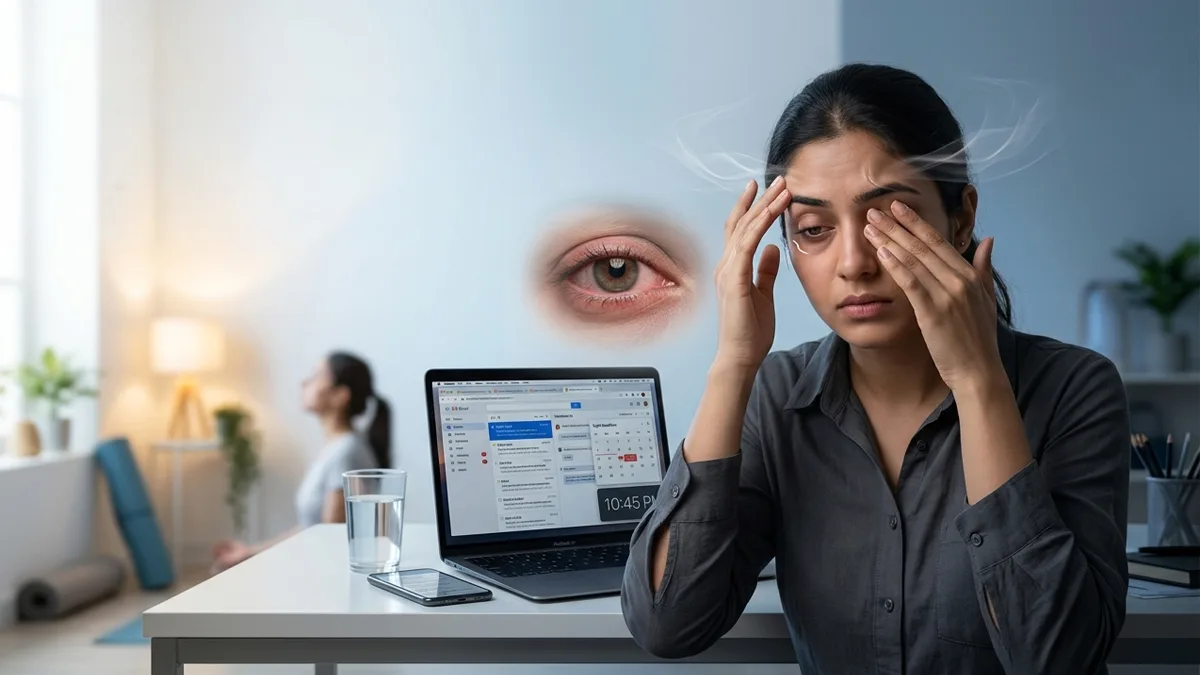
Stress also plays a role in sleep, mood, headaches, and digestion, but many also see it affect the eyes during stressful times. Temporary blurring, eye fatigue, dryness, headaches, or difficulty focusing can make patients wonder about stress and eyesight.
The issue is that the connection is real but it requires careful interpretation. Stress may play a role in what you see and how you focus, also in that picture are habits like long screen time and poor sleep which play a role too. Persistent or sudden vision changes should never be blamed on stress without an examination by an Eye doctor.
Can Stress Really Affect Your Vision?
During stress the body goes into “fight or flight” mode. This causes changes in heart rate, breathing, muscle tension, hormone production, and the autonomic nervous system which also controls things like pupil size and focus.
In a 2026 report which was indexed by PubMed there is a report of a connection between chronic work related stress and eye strain, ocular discomfort, and reduced focusing efficiency. Also the authors report that cause and effect has not been definitely proven.
This may account for the fact that you notice stress and eyesight symptoms even when we don’t find structural eye disease. Also stress may make present dryness, head ache, or focusing issues worse.
Common Stress Eye Problems
The most common stress eye problems tend to fluctuate. They may appear after long work hours, continuous screen use, lack of sleep, or periods of anxiety.
| Symptom | How It May Feel | Other Possible Contributors |
| Temporary blurred vision | Difficulty keeping text or objects clear | Refractive error, dry eye, near work |
| Eye strain | Heavy, tired, sore eyes | Screens, lighting, uncorrected power |
| Dryness | Burning, grittiness, fluctuating clarity | Reduced blinking, air conditioning |
| Headache around the eyes | Pressure or aching | Migraine, eye strain, sinus problems |
| Eyelid twitching | Small repeated eyelid movements | Fatigue, caffeine, lack of sleep |
People often search for blurry vision stress when focusing changes during an anxious period. Also blurred vision has many causes. The National Eye Institute reports that refractive errors are a common cause which we identify via an eye exam.
Why Can Stress Make Eye Symptoms Worse?
The relationship between stress and eyesight is usually indirect. In times of stress people may sleep less, work longer, spend more time on screens, drink more coffee, or take fewer visual breaks. These habits which in turn cause increased dryness and eye strain. Also people with dry eye, migraine, outdated spectacle prescription, or heavy near work demands may notice more stress eye problems when under pressure. Stress may also make physical discomfort more present without causing it.
How Doctors Diagnose Vision Changes During Stress
An assessment should not jump to the conclusion that stress is the cause. An Eye specialist may ask when did symptoms start, which eyes are affected, if the blur is constant or intermittent, also if there is pain, redness, flashes, floaters, headache, or light sensitivity present.
Testing out visual acuity, refraction, eye surface examination, eye pressure measurement and may add a retinal exam if needed. This helps distinguish blurry vision stress from conditions that require specific Eye treatments.
Managing Stress-Related Visual Discomfort
Managing stress and eyesight symptoms which in turn means to reduce visual strain and at the same time improve over all health. Break from the screen often, have proper lighting, get adequate sleep, stay hydrated, and wear the right glasses or contact lens prescription which in part can make visual tasks easier.
The U.S. National Center for Complementary and Integrated Health reports that methods of relaxation like slow breathing and mindfulness may play a role in the body’s relaxation response. At the same time do not forgo medical evaluation when symptoms require it.
If you have recurring symptoms bring up your screen time, sleep, prescriptions, and health issues with your Eye doctor during your Eye care visits.
When Should You See an Eye Specialist?
Some vision changes require prompt attention. Having sudden flashes which come with lots of new floaters or a curtain that is like a shadow in your field of vision is a sign of retinal detachment. Sudden vision loss, acute eye pain, a red painful eye with blurry vision also require immediate medical care.
| Vision Change | Recommended Next Step |
| Mild blur after prolonged screen use that improves with rest | Arrange a routine eye check if it keeps recurring |
| Persistent or repeatedly returning blur | Book a comprehensive eye examination |
| New persistent symptoms in one eye | Seek timely ophthalmic assessment |
| Sudden flashes, many new floaters, or a curtain-like shadow | Seek urgent ophthalmic care |
| Sudden vision loss or severe eye pain with blurred vision | Seek emergency medical care |
If you are uncertain of a connection between a symptom and stress versus another issue, bring it to an Eye hospital rather than self diagnosing.
Can Stress Permanently Damage Eyesight?
While temporary visual issues which present with stress are a thing they do not in fact mean permanent damage to the eyes is a going out affair. What we should be more worried about is that a real eye issue is being identified as stress.
Ongoing stress eye problems or repeated blurry vision stress should therefore be assessed properly. Once eye disease and refractive errors are ruled out, stress management and better visual health practices may be included in the total care plan.
Recovery and Follow-Up Care
Symptoms of fatigue, dryness, screen overload or stress which do improve when the cause is addressed may be seen. As for recovery time, that varies for each person as the root cause is different for all.
If you have recurring symptoms it is recommended that you see an Eye specialist which in turn will help us determine what the issue is is it a change in your prescription, tear film health, screen time habits, history of migraines or another condition. At Vasan Eye care evaluation and work to determine the cause of your issue and what the best forward steps are for you.
Conclusion
Stress issues play a role in visual health, focus, sleep, and daily routine which is why we should pay attention to the connection between stress and eyesight. Also at the same time it is true that there are many causes for blurred vision and stress should not be what causes delay in diagnosis.
If you are experiencing symptoms frequently, persistently, or which are causing you worry, we recommend that you see a professional ophthalmologist at a trusted Eye care facility for a personal evaluation. At Vasan Eye care we are able to determine if you require a prescription update, dry eye treatment, other Eye treatments, or a change in your visual habits. Vasan Eye care can support patients in understanding the cause of their symptoms and choosing an appropriate next step.
Frequently Asked Questions
Yes at times what we see is that some people report temporary focusing issues or eye strain during stress out breaks. But blurry vision stress related issue should be evaluated if it is persistent, recurrent, affects only one eye or comes with pain, flashes, floaters or any other new symptom.
It is put forth that anxiety and long term stress play a role in muscle tension, poor sleep, and extended use of screens. These in turn play a role in what we term stress eye problems. An eye exam is a good idea to rule out other causes when symptoms are frequent.
Stress causes short term physical changes but signs do not report on eye pressure. Glaucoma and other pressure related issues require appropriate testing. Consult an Eye doctor if you have persistent concerns about your vision or eye pressure.
There is no set time. Blurry vision which is a result of fatigue, dryness, or prolonged near work may improve with rest and correction of the trigger. Persistent or recurrent blurry vision stress should be evaluated by a professional.
Seek prompt medical care for sudden vision loss, severe eye pain, a red and painful eye that also has blurriness, flashes which may be accompanied by many new floaters, or a curtain like shadow. Persistent but less sudden symptoms should be examined by an Eye specialist.
References
- https://www.nccih.nih.gov/health/stress
- https://www.nei.nih.gov/eye-health-information/eye-conditions-and-diseases/refractive-errors
- https://www.nei.nih.gov/eye-health-information/eye-conditions-and-diseases/retinal-detachment
- https://medlineplus.gov/ency/article/003029.htm
- https://pubmed.ncbi.nlm.nih.gov/41893424/