
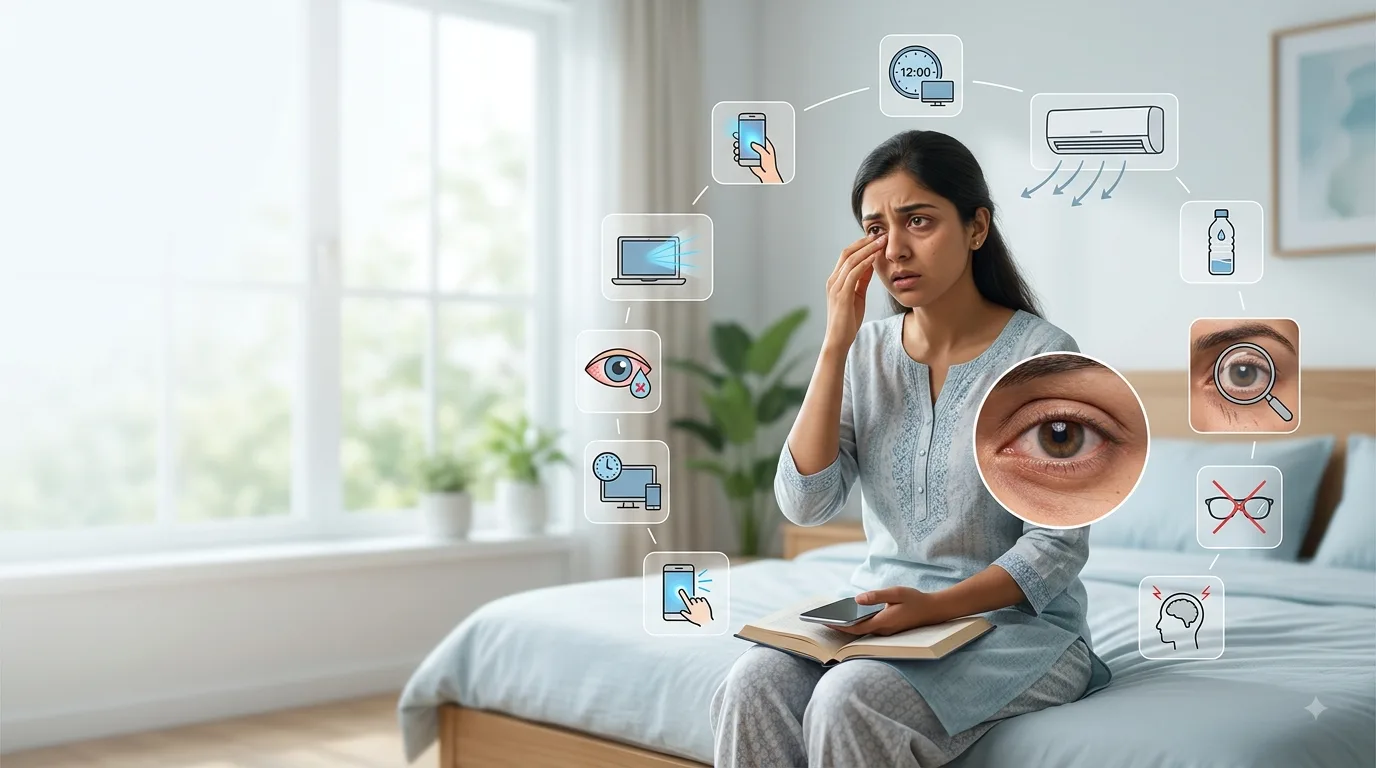
Getting sufficient sleep will leave you feeling recharged, at the same time some mornings your eyes may still feel heavy, sore, dry, or have trouble focusing. Persistent tired eyes isn’t a sure sign that you aren’t getting enough sleep. The issue may be with the eye surface, focusing system, eyelids, your use of screens, vision correction or your daily environment.
By identifying what the cause is you can put in place the right eye care solution instead of just trying to sleep more.
What Do Tired Eyes Actually Feel Like?
People put out different reports on tired eyes. Some report of heaviness in the eyelids, others of dryness, burning, blurry vision, difficulty in focus, or a dull ache around the eyes.
These present with also the signs of eye fatigue and common eye strain symptoms, which do present themselves post long sessions of reading, computer work, smartphone use, driving, or other intensive visual tasks.
However, symptoms that return every day, become more noticeable, or interfere with work and reading deserve attention from an eye doctor.
Why Can Your Eyes Feel Tired After 8 Hours of Sleep?
Eight hours of sleep reports what your body did but it doesn’t tell us what your eyes were doing before, during, or after that sleep. Also in play are several eye specific issues which may leave you with uncomfortable eyes despite getting enough rest.
Dry Eyes Can Make the Eyes Feel Heavy
Dry eyes is a very frequent cause of burning, grittiness, fluctuating vision, redness, and uncomfortable tired eyes. It develops when the eyes do not produce enough tears or when the tear film does not properly moisturize the eye
The National Eye Institute explains that prolonged screen viewing can reduce blinking, while wind, smoke, dry environments, some medicines, contact lenses, and certain health conditions may also contribute to dry eye. Air-conditioned bedrooms or offices may also make dryness more noticeable in susceptible people.
Digital Devices May Be Causing Eye Fatigue
Your eyes may rest for eight hours at night but they still have to perform the functions you ask of them during the day. We put in long times looking at computers, phones, tablets and other close objects which in turn causes eye fatigue.
As you are into a task at the computer you tend to blink less. This increases dryness and discomfort. Also digital visual tasks may cause eye strain symptoms which presents as temporary blurred vision, hard time refocusing, headaches, burning and soreness around the eyes. At MedlinePlus we are told to take the eyes out of the action every now and again during long screen sessions and we present to you the 20-20-20 approach which is. https://medlineplus.gov/eyecare.html
| Daily factor | How it may affect your eyes |
| Long screen sessions | Reduced blinking and greater focusing demand |
| Air conditioning | May increase tear evaporation and dryness |
| Extended reading | Can increase near-focusing effort |
| Contact lens wear | May worsen dryness in some people |
| Poorly corrected vision | Can make focusing more demanding |
Your Glasses Prescription May Need Checking
Uncorrected and poorly corrected refractive errors put stress on your eyes which in turn try to compensate for clear vision. Myopia, hyperopia, astigmatism, and age related presbyopia may cause issues like blurred vision, headaches, difficulty in focus and eye strain.
The National Eye Institute reports that among signs of refractive errors is eye strain and difficulty focusing which you may see in yourself while reading or at a computer. If you are a chronic squinter, get too close to screens, have trouble with small print, or feel discomfort from near work, a full eye exam can determine if it is time to update your prescription.
Eyelid Problems May Be Responsible
Sometimes what we have is an issue with the eyelid itself instead of the eye. Blepharitis which is an inflammatory condition of the lid margins we see also has it’s issues. It causes itchy, burning, watery eyes, dryness, redness and also crusting around the eyelashes in particular upon waking. What we see is that people with blepharitis may wake with uncomfortable eyes even after a full night’s rest. The National Eye Institute reports that treatment varies based on the person’s situation and usually includes proper eyelid hygiene, also some may require more in depth medical management.
Common Symptoms to Watch For
Eye fatigue does not always present as simple sleepiness. Paying attention to the accompanying symptoms can help your eye doctor identify the underlying problem.
| Symptom | What may need evaluation |
| Burning or gritty feeling | Dry eye or eyelid irritation |
| Blurred vision during screen use | Digital strain or refractive error |
| Headaches after reading | Focusing or vision-correction issue |
| Itchy or watery eyes | Allergy or surface irritation |
| Crusty eyelashes on waking | Possible blepharitis |
| Difficulty focusing nearby | Refractive error or focusing problem |
These symptoms present a few different possibilities which is why we do not recommend self diagnosis.
How Are Persistent Tired Eyes Diagnosed?
When tired eyes persist after adequate rest an ophthalmologist will review your symptoms, screen habits, contact lens use, glasses prescription, medicines, work environment, and general health.
An evaluation may include assessment of visual acuity, refractive error, eyelids, tear film, cornea, and other eye structures. In the case of dry eye we may check tear production or how quickly tears evaporate which is in response to what symptoms present.
At a qualified Eye hospital a consultation can help to identify simple eye fatigue from dry eye, refractive errors, eyelid issues or a different issue that requires specific eye treatments.
How Can You Manage and Prevent Eye Fatigue?
Reduction of what is unnecessary visual stress is a top priority. During extended computer or smart phone use, take frequent breaks and be aware to blink more. Position screens in a way that is comfortable to you, reduce glare which is distracting and also try to not fixate on the same digital device without varying your viewing distance.
If you have eye discomfort from air conditioning try to reduce the flow of air directed at your face. For contact lens wearers which experience persistent dryness see an eye care professional before changing how long you wear your lenses or using non prescribed drops
Lubricating drops may help with some types of dry eyes, but that will vary based on the cause. Do not treat yourself with antibiotic, steroid, redness relief or other medical eye drops before at least talking to your health care provider. At Vasan Eye care there is an appropriate evaluation whether persistent eye strain symptoms are related to dry eye, refractive error, lid health issues, digital screen over use or some other underlying eye problem.
How Long Does Eye Fatigue Take to Improve?
Temporary eye fatigue which results from extensive near work may improve with a reduction in visual demand and rest for the eyes. But if you find yourself going to bed with tired eyes every day it is a sign that the cause may still be at play. When dryness, an inaccurate prescription, blepharitis or some other condition is the cause, improvement will depend on identifying and appropriately managing that cause. Follow-up eye care may be advised when symptoms persist or when treatment needs adjustment.
When Should You See an Eye Specialist?
If your tired eyes occur often, interfere with reading or computer work, or are accompanied by persistent redness, recurring headaches, dryness, blurred vision, or difficulty focusing .
For more acute issues like sudden vision changes, significant eye pain, marked redness, severe light sensitivity, eye injury, or sudden loss of vision, more prompt assessment is required. These symptoms should not be assumed to be ordinary eye strain symptoms.
Conclusion
Sleeping eight hours isn’t a cure for tired eyes. Dryness, digital addiction, uncorrected vision, contact lens use, environmental issues, and eyelid problems are some of the causes of on going discomfort.
If rest and a healthy approach to screen time isn’t helping to improve your symptoms, don’t just accept that which is your lot. Go see a qualified ophthalmologist at Vasan Eye care or a trusted eye hospital for a personal evaluation and appropriate eye treatment.
Frequently Asked Questions
Adequate sleep does not preclude dry eye, prolonged screen time, refractive errors, eyelid irritation, or other causes of eye fatigue. If the issue is a regular one a visit to the eye care professional can help determine what is causing your eye discomfort.
Yes it does. Also included in extended digital-device use are tired eyes, dryness, blurred vision, headaches and eye strain symptoms. Also during intense screen viewings people tend to blink less which in turn may make the eye surface feel dry or irritated.
Dry out which in turn may cause issues like pain, burning, sand in the eye feeling, blurred vision and in general eye discomfort. Some people report this as a heavy sensation in the eyes or eye fatigue which is very much a thing after a long day of reading or sitting in front of a screen.
Not always. It is true that an uncorrected refractive error or an out of date prescription can play a role in eye strain symptoms. A full eye exam by an eye doctor is the way to go in order to see if we require some sort of vision correction or other eye care.
Seek professional evaluation when you have tired eyes that don’t go away, which interfere with your daily activities, or which present with blurred vision, significant redness, pain, or focus issues. Sudden vision loss, severe pain, or large scale changes in vision require you to seek care right away.
References
- National Eye Institute – Dry Eye
https://www.nei.nih.gov/eye-health-information/eye-conditions-and-diseases/dry-eye - National Eye Institute – Causes of Dry Eye
https://www.nei.nih.gov/eye-health-information/eye-conditions-and-diseases/dry-eye/causes-dry-eye - National Eye Institute – Refractive Errors
https://www.nei.nih.gov/eye-health-information/eye-conditions-and-diseases/refractive-errors - National Eye Institute – Blepharitis
https://www.nei.nih.gov/eye-health-information/eye-conditions-and-diseases/blepharitis