
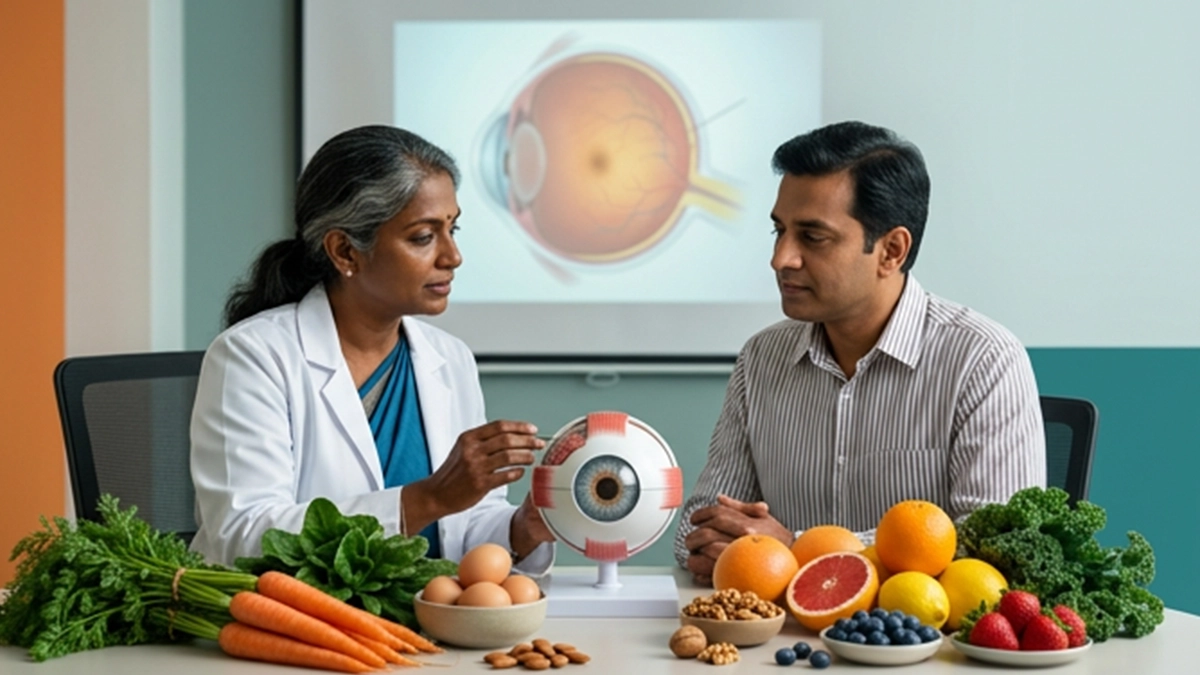
Vitamins play a key role in eye health which can be seen in the retina, cornea and other eye tissues that require nutrition. Vitamin A is for normal vision and vitamins C and E are great for antioxidant support. Also B vitamins and vitamin D play a role in normal body functions which in turn support the eye.
Vitamins for eye health should be looked at as a form of nutritional support and not a cure. Food cannot take the place of an eye exam or prescribed treatment.
Why Vitamins Matter for the Eyes
Different eye health vitamins play different roles. Vitamin A supports the eye’s response to light and also its surface. Vitamin C supports collagen and antioxidant defense, at the same time vitamin E puts forward protection for cells from oxidative damage. These nutrients for eyes can be found in common foods.
The National Eye Institute reports that AREDS and AREDS2 do indeed report to slow the progress from intermediate to advanced age related macular degeneration in appropriate patients. Also to note these are not general supplements.
7 Vitamins for Eye Health to Know
Vitamin A is for healthy vision and also plays a role in the function of the cornea and retina. Carrot, sweet potato, pumpkin, spinach, eggs, dairy are great sources. Very severe deficiency may cause night blindness and eye surface damage.
Also an anti oxidant is Vitamin C which you will find in amla, guava, oranges, peppers and broccoli. Also present in nuts, seeds and vegetable oils is Vitamin E.
Vitamin B2 is for the health of cells and energy metabolism. Also, Vitamin B6 does for metabolism, the nervous system. As for Vitamin B12 it is related to the health of the blood and nerve cells; you can get them from fish, eggs, dairy and fortified foods.
Also, Vitamin D is for the health of bones and the immune system. Though present research reports on its role in issues like dry eyes, at this time it is not to be put forth as a wide scale eye disease treatment.
| Vitamin | Role Related to Eye Health | Common Food Sources |
| Vitamin A | Normal vision and eye surface | Carrots, sweet potato, pumpkin, spinach, eggs |
| Vitamin C | Antioxidant and collagen support | Amla, guava, citrus, peppers, broccoli |
| Vitamin E | Antioxidant cell protection | Nuts, seeds, vegetable oils |
| Vitamin B2 | Supports cell function and energy metabolism | Milk, eggs, mushrooms, grains |
| Vitamin B6 | Metabolism and nerve function | Fish, poultry, potatoes, bananas |
| Vitamin B12 | Blood and nerve-cell function | Fish, eggs, dairy, fortified foods |
| Vitamin D | Bone and immune health | Fatty fish, fortified foods, egg yolk |
How to Build Better Eye Nutrition
A diet for healthy vision does not have to revolve around one vitamin or one “superfood”. Include in your diet a variety of leafy greens, colorful veggies, fruits, whole grains, pulses, nuts, seeds, eggs, dairy and also from which you get your protein this will present a wider range of nutrients for eyes.
In an Indian context include spinach or methi, carrots, pumpkin, amla, guava, citrus fruits, nuts, eggs and pulses which fit well into typical Indian meals.. Variety of eye health vitamins and nutrients is key to maintaining healthy eyes, rather than fixating on a single vitamin.
| Goal | Practical Approach | Important Reminder |
| Support healthy vision | Eat varied foods that provide vitamins and antioxidants | Diet does not replace eye examinations |
| Increase vitamin A intake | Choose carrots, leafy greens, pumpkin, eggs or dairy | Avoid high-dose vitamin A without medical advice |
| Add antioxidant nutrients | Include amla, guava, citrus fruits, nuts and seeds | Variety matters |
| Manage a diagnosed eye condition | Follow the ophthalmologist’s treatment plan | Food is supportive, not curative |
Food First, Supplements With Caution
For many people, food is a practical source of vitamins for eye health. High dose supplements are different from what is obtained in a daily diet and may react with medicine or do not fit some people’s health profiles. Vitamin A for example may present danger in large doses.
AREDS2 is a high dose supplement for certain people that have intermediate or late age related macular degeneration. It is not a routine eye vitamin. See a health care professional before taking high concentration supplements.
When to See an Eye Specialist
Nutrition supports healthy vision but does not rule out new symptoms. Sudden vision loss, a curtain report, new flashes with floaters, severe eye pain which also presents as reduced vision, or large eye injury requires prompt assessment.
Persistent blurred vision should see an eye care professional instead of self treating with eye health vitamins. Vasan Eye Care can help you in assessing vision and recommend further evaluation.
Related Nutrition Tips for Healthy Eyes
Getting the right nutrients every day can help support normal vision and maintain overall eye health. Learn how antioxidants for eye health help protect cells from oxidative stress, and explore the best foods for eye health to discover nutrient-rich options for your daily diet. You can also include fruits good for eyesight to increase your intake of essential vitamins and antioxidants. Along with a balanced diet, understanding the importance of hydration can help you maintain normal tear production and eye comfort. If you experience persistent dryness, blurred vision, or other changes in your eyesight, consider scheduling an eye check-up with an eye care professional for an appropriate assessment.
Conclusion
Vitamins for eye health are one part of a bigger picture to healthy vision. Vitamins A, C, E, B2, B6, B12 and D which play a huge role in how the body functions but no one vitamin is the full picture.
For persistent symptoms or a diagnosed eye issue it is recommended you seek out professional eye care. Vasan Eye Care does that which is to give you an eye exam and to direct you to what further care you may need.
FAQs About Vitamins for Eye Health
1. Which vitamins are best for eye health?
Vitamin A is key in normal vision but at the same time vitamins C and E act as antioxidants which are also important. B vitamins and D vitamins also play very important roles in normal body function. A varied diet is best to what you may think.
2. Can vitamins improve eyesight?
Vitamins do in fact correct issues related to certain deficiencies, but they do not in any way remove refractive errors or replace glasses. If you see persistent changes in your vision get that checked out by an eye specialist.
3. Do I require eye vitamin supplements daily?
Not at all. Many people get what they need from a varied diet. High dose supplements may be for some with AMD but they should be used under professional guidance.
4. What foods are rich in vitamins for eye health?
Leafy greens, carrots, pumpkin, amla, guava, citrus fruits, eggs, dairy, nuts, seeds, pulses and fish which are sources of many nutrients that support healthy vision.
References Links
1. National Eye Institute – Age-Related Eye Disease Studies (AREDS/AREDS2) https://www.nei.nih.gov/eye-health-information/clinical-trials/age-related-eye-disease-studies-aredsareds2
2. NIH Office of Dietary Supplements – Vitamin A and Carotenoids: Fact Sheet for Consumers
https://ods.od.nih.gov/factsheets/VitaminA-Consumer/