
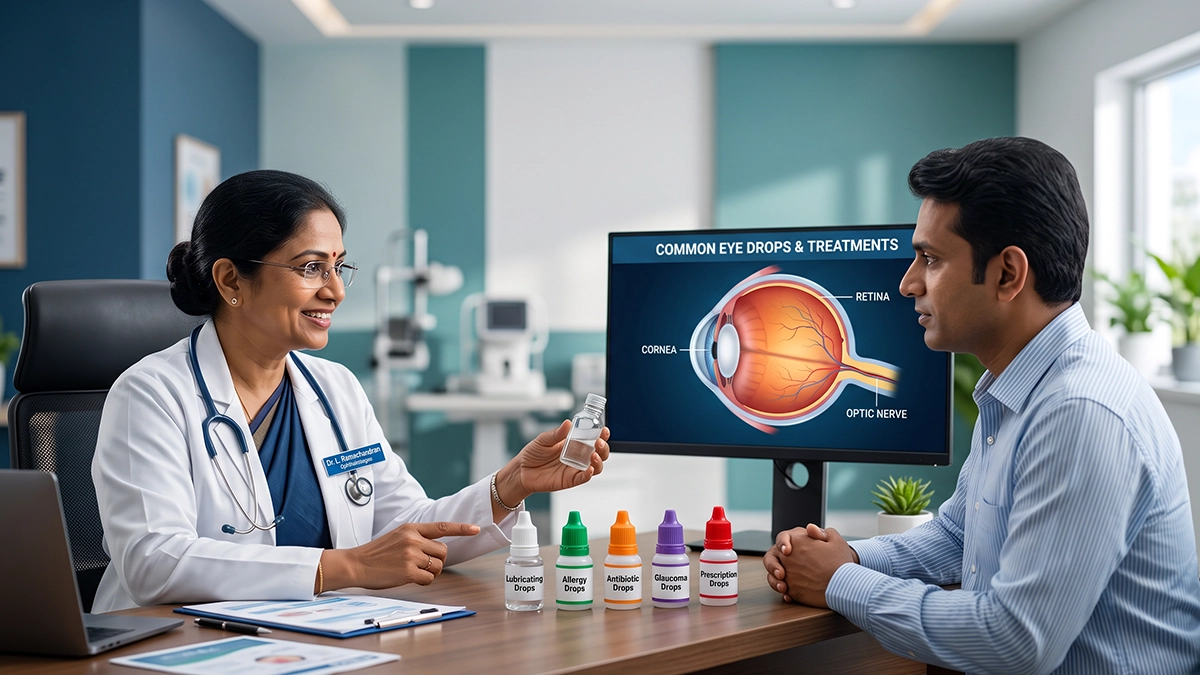
An ophthalmic drug guide which reports on what drugs are used for dry eyes, allergies, infections, inflammation, and increased eye pressure. Each category of eye drop is for a different condition which you are to use which is related to what is causing your issue. Use of the wrong drops for example antibiotics or steroid drops that widen the pupils may delay proper treatment or make some eye conditions worse.
What Are the Different Types of Eye Drops?
The which eye drop is named on the prescription usually describes what the medicine does or its active ingredient. Some drops relief discomfort, others treat specific conditions or enable an ophthalmologist to better see in to the eye. The we have put forth nine common categories in the following table.
| Type of eye drops | Common purpose | Important precaution |
| Lubricating drops | Relieve dryness, burning, and gritty sensations | Ask about preservative-free options for frequent use |
| Anti-allergy drops | Reduce itching and watering caused by allergies | Avoid rubbing the eyes |
| Antibiotic drops | Treat certain bacterial infections | Do not treat viral infections |
| Steroid drops | Control selected forms of inflammation | Require medical supervision |
| Eye drops for eye pressure | Lower pressure inside the eye, including in glaucoma | Use consistently as prescribed |
| Dilating drops | Enlarge the pupil for an eye examination | May cause temporary blurred vision |
| Cycloplegic eye drops | Relax the focusing muscle and sometimes enlarge the pupil | Can cause light sensitivity |
| Redness-relief drops | Reduce visible redness in selected situations | Overuse may worsen redness |
| Numbing drops | Temporarily numb the eye during clinical procedures | Do not use at home unless specifically directed |
Which Eye Drop Is Used for Each Problem?
Dryness may be treated with lubricants but for cases of itchy allergies the may need antihistamines. In case of bacterial infection antibiotic drops will be necessary, but redness and discharge don’t always mean it’s a bacterial issue. An exam is the best way to determine what kind of drops you need and also to avoid at-home treatment that may not be proper.
When it comes to eye drop names, pay attention to the active ingredient which is more so than the brand. There are different products that may have the same packaging but in fact are for different uses. Do not use old prescription medicine when you have a new onset of redness, pain, or irritation.
For glaucoma we have eye drops which help reduce intra ocular pressure and save the optic nerve from more damage. These meds may also decrease production of aqueous humor or enhance it’s outflow. It is true that one may not see a change in symptoms at all times but that doesn’t diminish the importance of a regular routine of application and of follow up even when vision appears to be normal.
What Do Dilating and Cycloplegic Drops Do?
During some eye exams doctors will use drops to dilate the pupil which in turn will allow them to see inside the eye better. These drops may cause short term blurry vision of near objects and light sensitivity. Follow the clinic’s advice on when it is safe to drive and perform other tasks until your vision has returned to normal.
Cycloplegic eye medications which include atropine are given to relax the eye’s focus muscle. In the office this is used to evaluate refractive errors which is very useful with pediatrics, also we use them in certain inflammatory conditions. The results of the medication which may include different options, can be variable and in some cases near vision may be blurred for many hours. As with all medical treatments these drops should only be used as directed by an eye care professional.
Steroid and Antibiotic Drops: What Should You Know?
Steroids reduce inflammation which in turn may cause an increase in eye pressure, slow the healing process, or even make some infections worse. Also it is important to note that which is true of steroid drops and the need for supervision that long term or improper use may cause greater risk of complications like cataracts. Do not start, extend, or stop a prescribed steroid regime without first speaking to your health care provider.
Antibiotic drops are effective for some types of bacterial eye infections, but for the most part they do not treat viral infections and allergies. Also this note that overuse can bring on irritation and antibiotic resistance. The appropriate treatment will vary from case to case as it is determined from the physical exam and what is most likely causing the symptoms.
How Should Eye Drops Be Used Safely?
Wash hands before using, check the expiration date, do not touch the tip of the bottle to the eye or the surrounding skin. Use as directed for dose and timing, do not share your eye drop bottles. If on other medications, ask a pharmacist or ophthalmologist what the wait time is between applications.
People that are put on eye drops for high eye pressure should not stop treatment when they feel better. If you miss a dose refer to the product info or get professional advice instead of putting in double the dose. Regular follow-up allows the ophthalmologist to monitor pressure and how the treatment is working.
| Situation | Recommended action |
| Mild dryness or allergy symptoms | Ask an eye-care professional about suitable options |
| Persistent redness, pain, or discharge | Arrange an eye examination |
| New discomfort while using steroid drops | Contact the prescribing clinician promptly |
| Sudden vision loss, severe pain, marked light sensitivity, or eye injury | Seek urgent medical assessment |
When Should You Seek Medical Attention?
Severe eye pain, sudden vision changes, very bright light sensitivity, a red eye which also has nausea or seeing halos around lights is a reason to go to the emergency right away. These symptoms point to a serious eye issue which should not be treated with over the counter eye drops.
An ophthalmologist will go over symptoms, medical history, and exam results before putting forth a treatment plan. An eye drops list which includes the different drug types is available, but it does not determine the cause of a particular eye issue. For each issue we choose the appropriate drop out of what best fits the diagnosis and also takes into account any other eye health issues.
Eye Care at Vasan Eye Care
Vasan Eye Care provides ophthalmic evaluations for concerns such as dryness, allergies, infections, and glaucoma. An eye specialist can explain suitable treatments, including pressure-lowering drops when clinically appropriate, and discuss possible side effects and follow-up requirements. steroid drops and why they need supervision
Persistent and improving symptoms should get in touch with a professional. We have offices of Vasan Eye Care which do eye exams and also go over what treatment options are available for you.
Frequently Asked Questions
1. Can antibiotic drops treat every red eye?
No. Antibiotics in drop form treat some bacterial infections but not allergies or the large majority of viral infections. Redness is a symptom with a number of bases. An exam is very important when pain, light sensitivity, discharge, or blurred vision is present with the redness.
2. Are drops that widen the pupil safe?
Dilating drops that are used in the eye exams are very common. They may cause near vision to be blurred and light sensitivity to increase. Follow the clinic’s instructions and do not operate a vehicle until your vision has cleared enough to do so safely.
3. Why do steroid drops need supervision?
Steroid drops and why they need supervision matter because these medicines can raise eye pressure, delay healing, or worsen some infections. Use them only under medical guidance and attend recommended follow-up appointments.
Yes. Cycloplegic drops will cause temporary blurring of near vision and sensitivity to light. Time frame varies by the type of medication and also by individual response. Talk to your doctor when it is safe to return to driving and other daily activities.
References
- American Academy of Ophthalmology — Eye Drops: Types and Recommendations
https://www.aao.org/eye-health/treatments/eye-drops-kinds-recommendations - NHS — Dexamethasone Eye Drops: Uses and Safety https://www.nhs.uk/medicines/dexamethasone-eye-drops/