
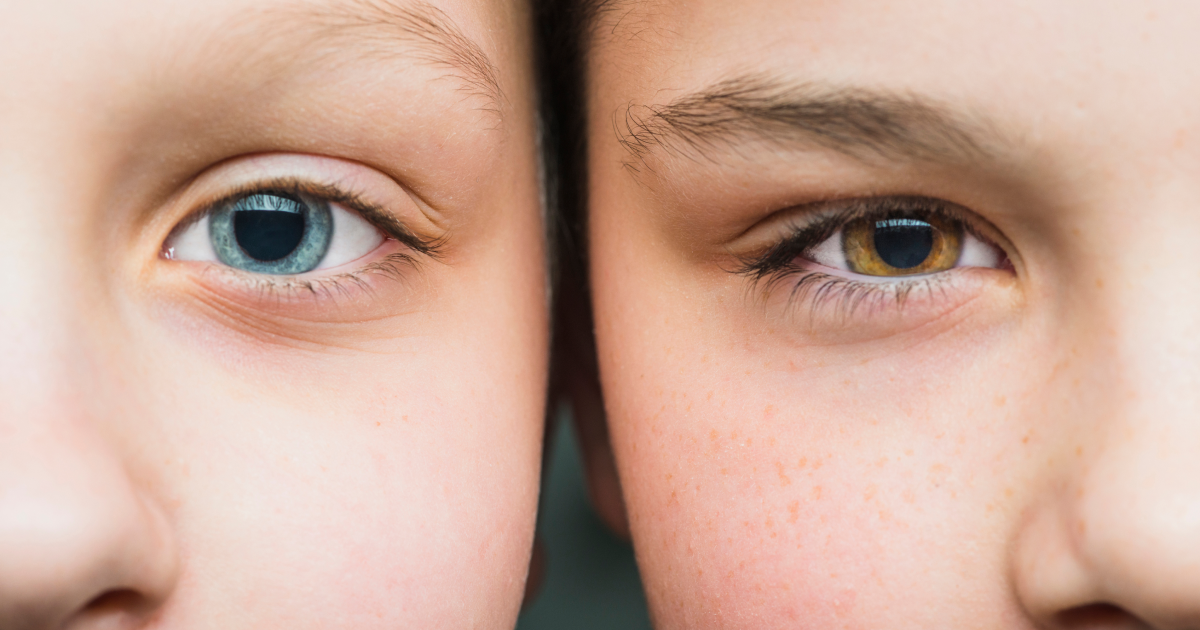
Eye color ranges from very light blue to dark brown and brown is the most common color worldwide. In terms of brown eyes vs blue eyes we must separate out pigmentation, inheritance, light sensitivity and disease associations from that of visual sharpness.
What Creates Brown and Blue Eye Colour?
The iris which is the colored ring around the pupil controls how light enters the eye by changing pupil size. What color we see is mainly due to melanin which also plays a role in skin and hair color. Brown irises usually have more of this pigment in their front layers, while blue irises have very little.
Blue eye color is a result of no pigmentation in the eyes. What happens is that light reflects off of an iris that has very little melanin. In other words between brown eyes vs blue eyes, what you are really looking at is a difference in iris pigmentation as well as how light acts in the tissue.
| Feature | Brown Eyes | Blue Eyes |
| Iris melanin | Usually higher | Usually lower |
| Global frequency | Most common worldwide | Less common globally |
| Bright-light comfort | Often less glare-sensitive | May be more glare-sensitive |
| Visual sharpness | Depends on overall eye health | Depends on overall eye health |
| Genetics | Influenced by several variants | Influenced by several variants, especially around HERC2 and OCA2 |
Genetics Behind Brown Eyes vs Blue Eyes
Eye color was at one time presented as a simple trait in which brown was dominant and blue was recessive. That model is incomplete. Eye color is polygenic in that many genes are involved. MedlinePlus reports that OCA2 and HERC2 on chromosome 15 are the main players in this, while also other genes which play a role in the full range of shades. plays in the production and storage of melanin. A regulatory area within HERC2 changes how much OCA2 is expressed. Variants that reduce OCA2 activity may result in less melanin and a lighter iris. This interaction accounts for the common presentation of brown eyes vs blue eyes, but it does not account for all individuals’ eye colors exactly.
Seen through genetics, brown eyes vs blue eyes represents a spectrum rather than two rigid biological categories.
Parents’ eye colors are a clue but do not determine what a child will have. Brown eyed parents can have a blue eyed child when the right combination of traits is inherited. The idea that one eye-colour gene is simply “stronger” should therefore be replaced by a more accurate explanation: several variants contribute, and some have larger effects than others.
Understanding the Types of Brown Eyes
People go after what types of brown eyes are, as brown is not a uniform color. It may range from honey to amber to a medium brown, to almost chocolate to so dark that the iris appears almost black in normal lighting. What we see usually is based on the amount and distribution of melanin and the lighting which the person is in.
Some types of brown eyes have lighter rings, golden flecks, or a darker rim. Because hazel eyes contain a mix of pigmentation, they can look brown in one setting and green or gold in another. These differences are usually cosmetic; no particular shade indicates healthier vision.
A sudden colour change should not be treated as another normal example of types of brown eyes.A new dark spot, one iris which is changing color, pain, redness or a change post injury requires an ophthalmic evaluation.
Who Has Better Vision: Brown Eyes or Blue Eyes?
Neither in blue nor brown eye color is there a universal report of sharper vision. Visual performance is a result of the health of the cornea, lens, eye length, retina, optic nerve and brain as well as the correction of any refractive errors. What we see in an individual with blue eyes may have outstanding uncorrected vision where another may require glasses. The same holds for brown eyed people.
When looking at brown eyes vs blue eyes people at times report what they feel is better vision in bright settings which may not be the case. A dark iris has more melanin and may absorb more stray light. Some with light eyes report more glare and light sensitivity which does not mean their retinas produce a poorer quality image.
Practically what we see is that eye color is a very small issue as compared to symptoms and results of the exams. Persistent blur, headaches, halos, double vision, flashes, floaters or pain should be evaluated at an eye hospital, not dismissed by the color of the iris.
Brown Eyes vs Blue Eyes: Health Facts
In health discussions, brown eyes vs blue eyes should never be treated as a simple healthy-versus-unhealthy comparison.
Most people are not at risk for eye disease due to their color. Eye color is but one variable which in itself does not indicate health risks; health issues are also shaped by age, family history, ultraviolet exposure, smoking, diabetes, blood pressure and many other factors.
| Question | Evidence-Based Answer |
| Does blue eye colour cause weak eyesight? | No. Iris colour does not determine visual acuity. |
| Are brown eyes protected from UV damage? | No. Every eye colour requires UV protection. |
| Are light eyes associated with uveal melanoma? | Light colour is one recognised risk factor, but the cancer is rare and multifactorial. |
| Are dark eyes associated with cataract? | Some studies report an association with certain cataract types. |
| Should sudden eye-colour change be checked? | Yes, particularly when it affects one eye or occurs with other symptoms. |
In a fair assessment of brown eyes vs blue eyes we see that pigmentation does play a role in glare response and may also play a factor in certain risks, but at the same time neither color is a guarantee for protection against disease. UV protective sunglasses, a hat in bright sun, healthful lifestyle options and regular eye exams are what we should all be concerned with.
Do Indians Have Blue Eyes?
The question do Indians have blue eyes has a clear answer: yes, although blue eyes are uncommon in India compared with brown eyes. Nationality is not a single genetic category, and India has extensive population and genetic diversity.
A report by the Government of India science portal which we present here reports on iris pigmentation as a very heritable and polygenic trait which they note to include in South Asia a range of eye colors from light blue and green to brown. Also reported is research into iris pigmentation among populations in Maharashtra. These Indians with blue eyes are unusual, but entirely possible. A person may inherit variants related to lighter pigmentation through normal family line and population history. Also it is put forth that a person’s eye color does not in itself prove out their ancestry.
Families may also wonder do Indians have blue eyes when a baby’s eyes turn out very light. Eye color does change in the first year as the melanin develops and thus the true color may not be known right at birth. There are Indians with blue eyes that are totally healthy which is the same for people with brown eyes.
The broader comparison of brown eyes vs blue eyes applies across populations, including India.
The answer to do Indians have blue eyes should therefore avoid stereotypes. Yes they do have blue eyes and what we see of Indians with blue eyes is a result of normal human genetic variation which in no way indicates a separate eye disorder.
Are Brown Eyes Genetically Stronger?
In simplified models brown eye traits are often reported as dominant to blue eye traits. In reality what we see is that multiple genes play a role in determining eye color between brown eyes vs blue eyes, which means that a simple dominant/recessive model doesn’t apply to every family.
Main HERC2 and OCA2 variants play a large role, other genes modulate pigmentation. That is why siblings may have different shades and also why in a family we see many types of brown eye color. “More present” and “more melanin rich” does not mean genetically superior.
What Eye Colour Did Humans Have 10,000 Years Ago?
Dark eye color is a trait which is very ancestral, on the other hand variants which became very common in blue eye color in humans are of more recent origin. Also the popular put forth idea that we all had brown eyes 10,000 years ago is too absolute.
A published study which is reported in PubMed reports that many blue eyed individuals may have a founder mutation which affects the regulation of HERC2 and results in reduced OCA2 expression. Later research has been done on the mutation’s timeline and the way in which it spread. It is known that through history their brown eyes vs blue eyes of dark eyes being the ancestor and blue eye associated variants becoming more present in some groups. This is not to say that at some exact date all human eyes changed color at the same time.
Can Eye Colour Change?
A baby’s iris changes color as melanin develops. In adults eyes may appear different due to lighting, clothing, photography or pupil size, but a true color change is less common.
A report of a change may be due to injury, inflammation, medicine use or certain iris pigment issues. At birth Heterochromia which is a difference between the two eyes’ color or a single iris that has in it different colored sections is a possibility. If it appears later in life an eye specialist hospital evaluation is advised.
This is a key issue in the debate between brown eyes vs blue eyes. Report out of that pain, redness, blurred vision, severe light sensitivity, flashes or a new dark spot in the iris requires professional evaluation.
Eye Care for Every Eye Colour
For day-to-day care, brown eyes vs blue eyes does not change the basic advice.
Everyone out there should use sunglasses which offer proper UVA and UVB protection. Also it is important to note that eye color does not play a role in workplace protection, screen breaks, diabetes management, balanced diet or at regular intervals have comprehensive exams.
A person looking for eye treatments should be evaluated by symptoms and diagnosis which may not correlate with iris color. Refractive errors, cataract, glaucoma, retinal disease and dry eye affect all eye colors. A trip to the eye hospital is a chance to catch issues before they lead to large scale vision loss.
At Vasan Eye Care we conduct ophthalmic assessments which look at visual acuity, refractive error, eye pressure and the health of the front and back of the eye. It is important to see an eye specialist hospital for a consultation when a symptom is sudden in onset, persistent, or affects only one eye. The main point from brown eyes vs blue eyes is that color is a genetic trait of interest, while healthy sight is a product of the full visual system.
Conclusion
The science brown eyes vs blue eyes is a story of melanin, light scattering and a mix of genes. In brown eyes we see more of the pigment melanin, in blue eyes that pigment is present in smaller amounts. Also, neither eye color at birth proves for sure sharper vision, stronger eyes or a free pass from disease.
Ultimately, brown eyes vs blue eyes describes appearance and pigmentation more than visual performance.
Symptoms should be what treatment is based on which may be in the brown, honey, hazel or blue. What we put forward as eye treatments solutions is to be from a professional diagnosis not appearance and regular examinations remain the most reliable way to protect vision.
Frequently Asked Questions
Neither is born with better vision. What you see is a result of your eye’s focus systems, retina, optic nerve and refractive correction which may be corrected with glasses or contact lenses, not brown eyes vs blue eyes.
Brown associated variants do present in a dominant fashion in simple models, but eye color is polygenic. HERC2, OCA2 and other genes play a role in determining the final shade.
Brown is a very present eye color around the world and includes in itself many types of brown eyes.
Dark pigmentation is a very old trait but to say that every person had brown eyes at the exact time of when we left the African continent is to over simplify. The age and the spread of blue eye associated genes is still in question.
Reference Links
- MedlinePlus Genetics – Is Eye Color Determined by Genetics?
https://medlineplus.gov/genetics/understanding/traits/eyecolor/ - National Cancer Institute – Intraocular or Uveal Melanoma Treatment
https://www.cancer.gov/types/eye/patient/intraocular-melanoma-treatment-pdq - India Science, Technology & Innovation Portal – Iris Pigmentation Research in Maharashtra
https://www.indiascienceandtechnology.gov.in/research/study-association-iris-pigmentation-candidate-snps-quantitatively-assessed-iris-pigmentation-among - PubMed – Blue Eye Colour and the HERC2/OCA2 Founder Mutation
https://pubmed.ncbi.nlm.nih.gov/18172690/ - NCBI/PMC – Iris Colour and Associated Ocular Complications
https://pmc.ncbi.nlm.nih.gov/articles/PMC4206898/