
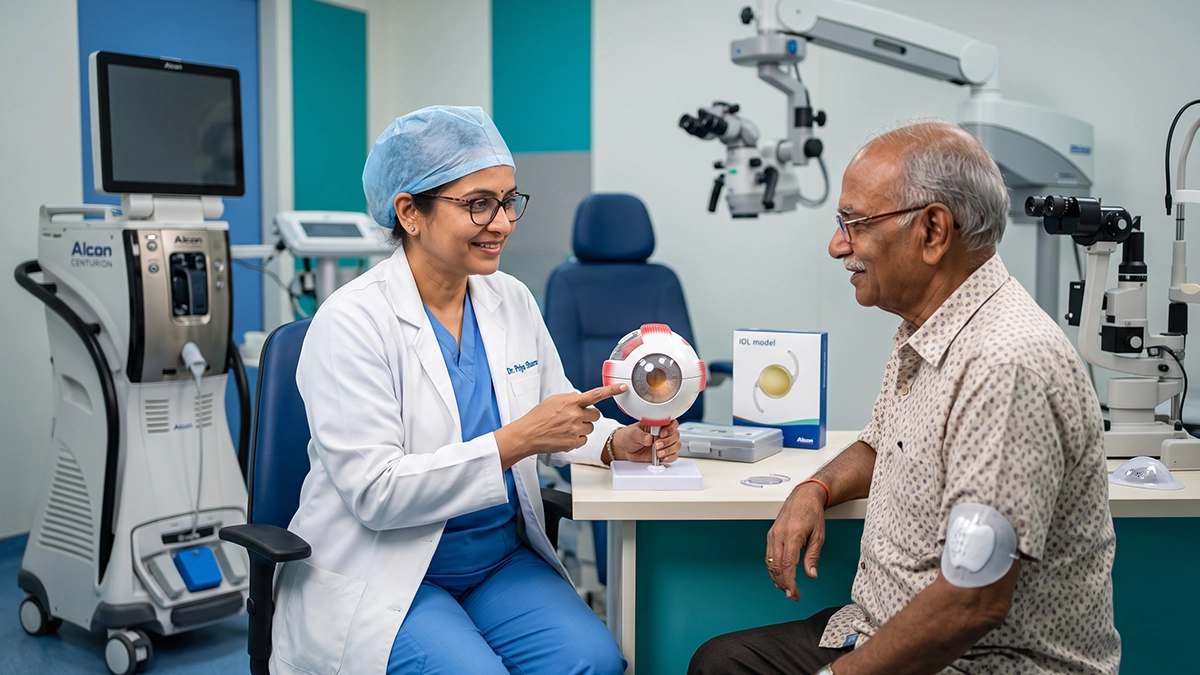
A cataract surgery procedure which removes the cloudy natural lens and puts in an artificial intraocular lens, or IOL. When cataracts do play a role in impeding daily life the cataract surgery procedure may be put forward after an eye exam. To better understand what is cataract surgery is to help patients prepare for the treatment and recovery.
For those that are in search of a more in depth treatment overview, at Vasan Eye Care we present the cataract surgery procedure on our cataract treatment page. Vasan Eye Care cataract treatment page.
What Happens Before the Cataract Surgery Procedure?
Before a cataract surgery procedure, the ophthalmologist tests the patient’s vision, examines the cataract, and measures the eye to determine the correct IOL power. The doctor also reviews medications and any other eye conditions, allowing the surgical management of cataract procedure to be planned for that individual.
The National Eye Institute’s cataract surgery guidance says that preoperative measurements help the surgeon choose the artificial lens. Patients may also receive personal instructions about medications, prescribed eye drops, and when to stop eating or drinking before the procedure. NEI cataract surgery guidance .
Vasan Eye Care’s preparation guide helps patients understand what to do before cataract surgery.
Cataract Surgery Procedure Types
Different cataract surgery procedure types do best in their own clinical settings. Phacoemulsification which uses ultrasound to break up and remove the cloudy lens is one option. Femtosecond laser cataract surgery which uses a laser for some steps is another. Depending on the patient’s eye condition, the eye specialist at Vasan Eye Care may recommend a small-incision technique or extracapsular cataract extraction.
| Technique | What happens | When it may be considered |
| Phacoemulsification | Ultrasound breaks and removes the cloudy lens | Commonly used for routine cataracts |
| Femtosecond laser cataract surgery | A laser assists selected steps before lens removal | Selected eyes or IOL plans |
| SICS/ECCE | The lens is removed through a larger incision | Dense or advanced cataracts |
The Cataract Surgery Procedure in 8 Steps
Step 1: Pre-operative Assessment
In the beginning of the cataract surgery procedure we do eye measurements and IOL planning. Patients should talk to their ophthalmologist about medical history, medicines and what they expect from visual results.
Step 2: Anaesthesia and Preparation cataract surgery procedure
On the day of the cataract surgery procedure we clean the eye, dilate the pupil with eye drops, also we use numbing drops or a local anesthetic which helps keep the patient at ease during the procedure.
Step 3: Creating the Incision
The surgeon makes a tiny incision to access the lens. In some cases laser technology is used for this stage of cataract surgery procedure.
Patients that are interested in laser versus traditional cataract surgery are directed to Vasan Eye Care’s material on laser assisted treatment. Vasan Eye Care laser cataract surgery page.
Step 4: Opening the Lens Capsule
A lens capsule opening which is circular in shape is made at the front of the lens capsule which in turn allows for access to the cataract and precise IOL placement.
Step 5: Removing the Cloudy Lens
During the process of cataract surgery procedure the cloudy lens is broken up into small pieces and removed. For patients interested in the details of how the surgery is actually done they may ask which technique their surgeon recommends. Vasan cataract procedure overview.
Step 6: Implanting the IOL
A foldable artificial lens is put in the residual lens capsule. The power is determined by measurements done before the cataract surgery procedure.
Step 7: Immediate Check
After surgery the doctor will check your eye and they will cover it for protection. Usually we go home the same day with a set of medications and very clear instructions on what to do going forward.
Step 8: Recovery and Follow-up
Recovery after cataract surgery procedure includes post op visits, use of prescribed eye drops and measures to protect the eye. Severe pain, redness, sudden loss in vision, flashes or development of many new floaters is a cause for prompt medical care.
| Recovery stage | What may occur | Usual advice |
| First few days | Mild irritation, light sensitivity or temporary blur | Use prescribed drops and avoid rubbing |
| Following weeks | Vision becomes more stable | Attend reviews and follow activity restrictions |
| Warning signs | Severe pain, significant redness or sudden vision change | Contact the eye-care team promptly |
Cataract Surgery Risks and Recovery
Although it is very common for people to have Cataract surgery risks and complications. What may happen during cataract surgery are infection, inflammation, pressure issues, retinal problems or posterior capsule opacification. Vasan cataract info and treatments .
The MedlinePlus report on cataract removal notes that the procedure is usually an out-patient one which also includes the implant of an artificial lens. MedlinePlus cataract removal info .
At Vasan Eye Care we tailor our cataract surgery procedure to the patient’s eye health, visual needs and appropriate IOL choice. At Vasan Eye Care, treatment is tailored to each patient’s eye condition and individual needs rather than following the same approach for everyone.
When Is Cataract Surgery Considered?
A cataract surgery procedure is usually done when cataract related vision loss affects daily activities or when the cataract itself is a factor which rules out evaluation or treatment of a separate eye issue. It is a discussion between patient and ophthalmologist which determines the right time for surgical management of cataract.
Understanding what is cataract surgery, the cataract surgery procedure types available, and the recovery process can help you make an informed decision about your treatment.At Vasan Eye Care our ophthalmologists will assess your eye health and determine if cataract surgery is right for you.
Frequently Asked Questions
1. Is the cataract surgery procedure painful?
The eye is anesthetized prior to surgery which in turn causes most patients to report little if any pain although they may note mild pressure.
2. How long does a cataract surgery procedure take?
Operating time is a factor of the technique and eye condition. Also time is added for preparation and observation.
3. Can cataracts return after a cataract surgery procedure?
The grown out natural lens will not develop into a cataract again. Posterior capsule opacification at a later time may cause your vision to become cloudy.
4. Is femtosecond laser cataract surgery suitable for everyone?
No. It is by your eye shape, what type of cataract you have, the IOL plan, and what the surgeon feels is best.
5. How soon can vision improve after cataract surgery?
Many see improvement in days, but full healing and visual stabilization may take several weeks.
Reference Links
1. National Eye Institute (NEI) – Cataract Surgery: Preparation, Procedure, Recovery and Risks
https://www.nei.nih.gov/eye-health-information/eye-conditions-and-diseases/cataracts/cataract-surgery
2. MedlinePlus (NIH) – Cataract Removal Procedure
https://medlineplus.gov/ency/article/002957.htm
3. National Eye Institute (NEI) – Cataracts: Symptoms, Diagnosis and Treatment
https://www.nei.nih.gov/eye-health-information/eye-conditions-and-diseases/cataracts
4. MedlinePlus (NIH) – Cataract Surgery and Treatment Information
https://medlineplus.gov/cataract.html
5. National Eye Institute (NEI) – Types of Cataracts and Secondary Cataracts
https://www.nei.nih.gov/eye-health-information/eye-conditions-and-diseases/cataracts/types-cataract