
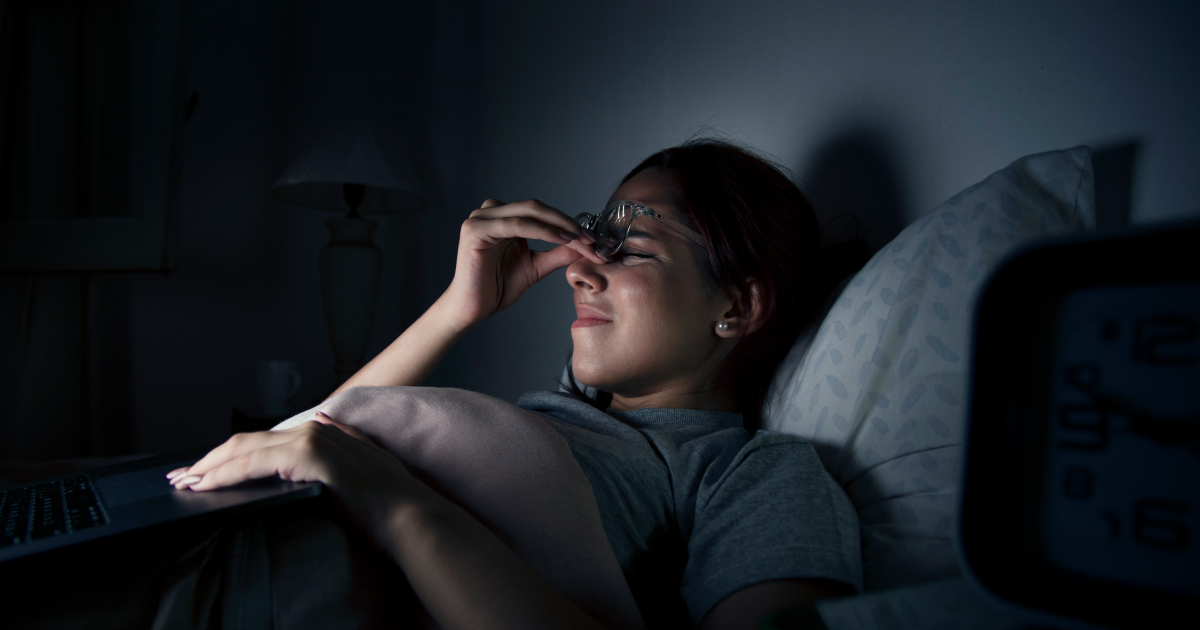
Busy schedules leave no room for rest, which is an issue many people face. We stay up to finish work, scroll through our phones, study for that exam or in fact we do it all for entertainment, then joke that sleep is overrated. One late night may leave you tired the next morning, but if it becomes a routine of poor rest, it will affect your concentration, your mood, your metabolism, and, in turn, your daily performance. Also, it will change how stable and comfortable your vision is. This is why the question of how does sleep affect eyes deserves more than a casual answer. In a health context, sleep is overrated is a risky one.
The relationship between sleep and eyes is especially noticeable when screen use, air-conditioning, contact lenses, dehydration or an existing dry-eye condition are also involved. We see fatigue, heaviness, tearing, redness, difficulty with focus and temporary blurring as common results of poor rest. It is true that these symptoms do not always mean permanent damage, but persistent lack of sleep and eye problems should not be dismissed as normal. If symptoms persist, it is best to get an evaluation at an eye hospital, which will help determine if sleep loss is the primary issue or if there is in fact another condition present. That is the safest way to interpret lack of sleep and eye problems.
Why Sleep Is Overrated Is Misleading
The National Heart, Lung, and Blood Institute reports that proper quality sleep is the base for physical health, brain function, safety and daily performance. Most adults do require between seven to nine hours of sleep which may vary by person.
So, how does sleep affect eyes during ordinary life? Sleep gives the ocular surface a break from all that is constant continuous exposure, the demand of blinking, environmental irritants and the stress of near work. Also with the eyes closed the evaporation of tears is reduced as the body goes through its natural repair cycles. When rest is broken the eyes may present with a less stable tear film and greater sensitivity to screens, bright light and dry air at the start of the next day.
This does not mean that all who put forth sleep is overrated will develop an eye disease. Still, repeating sleep is overrated and can normalise an unhealthy routine. Chronic sleep loss brings out existing health issues. The combination of lack of sleep and eye problems may be particularly troublesome for people with dry eye allergies, contact-lens use, long digital working hours or an existing ocular surface condition. This is one reason why sleep affects eyes is related to daily eye health.
How Does Sleep Affect Eyes? Tear-Film Changes and How Does Sleep Affect Eyes
To understand how sleep affects eyes, a healthy tear film, which is put out by the eye plays a role in lubricating the eye, supporting clear vision and protecting the corneal surface. Research indexed through PubMed it was reported that in a small group of healthy participants, sleep deprivation which we induced in the study reduced tear production, shortened the tear film breakup time and increased tear concentration. These changes may cause dryness and irritation. This evidence challenges the causal claim that sleep is overrated.
People who believe sleep is overrated may report rubbing their eyes again and again. That action may in fact increase redness and irritation. Persistent lack of sleep and eye problems can also become a cycle: uncomfortable eyes interfere with rest, while poor rest makes the eyes feel worse the next day. In that cycle, lack of sleep and eye problems may reinforce each other. An eye specialist hospital can determine tear production, eyelid health, corneal staining and also other possible causes that present very often.
Sleep Is Overrated: Common Eye Changes and Sleep and Eyes
The following table explains what people may notice when sleep is overrated becomes a regular lifestyle pattern. These signs are not at all related to sleep loss, in which case persistent or serious symptoms still require professional evaluation.
| Eye change | What it may feel like | Possible connection with poor rest |
| Dryness or grittiness | A sand-like sensation, burning or stinging | Reduced tear secretion and increased evaporation may make lack of sleep and eye problems more noticeable |
| Temporary blurred vision | Focus comes and goes, often improving after blinking | An unstable tear film can disturb the eye’s smooth optical surface and explains one aspect of how does sleep affect eyes |
| Red or watery eyes | Visible redness, reflex tearing or irritation | Fatigue, dryness, rubbing and extended screen exposure may combine |
| Heavy eyelids | Difficulty keeping the eyes comfortably open | General sleepiness and reduced alertness affect sleep and eyes together |
| Light sensitivity | Screens or daylight feel unusually harsh | Dryness, headache, migraine or ocular fatigue may contribute |
| Eyelid twitching | Brief, repetitive eyelid movement | Fatigue, stress and excess caffeine may act as triggers, although persistent twitching needs evaluation |
Lack of Sleep and Eye Problems Linked to Digital Strain: How Does Sleep Affect Eyes?
In today’s world, we see that many cases of sleep loss take place at the very place that is also a source of blue light on the screen. This pattern makes it difficult to separate lack of sleep and eye problems from digital eye strain. This routine blurs the line between what is caused by sleep deficiency and what is from digital eye strain. When both occur together, how does sleep affect eyes becomes a practical question rather than a theory.
Reduced blinking at screen time may see an increase in dryness also with long time close in which causes aching, heaviness and temporary change in focus. Also lack of proper rest may report to reduced alertness which in turn makes what is visually intensive work feel more difficult.
The term sleep is overrated is a misstatement for drivers, machine operators and people that do precise visual work. For safety-critical work, sleep is overrated is very poor advice. Tired eyes are not the only issue we should be aware of in addition to that, tiredness which may cause slow responses and brief microsleeps which present great safety risks. As we think about sleep and eyes we also have to take into account the brain’s role in processing what the eye sees.
Sleep Is Overrated: Can Poor Rest Cause Dry Eye and Sleep and Eyes?
Dry eye is a very clear field in which we see the connection between a lack of sleep and eye problems. This connection puts forth how does sleep affect eyes for many patients. The National Eye Institute reports that getting about seven to eight hours of sleep is a doable step in the care of dry eyes.
People asking how does sleep affect eyes should remember that dry eye is usually multifactorial. Hormones, certain medications, autoimmune conditions, issues with the gland of the eyelid, contact lens use, age, environment and screen time may all play a role. To say sleep is overrated may be to ignore one factor but improving sleep by itself may not fix it all. Even so, sleep is overrated and should not guide a dry-eye routine.
If lack of sleep and eye problems continue despite better rest, hydration and screen breaks, it is a good idea to get an evaluation for appropriate eye treatments. Treatment may include the use of lubricating drops, eyelid care, prescription medications or other options which will depend on the cause. Self treatment with redness drops for large amounts of time is not a solution in the case of lack of sleep and eye problems persist.
Sleep Is Overrated: Can Poor Sleep Damage Eyesight?
A single night out of routine often brings up temporary symptoms which in fact do not cause permanent vision loss. This distinction matters when answering how does sleep affect eyes. Dryness, blur, heaviness and focus difficulty may improve with proper rest. That is another reason the phrase sleep is overrated does not apply. Recurring symptoms should not be put off as they may in fact be a sign of an underlying condition rather than just fatigue.
It’s true that we can’t say sleep is overrated, at the same time we also don’t want to put all eye diseases down to sleep. The medically responsible view is that persistent lack of sleep and eye problems may interact with other health factors. In other words lack of sleep and eye problems should do a full assessment instead of jumping to conclusions. Diabetes, high blood pressure, sleep apnoea, drug use and a preexisting eye disease may require separate medical evaluation.
Sleep Is Overrated: Sleep Apnoea and Eye Health
This is an important extension of how does sleep affect eyes because sleep quality matters, not only duration. You report to your doctor symptoms like loud snoring, observed breathing stops, morning headaches and very large amounts of daytime sleepiness. . A person may insist that sleep is overrated when the actual problem is an untreated sleep disorder. In this setting, sleep is overrated and can delay medical advice.
For people that have glaucoma risk factors the issue of sleep and eyes should be brought up at every eye care visit. This is a more useful response to how does sleep affect eyes than making broad claims. An eye exam can check eye pressure, look at the optic nerve and also the visual field. If you are having sleep issues and eye problems you shouldn’t put off seeing a professional if also you notice reduced peripheral vision, eye pain, halos, or a sudden change in vision.
Healthy Sleep Habits: How Does Sleep Affect Eyes?
| Daily habit | Possible eye-related benefit | Practical approach |
| Keep a consistent bedtime | Supports regular and sufficient rest | Avoid treating sleep is overrated as a productivity rule |
| Reduce screen use before bed | Limits late-night focusing and dryness | Dim the display and move non-urgent work to daytime |
| Follow the 20-20-20 rule | Relaxes near focus and encourages blinking | Every 20 minutes, look about 20 feet away for 20 seconds |
| Stay hydrated | Supports normal tear production | Drink water regularly rather than depending on excess caffeine |
| Remove contact lenses before sleeping | Reduces the risk of corneal complications | Follow the wearing schedule prescribed by your eye-care professional |
| Seek care for persistent symptoms | Helps distinguish fatigue from an eye condition | Visit an eye hospital for continuing pain, redness or blurred vision |
These steps put out a practical answer to how does sleep affect eyes without putting sleep forward as a panacea. Also we see here an end to the idea that sleep is overrated. Good habits may reduce common contributors to lack of sleep and eye problems, include large amounts of caffeine, continuous screen time and wearing contact lenses at night.
When Should Tired Eyes Be Examined? Sleep and Eyes
Occasional mild dryness due to a late night may resolve with better rest and reduced screen time. If discomfort has been present for a few days, comes back again, disrupts your work, or if you have to put in frequent eye drops then it is time for a medical checkup. At that point, sleep is overrated and should not be used to dismiss symptoms. This is where the question of how does sleep affect eyes must be separated from “what else could be affecting the eyes?”
Do not assume sleep is overrated or that all blurred vision is simply fatigue when vision changes suddenly. There is a great need for emergency assessment of sudden vision loss, severe eye pain, light sensitivity which is a big issue, injury, chemical exposure, flashes, a curtain like shadow, new double vision or a very red eye which also has nausea to go with it.
A consultation can identify whether lack of sleep and eye problems are connected with dry eye, refractive error, infection, inflammation, glaucoma, retinal disease or some other cause. We find out that sometimes these issues may in fact have multiple causes. Timely assessment allows the doctor to recommend the right eye treatments instead of just guessing.
The Long-Term View: Sleep and Eyes Work Together
The term sleep is overrated may go down easy but it in fact promotes the idea of ignoring a very basic health issue. Also by repeating sleep is overrated we are not bringing to light the very real issue of chronic sleep loss. What we don’t see in the association between sleep and eyes is that sleep doesn’t in fact improve eyesight at all. What we do see is that proper rest supports tear film health, alertness, visual performance and in turn healthier daily choices.
When patients put it to us how does sleep affects eyes the best response is a balanced one. Poor sleep may bring out eye dryness, irritation, fluctuating vision issues, visual fatigue in addition to computer related issues are made worse. At the same time, persistent symptoms deserve an eye examination because lack of sleep and eye problems may coexist with an unrelated or previously undiagnosed condition.
Treating sleep is overrated as a fact has little value for better sleep habits and effective care. It is true to say that what we do about sleep is overrated is a myth as a health strategy. A set routine for sleep, reducing screen time and at the age of an eye examination at an eye hospital is a better, safer approach for the long term health of eyes.
Frequently Asked Questions
It’s that you look at something 30 feet away for 30 seconds after 30 minutes of close work. It does not mean sleep is overrated.
Yes it does. Poor sleep may bring on dryness, blurred vision, redness, heavy eyelids and difficulty in focus. This is a common play out of how does sleep affect eyes, but if you see lasting or sudden vision changes you should see a doctor.
Closing out the eyes may give a break to the visual system for a short while and reduce dryness but does not in fact provide the same restorative benefits as sleep does. The sleep is overrated theory is not supported by what we see in sleep health research.
We see that chronic sleep deficiency is a factor in developing serious health issues. Ongoing lack of sleep and eye problems should be considered within a person’s overall health.
One poor night does in fact cause temporary discomfort. However, repeated lack of sleep and eye problems should be evaluated. Persistent lack of sleep and eye problems by blurred vision, pain, floaters or vision loss you should seek care right away.
Most adults generally need seven to nine hours. Individual needs differ, but adequate rest supports the relationship between sleep and eyes and may help reduce dry-eye discomfort.
References
- NHLBI Sleep Deprivation and Deficiency
https://www.nhlbi.nih.gov/health/sleep-deprivation - National Eye Institute Dry Eye Guidance
https://www.nei.nih.gov/eye-health-information/eye-conditions-and-diseases/dry-eye - CDC Sleep Guidance
https://www.cdc.gov/heart-disease/about/sleep-and-heart-health.html - PubMed Tear-Film Study
https://pubmed.ncbi.nlm.nih.gov/24833736/ - PubMed Review of Sleep Duration and Eye Disorders
https://pubmed.ncbi.nlm.nih.gov/36683054/