
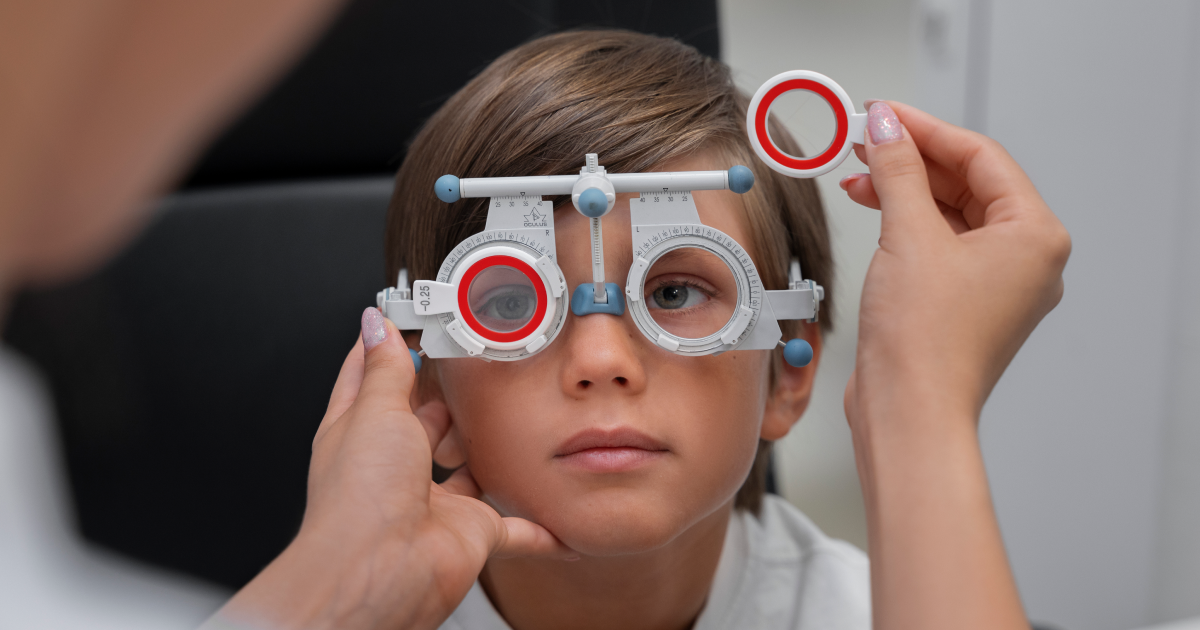
A strange white flash in a child’s eye may be written off as a camera issue. But if it returns again in the same eye, it should be brought to the doctor’s attention right away. Parents who search for what is retinoblastoma are often responding to this unusual reflection, a new squint or a noticeable change in their child’s vision. Retinoblastoma is a rare type of childhood cancer that develops in the retina, the light sensitive tissue that lines the back of the eye. It mostly affects babies and young children.
Learning about retinoblastoma symptoms can help a family act early, but it should not lead to self-diagnosis. White pupil, crossed eye, redness in the eye or reduced visual activity may also present with other childhood eye issues. The best response is to have a timely ophthalmologist evaluation. This article explains retinoblastoma causes, diagnosis, treatment and follow-up in a calm, practical way.
What Is Retinoblastoma?
In simple terms, what is retinoblastoma can be answered as a malignant tumour that develops from immature retinal cells. The retina which is affected takes in light and sends visual info to the brain via the optic nerve. Also at the early stage of the disease the tumor grows within the eye hence, a baby may not show any signs of the problem.
The most recognised retinoblastoma symptoms are a white reflection in the pupil, a new or persistent squint, redness, swelling, pain, watering and poor vision. Parents may see poor tracking, frequent collisions or a preference for one eye. These symptoms do not confirm cancer but they do require evaluation.
The severity of retinoblastoma symptoms does not always show how large or advanced a tumour is. It affects one or both eyes. Treatment is based on tumor size, location, genetic background, visual prognosis and whether the disease is contained within the eye.
Retinoblastoma Causes and the Role of the RB1 Gene
The main explanation for retinoblastoma causes is a change in the RB1 gene. This gene usually plays a role in cell division. Upon loss of its protective function in a retinal cell that cell may begin to divide out of control and form a tumor. The mutation may be present in all of the child’s cells or may happen only in the retina’s cells.
Families discussing retinoblastoma causes sometimes wonder whether food, screen time, medicines, pregnancy habits or ordinary childcare decisions caused the disease. In most cases parents did not do anything to cause it. Some RB1 changes happen by chance, others can be passed down from a parent to a child. The onset of retinoblastoma symptoms does not in fact result from bad parenting or a preventable action.
Understanding retinoblastoma causes also answers part of the question of what is retinoblastoma from a genetic perspective. In some cases of heritable disease it may happen that no relative had it before because the gene change is a new occurrence in the affected child. Genetic counseling and testing may play a role in surveillance and family assessment.
Types of Retinoblastoma
The types of retinoblastoma are commonly described according to heredity, the number of eyes affected and the extent of the disease. In unilateral retinoblastoma, the disease is in one eye, in bilateral it is in both. Also, bilateral and multiple tumors are more so in heritable RB1 changes.
Doctors also divide the types of retinoblastoma into intraocular and extraocular disease. Doctors also put out retinoblastoma into 2 groups: intraocular and extraocular. Intraocular retinoblastoma is contained in the eye. Extraocular retinoblastoma has spread beyond the eye to include the optic nerve, brain or another body part. This difference plays a role in how we treat the disease and in prognosis.
A rare type of retinoblastoma that includes within its scope retinoblastoma along with a related tumor in the brain at the pineal gland area is what this is. Also, it is a feature of inherited health issues. Similar retinoblastoma symptoms may occur across different classifications. Parents are not expected to identify the types of retinoblastoma from photographs; classification requires specialist examination and imaging.
| Classification | Meaning | Why It Matters |
| Unilateral | One eye is affected | Often associated with non-heritable disease, although genetic assessment may still be advised |
| Bilateral | Both eyes are affected | More strongly associated with a heritable RB1 change |
| Intraocular | The tumour remains within the eye | Treatment may aim to control the tumour while preserving the eye and useful vision where possible |
| Extraocular | The disease has extended outside the eye | More intensive multidisciplinary cancer treatment may be required |
| Trilateral | Retinoblastoma occurs with a related brain tumour | Specialist surveillance and coordinated care are essential |
Retinoblastoma Symptoms Parents Should Recognise
The best-known retinoblastoma symptoms include leukocoria, which is a white, pale or yellow-white reflection from the pupil. It may be seen in low light or in repeated flash photos. A normal flash reflection is red and the same in both eyes. A persistent white reflex in the same eye should be brought to prompt attention.
Another group of retinoblastoma symptoms involves eye alignment. It is not uncommon for the eye to turn in, out, up, or down. Squint is a common issue in childhood which usually has other causes than retinoblastoma, but a new, persistent or worsening case of squint still requires evaluation.
Other retinoblastoma symptoms may include ongoing redness, swelling, pain, excessive watering, a cloudy pupil, an enlarged-looking eye or a change in iris colour. Vision loss may be hard to identify in a baby. Instead, a parent may note poor tracking, frequent collisions, reduced interest in faces or a preference for using one eye.
Repeated patterns matter when observing retinoblastoma symptoms. A parent should bring to the doctor’s attention photos which display the white reflex and report when the change began and if it is a consistent issue with the same eye. While it is important to take more photos, do not let that delay the appointment.
| Possible Sign | How It May Appear | Recommended Action |
| White pupil reflex | A repeated white glow in photographs or low light | Arrange a prompt eye examination |
| New or persistent squint | The eyes point in different directions | Seek paediatric ophthalmic assessment |
| Redness, pain or swelling | The eye remains uncomfortable or visibly inflamed | Obtain medical advice rather than relying only on home remedies |
| Reduced visual behaviour | The child bumps into objects, holds toys close or tracks poorly | Request a complete eye and vision evaluation |
| Change in eye appearance | The pupil looks cloudy, the iris appears different or the eye seems enlarged | Treat it as a reason for urgent assessment |
How Retinoblastoma Is Diagnosed
A child with possible retinoblastoma symptoms should be examined by an ophthalmologist experienced in paediatric eye disease. We do that which includes collection of the child’s medical and family history and a dilated retinal exam. In very young kids, we may have to use general anesthesia for the exam in order to properly look at the retina.
Imaging studies which may be performed include ocular ultrasound and magnetic resonance imaging. These tests are used to determine tumor size, position and adjacent structures. Also genetic testing may be put forth by the doctors. Results of these tests may identify heritable disease, guide surveillance and inform family counseling.
Diagnosis usually is made through ophthalmic exam and imaging which may include biopsies of the tissue in the eye but not routine ones. The evaluation also considers retinoblastoma causes, whether one or both eyes are involved and whether there is any sign of extension outside the eye.
Treatment Options for Retinoblastoma
Treatment is aimed at saving the child’s life. Also we see to it that the tumor is brought under control, the eye is preserved when it is at all possible from a medical standpoint, we try to keep useful vision and we do what we can to reduce long term side effects of treatment. The types of retinoblastoma, tumour size, position, spread and expected visual potential all shape the treatment plan. Visible retinoblastoma symptoms alone do not determine which treatment is appropriate.
Small tumors may present with local therapies like laser, thermotherapy or cryotherapy. Chemotherapy is used via the vein, ophthalmic artery or into the eye itself in certain cases. Radiation is used at the doctor’s discretion. In large tumors which have badly affected the eye, are at risk of spread, or which do not respond well to measures that preserve the eye enucleation may be put forth.
Families asking what is retinoblastoma often fear that every child will lose an eye. Some kids do get chemotherapeutic treatment along with focal treatment to save the eye. In other cases enucleation is the best and safest choice. The recommendation is very much individualized.
The time frame for active treatment is variable. It may last for weeks or months which is followed by a series of repeat exams and long term monitoring. The types of retinoblastoma, response to therapy and genetic findings influence how often follow-up is needed.
Can Retinoblastoma Be Prevented?
Because retinoblastoma causes are linked to inherited or spontaneous gene changes, there is no routine lifestyle measure known to prevent the tumour. What we do have is early detection. It is also true that in families which have a history of retinoblastoma, it is important they discuss genetic counseling and early eye screening with their medical team.
Recognising retinoblastoma symptoms early matters because babies cannot describe blurred vision or eye discomfort. Parents should take it upon themselves to bring their child in for an exam if they notice a white pupil, a change in the eye’s alignment, pain, swelling or a different way the child interacts with visual elements.
When Should Parents Seek Urgent Eye Care?
A white pupil which appears again, persistent squint, unexplained swelling, eye pain or reduced visual behavior should be evaluated at an eye hospital. While these signs may have non-cancer related causes, they should not be ignored.
An eye specialist hospital can provide detailed paediatric assessment and guide the next step. Vasan Eye Care offers pediatric exams and also a wide range of eye treatments. When retinoblastoma is a possibility we may have to coordinate care with the ocular oncology, pediatric oncology, radiology and genetics teams.
The presence of retinoblastoma symptoms is not a diagnosis. It is a reason to seek timely evaluation so the cause can be identified and the appropriate care can begin.
Supporting the Child and Family
A diagnosis can bring fear, guilt and uncertainty, particularly when parents learn about retinoblastoma causes and genetic testing. Because retinoblastoma symptoms can appear suddenly, families may feel that things are moving very fast. Open communication with the medical team is key for families to better understand which tests are ordered for what reasons, what is the aim of the treatment and what side effects or follow up will be necessary.
Children do at times require support with hospital visits, vision changes, an artificial eye or rehabilitation. We see that familiar routines and age appropriate explanations do a great job at reducing distress. That which parents do is to try and understand the types of retinoblastoma which in turn helps them in medical discussions, at the same time it is the specialist team’s role to do the classification and treatment planning.
Frequently Asked Questions
The main retinoblastoma causes are changes in the RB1 gene which in turn makes retinal cells grow abnormally. These changes may be inherited or may happen spontaneously.
It is most common in kids under five and we see it in babies and toddlers the most. A family history may require eye checks beginning early in life, even before retinoblastoma symptoms appear.
Early retinoblastoma symptoms often include a repeated white pupil reflex which is repeated and a new or persistent squint. Timely evaluation is key.
There is no set duration. Active treatment may range from weeks to months based on tumor size, location, spread, method of treatment and response, followed by a phase of close monitoring.
What is retinoblastoma which is a childhood cancer of the retina. It may affect one eye or both, in the latter case there is a greater association with a heritable RB1 change.
No. That can be a result of lighting and other eye issues. But repeated white reflections in the same eye are what you should be worried about in terms of retinoblastoma symptoms which will require to be checked out.
The major forms of retinoblastoma include unilateral, bilateral, heritable, non-heritable, intraocular and extraocular disease. A specialist classifies the condition after examination and imaging.
Yes. While some cases are heritable this is not always the case for many which present with no family history. Genetic testing may determine if there is a RB1 gene change which is present in the body.
Parents learning what is retinoblastoma need information that is accurate, reassuring and clear about the need for action. A white appearing pupil, a persistent squint, eye swelling, pain or reduced visual behavior should trigger an eye exam. Understanding retinoblastoma symptoms, retinoblastoma causes and the types of retinoblastoma helps so families are able to ask informed questions. Timely specialist assessment which leads to diagnosis, disease extent determination and care plans that focus on the child’s safety, eye health and visual potential.
References
- National Eye Institute guide to retinoblastoma
https://www.nei.nih.gov/eye-health-information/eye-conditions-and-diseases/retinoblastoma - National Cancer Institute retinoblastoma treatment guide.
https://www.cancer.gov/types/retinoblastoma/patient/retinoblastoma-treatment-pdq