
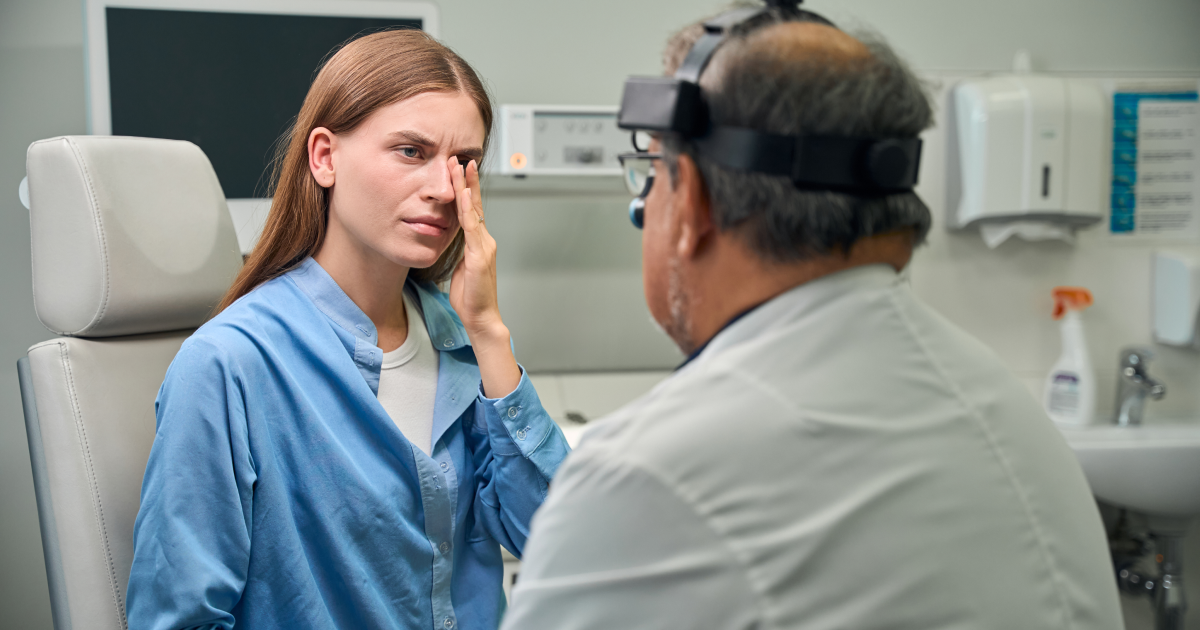
The thyroid produces hormones which in turn affect energy, heart rate, body temp, digestion, muscles, and mood. Also when thyroid activity goes either over the top or under the weather the body notes it. In some people auto immune thyroid disease also goes after the tissue around the eyes which results in what is known as TED.
Patients often search for high thyroid symptoms after noticing weight loss, sweating, tremors, palpitations, anxiety, or poor sleep. As for eye discomfort, eyelid swelling, a staring look, or double vision which may present even when on thyroid treatment those may require a separate assessment by an ophthalmologist.
How Are Thyroid Disorders Connected to Eye Health?
Thyroid eye disease mostly presents in patients with Graves’ disease which is a type of autoimmunity that also includes overactive thyroid as a common feature. In that process the immune system may go after the muscles, fat, and connective tissues in the eye area. That may result in retraction of the eyelids, proptosis of the eyes, impairment of eye movement, and exposure of the eye surface.
The American Thyroid Association explains that TED is most common in people with Graves’ hyperthyroidism, but it can occasionally occur when thyroid hormone levels are normal or low. Therefore, high thyroid symptoms alone cannot confirm or exclude eye involvement.
What Is Thyroid Eye Disease?
Thyroid eye disease which also goes by the names of Graves’ orbitopathy or Graves’ ophthalmopathy is an autoimmune inflammatory disorder that affects the structures around the eyes. It may cause issues with lid position, blink rate, tear film stability, eye movement, appearance and in rare severe cases the optic nerve.
TED usually goes through a dynamic phase in which inflammation and symptoms may fluctuate, then a quiet phase which is characterized by reduced inflammation of which some structure may be left behind. Disease activity, how severe it is, how long it lasts, and how it affects day to day life determines which eye treatments to prescript.
Common High Thyroid Symptoms and Eye-Related Changes
Typical high thyroid symptoms include unexplained weight loss, sensitivity to heat, drenching sweats, rapid and irregular heart beat, hand tremors, nervousness, irritability, more frequent bowel movements, muscle weakness, fatigue, changes in menstruation, and disrupted sleep. Also neck swelling may present when the thyroid gland is enlarged.
The signs and symptoms of thyroid eye disease include complaints of grittiness or dryness in the eyes, redness, watering, light sensitivity, pain or pressure behind the eyes, also reports of swollen or retracted eyelids, difficulty in fully closing the eyes, protruding eyes, blurred vision, and double vision. It is common for both eyes to be affected although sometimes one may appear more affected than the other.
| What the patient notices | More suggestive of thyroid hormone excess | More suggestive of thyroid eye disease |
| General body changes | Weight loss, sweating, tremors and palpitations | Usually absent unless thyroid dysfunction is also present |
| Eye discomfort | Not a defining feature | Dryness, grittiness, redness, watering and light sensitivity |
| Physical appearance | Possible swelling in the neck | Eyelid retraction, puffiness, staring appearance or bulging |
| Vision | Usually not directly affected | Blurred vision, double vision or colour changes in severe disease |
| Eye movement | Usually normal | Pain or restriction while looking in different directions |
What Causes Thyroid Eye Disease?
TED results from abnormal immune response and is not a result of high thyroid hormone levels. Immune driven inflammation is causing the growth of the muscles and also the fat in the eye socket. As the space becomes less available the eye may protrude out and normal movement may be affected. While we can control thyroid hormone production that is a primary issue, the eye condition may still need separate attention and treatment. In other words, putting the overactive thyroid in check does not always see an immediate resolution to eye inflammation.
Who Is at Greater Risk?
Smoking is a major changeable risk element in the development and progression of thyroid eye disease. Also avoid second hand smoke. Unstable thyroid levels, present eye involvement, and some thyroid treatment choices may raise issue which should be gone over with the endocrinologist.
People that identify high thyroid symptoms should have appropriate thyroid testing done instead of going at it alone with thyroid medicines, iodine or selenium supplements, or eye drops. TED may also present before a thyroid disorder is diagnosed which is why unexplained eye changes should still be looked at by a doctor.
Warning Signs That Need Urgent Eye Care
In most cases of TED that is not so serious in terms of sight. However color appears washed out, loss of vision, severe pain in the eye, inability to close the eye lids, rapid increase in protrusion of the eye, corneal clouding, or persistent double vision which does not go away these require immediate evaluation at an eye specialist hospital.
These may be signs of serious corneal exposure or pressure on the optic nerve. Do not manage these issues with home remedies, cosmetic solutions, or redness relieving eye drops. A visit to the eye hospital is advised which may determine that emergency medical or surgical care is required.
How Is Thyroid Eye Disease Diagnosed?
Diagnosis starts with a comprehensive health history. The ophthalmologist may ask what time the eye changes began, if they have been getting worse, if there is pain or double vision, if the patient is a smoker, and if Grav’s disease or some other thyroid issue has been diagnosed. Also important are current medications and recent results of thyroid tests. The eye exam may include evaluation of visual acuity, color vision, pupil response, eye pressure, health of the cornea, lid closure, eye prominence, range of eye movement, double vision and the appearance of the optic nerve.
Blood work may include thyroid stimulating hormone which is also known as TSH, free T4, free T3, and related thyroid antibodies when it is appropriate clinical case. Imaging of the eye orbits may be ordered when we are in the early diagnosis stages, or if the issue is moderate to serious in degree, there is what looks like optic nerve issues, or prior to having a surgical procedure.
Other autoimmune, neurological, muscular, or inflammatory diseases may present in a similar way to TED. Thus do not base diagnosis only on photos, eye appearance, or high thyroid symptoms. The American Thyroid Association and European Thyroid Association put forth that referral to a specialist ophthalmologist is supported when diagnosis is in question or disease is of moderate, severe, or sight threatening degree.
Treatment for Thyroid-Related Eye Problems
Treatment is based on if the disease is active or not and also what stage it is in from mild to severe or sight threatening. Safe control of the thyroid disorder by an endocrinologist is key because we must correct both high and low thyroid levels. Also thyroid treatment and TED treatment are related but not the same.
Treatment for Mild Thyroid Eye Disease
For slight to moderate active disease eye treatments may include preservative free lubricating drops, lubricating gel or ointment at night, sunglasses for wind and light sensitivity, and measures to protect the cornea when there is incomplete eyelid closure. Prism lenses or temporary coverage of one eye may help in selected cases of double vision. It is advised that patients do not start on steroid eye drops, oral steroids, or medicated redness relieving drops without first seeing an ophthalmologist.
Treatment for Moderate-to-Severe Active TED
Moderate to severe active disease may require systemic anti-inflammatory or immune modifying treatment. In some cases we use intravenous corticosteroids. Also other immune modifying medicines may be looked at according to disease activity, medical history, side effects, what is approved in our area, drug availability, cost, and also what the specialist recommends.
Teprotumumab is a targeted bio medicine which has approval for thyroid eye disease in the US. In other parts of the world it is different with regard to it’s availability and use. Also it may cause serious side effects which must be managed by very qualified specialists.
Surgery for Thyroid Eye Disease
Surgery is an option when there is threat to vision, cornea at risk, or when inactive disease causes persistent protrusion, double vision, or lid issues. As per the issue at hand procedures may include orbital decompression, eye muscle surgery, or lid surgery. Rehabilitative surgery is usually done after the inflammation has calmed down. An exception is made for when we must intervene urgently to protect the cornea or the optic nerve.
| Disease situation | Main treatment goal | Care that may be considered |
| Mild, active TED | Protect the eye surface and reduce discomfort | Lubricants, night-time gel, sunglasses, smoke avoidance and thyroid control |
| Moderate-to-severe active TED | Reduce inflammation and prevent progression | Specialist-supervised corticosteroids or immunomodulatory treatment |
| Sight-threatening TED | Protect the cornea and optic nerve | Urgent medical treatment and, when required, orbital surgery |
| Inactive, stable TED | Address remaining functional problems | Prism correction or staged decompression, muscle and eyelid procedures |
Eye Health Tips for Daily Management
Useful eye health tips include using artificial tears as prescribed, out of the habit of rub your eyes, wearing wrap-around sunglasses when outside, and in the low of dust, cigarette smoke, direct blow of fans, and air conditioning. Also it may be helpful for some patients to sleep with their head raised.
For people asking how to improve eye health, consistent medical care is more valuable than detox drinks, herbal remedies, or unproven supplements. Take your thyroid medicine as prescribed, quit smoking, eat a healthful diet, get enough sleep, and show up for your scheduled eye exams.
Iodine and selenium supplements are best taken as directed by a medical professional. What a person requires of these is based on diet, thyroid health, what other medications they may be on, and their general health. Large doses may be harmful and also interfere with thyroid management. Screen breaks are to ease digital eye strain which is very common, they do not remediate inflammation within the eye socket. Also prescription changes may improve refractive blur but will not fix all cases of double vision related to TED. These eye health tips support comfort but cannot replace disease-specific care.
Recovery and Follow-Up Care
During the course of active thyroid eye disease we see the patient in for regular follow up which allows us to compare vision, color perception, eye prominence, lid closure, inflammation, and eye movement. Patients should report in at the time of any noticeable changes as opposed to waiting for their next routine visit. As inflammation settles down we may see that which of the issues of dryness, eyelid retraction, eye prominence, or double vision has remained. At this stage we may discuss with the patient options of continued watchful waiting, use of prisms for correction, or surgical rehab which is based out of their visual needs and daily challenges.
Recovery differs from person to person. Treatment decisions should be based on eye function, discomfort, appearance concerns, daily activities, overall health, and disease stability rather than on a guaranteed recovery timeline.
Can Thyroid Eye Disease Be Prevented?
Not all cases can be prevented. Also it is true that by not smoking and away from second hand smoke, keeping thyroid levels in the advised range, going to regular reviews, and bringing to attention early any new eye symptoms may reduce what is preventable. It is before radioactive iodine treatment that patients who have existing eye disease or relevant risk factors should talk to their endocrinologist of which eye related effects to expect. Prevention medication may be used in some cases but that should be a very individualized decision.
Learning the signs and symptoms of thyroid eye disease is particularly important for people with Graves’ disease. We see early recognition as a chance to start protective care which also helps to identify which patients require specialist treatment. Regular eye health tips are useful, but prompt examination is the safest answer to how to improve eye health when symptoms are new, persistent, or worsening.
When Should You Consult an Eye Specialist?
If you have a thyroid disorder which presents with persistent dryness, redness, eyelid swelling, eye prominence, pain during eye movement, incomplete eyelid closure, blurred vision, or double vision, arrange for an ophthalmology consultation. Also get an exam done when high thyroid symptoms are present along with visible eye area changes.
Seek prompt care for reduced sight, altered color vision, visual field loss, severe corneal pain, or if your symptoms are getting much worse. An ophthalmologist may run tests to see if you require monitoring, imaging, medical eye treatments, or coordinated endocrinology care.
Conclusion
Thyroid issues are very much related to eye health which is true, at the same time having high thyroid symptoms and thyroid eye disease are different entities. Report any new eye changes even when you are under thyroid treatment. Early diagnosis, stable thyroid control, smoke avoidance, proper eye health tips and coordinated specialist care is what will protect your eye comfort and vision.
For personalised evaluation, consult a qualified ophthalmologist at Vasan Eye Care or visit a trusted eye hospital. A timely eye examination can clarify the cause of your symptoms and guide suitable eye treatments.
Frequently Asked Questions
Yes. Autoimmune thyroid disease which includes Graves’ disease can cause thyroid eye disease. It may lead to dryness, redness, puffy eyelids, protruding eyes, pain, or double vision. Eye symptoms also may present themselves even when thyroid hormone levels are normal or low.
There is no single breakfast food which will repair thyroid disease or TED. A well balanced diet which includes plenty of protein, veggies, fruits, and whole grains is what is best. Do not start on iodine or selenium supplements without first checking with your doctor as large doses may do harm.
Medication based on disease activity and severity. Lubricants may give some relief to mild cases of pain and redness, while specialist supervised IV corticosteroid therapy or other immune amending treatments may be tried out as the disease activity is moderate to severe in the individual after a careful review of their health issues and eyes.
Teprotumumab is that antibody we have which has been approved for TED in the U.S. It is a influx infusion and does have very important safety issues as well as side effects. Also its availability is not wide spread, and a specialist evaluation will be a must before trying it.
References
- https://www.nei.nih.gov/eye-health-information/eye-conditions-and-diseases/graves-eye-disease
- https://www.thyroid.org/thyroid-eye-disease/
- https://pmc.ncbi.nlm.nih.gov/articles/PMC9727317/
- https://www.nhs.uk/conditions/overactive-thyroid-hyperthyroidism/complications/
- https://www.accessdata.fda.gov/scripts/opdlisting/oopd/detailedIndex.cfm?cfgridkey=387812