
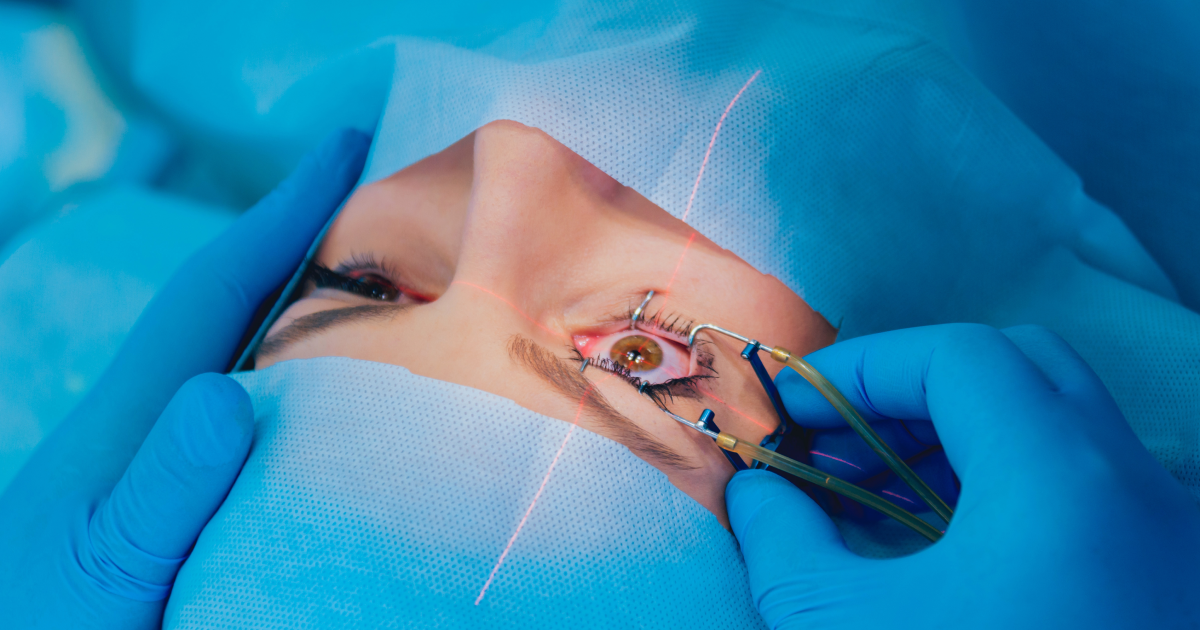
For people who depend on spectacles or contact lenses, vision-correction surgery can feel both exciting and uncertain. Femtosecond LASIK is an advanced form of lasik eye surgery in which one laser creates a corneal flap and another reshapes the cornea. It corrects myopia, hyperopia and astigmatism but results vary for each patient. A in depth eye exam is key. The decision includes evaluation of corneal health, stability of prescription, tear film health and setting realistic expectations.
What Is Femtosecond LASIK?
Patients often ask, what is femtosecond laser technology and how does it differ from conventional treatment? A femtosecond laser which delivers very short pulses of energy at a determined depth in the cornea is used. The pulses produce micro bubbles which in turn form a thin flap. The surgeon then raises this flap and uses an excimer laser to reshape the underlying corneal tissue.
In standard flap based LASIK a mechanical microkeratome is used to make the flap. In Femtosecond LASIK flap creation is done with the help of a laser which is why it is also known as all laser or bladeless LASIK.
Who May Be Considered for the Procedure?
The eye treatment is for adult patients with stable corrective wear and health cornea. It does not prevent the need for reading glasses as we age, cataract development or other eye conditions. Not for all. In pregnancy or while breast feeding, with unstable power, severe dry eye, active infection, thin corneas, keratoconus, uncontrolled auto immune disease, certain medications and very high unrealistic expectations you may not be a candidate. Also if you are involved in contact sports or occupations which have a high risk of eye injury discuss with us if a flap based procedure is right for you.
Contact lenses can alter corneal measurements temporarily, so follow the clinic’s instructions about when to stop wearing them.
Tests Before Femtosecond LASIK
An in depth assessment goes beyond the usual power check. The ophthalmologist will go over medical history, prescription stability, pupil size, tear film quality, corneal thickness and corneal shape. Corneal mapping is used to identify irregularities or conditions which in turn may increase postoperative risk.
| Preoperative assessment | Why it matters |
| Refraction and prescription history | Confirms the refractive error and whether the power is stable |
| Corneal thickness and mapping | Checks whether adequate healthy corneal tissue is available |
| Tear-film evaluation | Detects dry eye or eyelid problems needing treatment first |
| Pupil and eye-health examination | Supports planning and identifies other conditions affecting vision |
How the LASIK Surgery Procedure Works
Before the lasik surgery procedure, numbing drops are applied. A device which is gentle at the same time firm keeps the eyes open and the eye is aligned with the laser. For a short time a vacuum device may hold the eye in place as the femtosend laser makes the flaps. While the procedure is going on patients may see things a bit dimly, notice a pressure or a clicking sound but sharp pain is not a thing to report.
The surgeon makes a flap which in turn reveals the middle corneal layer. A computer guided excimer laser removes very small amounts of tissue as per the treatment plan which in turn changes how light hits the retina. The flap is then put back in its place and usually stays in position without the use of stitches. It is also that patients have someone with them to go home and should not drive right away after the procedure.
Potential Benefits of Femtosecond LASIK
Laser for flap creation which enables for precise flap dimensions. As a benefit we see quick initial visual improvement and reduced dependency on glasses or contacts. By reduced dependency we mean that you may not require them all the time. It is not to say that you will never use glasses. Maybe a small prescription will remain and at age you may require reading glasses.
Risks and Possible Side Effects
Like for any other procedure, Femtosecond LASIK has its limitations and issues. We see temporary dryness, fluctuating vision, glare, halos, starbursts, light sensitivity and night vision problems during the healing process. Also we see under correction, over correction or regression which may leave some degree of corrective wear.
Less common issues with the procedure include infection, inflammation under the flap, flap folds or displacement, epithelial ingrowth and corneal weakening. Also we see that vision quality may drop in some cases which may not be reflected in the letter chart results. Screening reduces avoidable risk but cannot remove all uncertainty. FDA reports that in refractive surgery there are no sure results and that each patient’s set of benefits and risks must be gone over.
Recovery After Femtosecond LASIK
Water at first is also very common along with a mild burning sensation, grittiness, light sensitivity and blurred vision. Vision does tend to improve early on for most, though in some cases fluctuation may still be present as the tear film and cornea stabilize.
| Recovery stage | What may be experienced | Recommended care |
| First day | Watering, irritation and hazy vision | Rest, use prescribed drops and avoid driving |
| First week | Improving clarity with possible dryness or glare | Do not rub the eyes; avoid dust and contaminated water |
| Following weeks | Gradual stabilisation of comfort and vision | Attend reviews and resume activities only as advised |
| Longer term | Vision may continue settling | Continue routine eye examinations |
Follow up visits we will check the position of the flap, healing, dryness and visual progress. We will prescribe the drops you should use exactly as directed along with personal advice on bathing, swimming, makeup and exercise. In the event of severe or increasing pain, sudden change in vision, redness, discharge, eye injury, or any other worsening symptoms you should get in touch with the surgeon immediately. MedlinePlus also says that you should report in for an urgent review if serious pain or other symptoms appear to be getting worse before your scheduled follow up.
How to Support a Safe Outcome
Choose out a ophthalmologist that does full corneal and ocular-surface testing, goes over options and explains what to expect. Share your health issues, medications and past eye work. Price shouldn’t be the only thing that counts. Lasik surgery cost may vary by technology, tests run, surgeon’s evaluation, eye hospital settings and post op care. Also ask what is included in the quoted price instead of choosing a treatment that seems cheap.
Frequently Asked Questions
Numbness is achieved in most cases, which means that acute pain is the exception during the procedure. As for temporary side effects, we may see pressure, a burning sensation, watering or a sanding in the eye. As a rule persistent or serious pain is not to be expected but report it right away.
For this treatment there is risk of dry eye, glare, halos, variable vision, not enough correction, too much correction, infection, inflammation and flap issues. Also rare is corneal weakening but it is very important to note. In depth evaluation helps us to determine which people may require a different treatment option.
No single success rate applies to all patients, prescriptions or laser systems. Outcomes are a result of screening, state of the cornea, treatment area, surgical planning and what we mean by “success”. The ophthalmologist should give you what is likely for you as an individual result which is not a guarantee.
Femtosecond LASIK is a two-laser vision-correction procedure. A femtosecond laser makes a thin corneal flap and an excimer laser is used to reshape the tissue beneath it. The flap is put back in place and heals under medical supervision.
Femtosecond LASIK may be a good choice for certain patients for convenient vision correction, but it is still an optional procedure which requires an informed decision. See a qualified ophthalmologist or go to a trusted eye center for a personal assessment of your suitability, options, recovery time and risks before you choose to have lasik eye surgery.
References
- https://www.fda.gov/medical-devices/lasik/what-lasik
- https://www.fda.gov/medical-devices/lasik/lasik-surgery-checklist
- https://www.fda.gov/medical-devices/lasik/what-are-risks-and-how-can-i-find-right-doctor-me
- https://www.nei.nih.gov/eye-health-information/eye-conditions-and-diseases/refractive-errors/surgery-refractive-errors
- https://medlineplus.gov/lasereyesurgery.html