
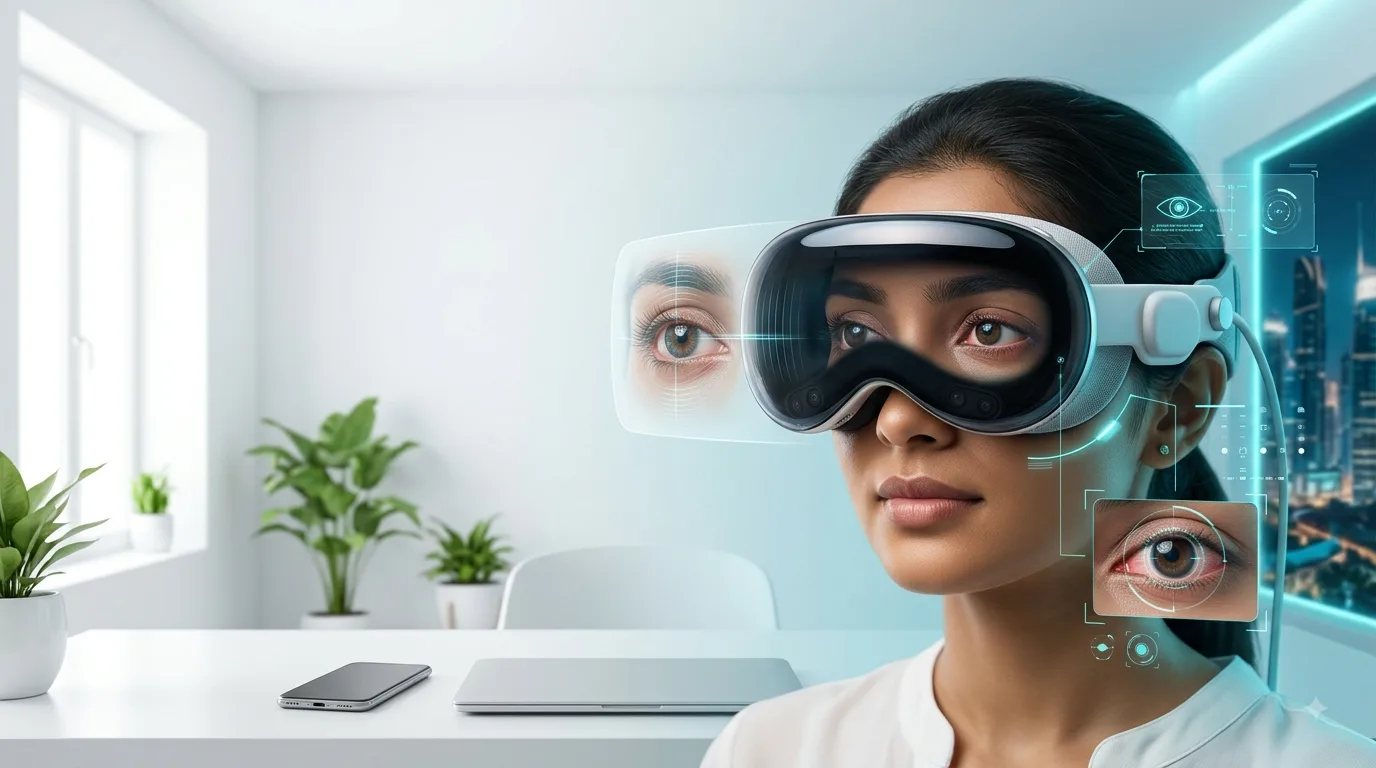
Artificial intelligence, virtual reality and augmented reality are integrating into our daily lives at a great rate. We have AI in our smartphones, in smart glasses, in VR headsets and we use AR for work, gaming, education, training and entertainment. As these techs grow in their ability to immerse us, many report issues of tired, dry or uncomfortable eyes which present itself after long term use.
For the most part those symptoms are a result of digital eye strain and the visual requirements of screens and head mounted displays which isn’t the same as permanent eye damage. But persistent discomfort should not be dismissed out of hand also when it includes repeated instances of blurred or double vision.
How Do AI, VR and AR Devices Affect the Eyes?
From the point of eye health an AI powered device does not cause a new type of eye disease. Many AI eye health concerns arise because AI tools encourage greater use of smart phones, computers, tablets or wearable displays.
Extended screen time as a factor in dryness, eye fatigue, headaches and temporary blurred vision. Also the National Eye Institute reports that this may be a result of people blinking less when they are into a screen. More information is available from the National Eye Institute.
VR and in turn AR devices present another layer of issue. A head mounted display may present what is in fact a 3D like experience when in fact the image is at a set non variable distance. Thus the eyes may have to adjust focus and alignment in ways they don’t in real life which is not the case in the physical world. Into the research we see reports of changes in the processes of accommodation and binocular vision as a result of use of these tech but also that which is put forth is mixed and at this point does not prove that regular use of VR is to blame for permanent visual damage.
| Device Type | Main Visual Demand | Possible Short-Term Complaint |
| AI-enabled phone or computer | Prolonged near focusing and screen attention | Dryness, tired eyes, headache |
| VR headset | Continuous binocular coordination in an immersive 3D environment | Eye fatigue, temporary blur, dizziness |
| AR or smart glasses | Switching attention between real and virtual objects | Focusing discomfort, visual fatigue |
| Gaming or mixed-reality device | Rapid movement, contrast and sustained concentration | Headache, nausea or tired eyes |
What Is Digital Eye Strain?
Digital eye strain is what we term the set of visual and ocular issues which present itself at the end of extended use of digital devices like computers, smart phones and other electronic displays. Symptoms may consist of dryness of the eyes, burning sensation, tearing, itchy eyes, blurred vision, headaches and difficulty in maintaining focus. Also some people report neck, shoulder and back pain which is a result of the same poor postures adopted while using devices for long periods.
A report in PubMed reviews digital eye strain which includes its association with long term device use, reduced blinking, visual demands and ergonomics. .
These symptoms generally reflect visual fatigue rather than proof that a screen has permanently damaged the eye.
Why Can VR Cause More Noticeable Eye Problems?
Some VR eye problems occur because virtual environments place unusual demands on accommodation and vergence. Accommodation is the eye’s focus response, and vergence is how both eyes work together to produce a single image. In the real world these systems play in sync. In a VR set up the present image may represent many distances even as the physical screen remains at a near constant distance.
This issue of vergence and accommodation not working in tandem has in fact been tied to reports of visual fatigue and discomfort in the research of immersive displays.
People which have uncorrected refractive errors, dry eyes, or issues with binocular vision will notice VR eye problems first. Also individual responses to that are quite variable, for example 2 people which are using the same device for the same time may have very different degrees of discomfort.
Can Augmented Reality Cause Eye Fatigue?
AR is in a different mold as it layers digital info on top of the real environment instead of fully replacing it. Still users’ attention goes back and forth between real and virtual elements. In terms of research we have looked at eye fatigue which comes out of heavy AR use which includes short term changes in accommodation and convergence. You should know that breaks should be taken during extended use, though we still need more research to report on the long term visual results of the latest AR technologies.
The issue of long term visual results from the latest AR technologies is a key element in the larger AI eye health discussion as we see more of these smart glasses and AI assisted wearables hit the market
Symptoms You Should Pay Attention To
Mild digital eye strain may be relieved by rest. Persistent or which is a worsening of symptoms should be brought to a doctor’s attention.
| Symptom | What You Can Do Initially | When Evaluation Is Sensible |
| Dry, burning or gritty eyes | Blink consciously and take screen breaks | Symptoms continue despite regular breaks |
| Temporary blurred vision | Stop the device and focus at a distance | Blur does not clear after resting |
| Headache around the eyes | Reduce continuous viewing time | Headaches are frequent or worsening |
| Double vision | Stop VR or AR use | Seek professional assessment if it persists or recurs |
| Dizziness or nausea during VR | Remove the headset and rest | Symptoms are severe or repeatedly triggered |
Sudden loss of vision, severe eye pain, new persistent double vision, flashes of light or a sudden increase in floaters is not to be treated as a case of routine digital eye strain. These symptoms require prompt medical attention.
How Is Device-Related Eye Discomfort Diagnosed?
There is no single test that diagnoses for all types of digital eye strain. An eye care professional may first ask how long you use screens, if symptoms present it self mostly after VR or AR sessions, and also if you are a glasses or contact lens wearer.
An evaluation may include visual acuity, refraction and eye surface assessment. When symptoms point to a focusing or eye coordination issue we also look at accommodation and binocular vision. This is particularly useful when suspected VR eye problems continue even after the headset has been removed.
Managing Digital Eye Strain from AI, VR and AR Devices
The simplest approach is to reduce uninterrupted viewing. Regularly looking away from the display gives the focusing system a change in visual demand. Blinking more consciously can also help when intensive screen concentration contributes to dryness. The National Eye Institute promotes the 20-20-20 approach: every 20 minutes, look approximately 20 feet away for about 20 seconds.
Screen dimness is a must over brightness which in turn may cause eye strain. Also text size and distance of view point should be just right for easy readable content. As for VR headsets they should be put on as the manufacturer says, not loose and definitely not with wrong interpupillary distance.
If your eyes are still dry, an ophthalmologist can determine that lubricating drops or other eye treatments are right for you. Also avoid using medicated eye drops repeatedly without professional advice.
Does Digital Eye Strain Cause Permanent Vision Loss?
Current research doesn’t support that digital eye strain is the same as permanent vision loss. The symptoms like fatigue, dryness and temporary blur are a result of the visual demand of extended device use. As for the long term effects of immersive VR we are still in the early stages of research which also report a large degree of limitations and variable results between present studies.
This distinction is particularly important when discussing AI eye health. The technology progresses to include more AI in what we do daily how much and how we interact with digital displays may change but also that the report of discomfort post use of an AI enabled device does not in and of itself prove that AI has damaged the eyes.
When Should You Consult an Eye Specialist?
Consider consulting an eye specialist when discomfort continues despite taking regular breaks, when you notice your vision is blurred often, when you are getting recurrent headaches, or when you have repeated episodes of double vision or report of very serious focusing issues.
Also it is a good idea to get an exam if your symptoms suddenly appear to be worse without you having increased your screen time. An underlying refractive error, dry eye condition or binocular vision issue may be the cause of what you’re experiencing which isn’t digital eye strain at all.
Protecting Your Vision in an Increasingly Digital World
AI, VR and AR will play a larger role in the workplace, in education and in entertainment. That said, they don’t have to be avoided. What is important is that we develop good device habits, which include comfortable viewing settings, frequent breaks from screen time and in time seeking out professional assessment.
AI, VR and AR will play a larger role in the workplace, in education and in entertainment. That said, they don’t have to be avoided. What is important is that we develop good device habits, which include comfortable viewing settings, frequent breaks from screen time and in time seeking out professional assessment.
Frequently Asked Questions
Current study does not support that people who use VR regularly cause permanent eye damage. Also VR is known to cause temporary visual fatigue, focusing discomfort, blurred vision, headache or dizziness in some users. Persistent symptoms should be evaluated by an eye specialist.
Commonly reported VR eye problems include tired eyes, temporary blurred vision, headache, difficulty focusing and visual discomfort. Also some users have dizziness or nausea in very immersive environments. Also what brings out symptoms is a which of the individual’s tolerance and the VR system’s features.
AI in large isn’t the primary cause. Digital eye strain which may present as a result of AI enabled phones, computers or wearables which in turn cause extended screen time, intense near work or reduced blinking. We may develop healthy screen habits and take regular breaks which in turn will help decrease symptoms.
For mild cases of digital eye strain recovery will come after the visual task is stopped and eyes are given sufficient rest. Recovery time varies from person to person. In case symptoms persist, keep returning, or interfere in daily vision, it’s recommended that you see an eye doctor.
Children should use immersive technologies as little as possible and in accordance with age and safety guidelines which manufacturers provide. Also due to that we don’t have much research based evidence for long term effects of immersive viewing on still developing eyes, we ask that you promote break times for your kids and bring in professional eye care if they report recurring issues like headaches, blur or double vision.
Reference Links
- National Eye Institute – Dry Eye
https://www.nei.nih.gov/eye-health-information/eye-conditions-and-diseases/dry-eye - National Eye Institute – Causes of Dry Eye
https://www.nei.nih.gov/eye-health-information/eye-conditions-and-diseases/dry-eye/causes-dry-eye - National Library of Medicine / PubMed – Digital Eye Strain: A Comprehensive Review
https://pubmed.ncbi.nlm.nih.gov/35809192/ - National Library of Medicine / PubMed – Impact of Immersive Virtual Reality on Binocular and Accommodative Function
https://pubmed.ncbi.nlm.nih.gov/38900011/ - National Library of Medicine / PubMed – Effect of Augmented Reality Technology on Human Eye and Psychomotor Fatigue
https://pubmed.ncbi.nlm.nih.gov/42134792/