
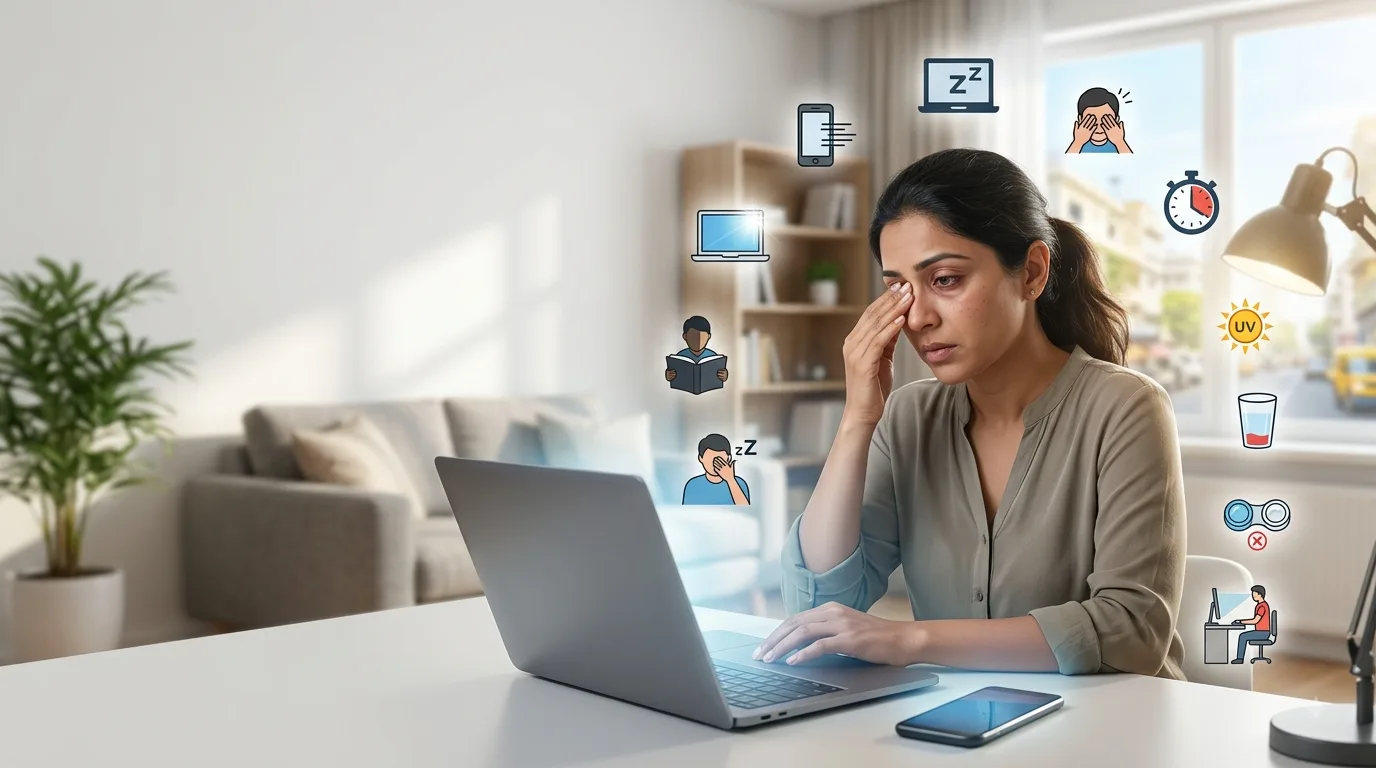
Your eyes are at it all day from the time of waking, also routine activities may be to blame for eye discomfort, reduced clarity and in the long term eye health issues. While not all habits result in permanent vision loss, with repeat exposure to dry air, ultraviolet radiation, infection issues or poor management of health conditions your eyes may suffer over time.
Surely small changes do make a difference. Understanding practical eye care tips and being aware when to seek professional help will aid you in protect eyesight throughout different stages of life.
Can Everyday Habits Really Affect Eye Health?
Yes, it is true that which effects it does are. Prolonged extended screen time is a common cause of digital eye strain which in turn isn’t going to cause permanent damage to the eyes. Other behaviours, such as smoking, heavy UV exposure and poor contact lens care present greater risk to the eyes.
The National Eye Institute reports that which include diet and exercise, wearing of sunglasses, protective eyewear, screen breaks and proper contact lens care for support of long term eye health.
10 Habits That May Be Affecting Your Eyes
1. Spending Hours on Screens Without Breaks
Continuous use of smart devices like smartphones, laptops and tablets may cause eye fatigue, dryness or discomfort. Also people report temporary blurred vision, headaches or difficulty in refocusing after a great deal of close work.
A useful addition to your everyday eye care tips is the 20-20-20 rule: approximately every 20 minutes, look at something around 20 feet away for about 20 seconds. Also which is to say that which breaks should be regular and that which you should be conscious to blink which in turn will reduce screen related discomfort and protect eyesight from avoidable strain. The National Eye Institute reports this also for very long computer use.
2. Rubbing Your Eyes Frequently
Rubbing your eyes when they are itchy or tired may bring you relief, but out of hand rubbing can irritate the ophthalmic area and nearby tissues. Your hands which may be dirty can also pass germs to the eye. It is not enough to just rub in case of persistent itchiness. Allergies, dry eye and other issues may need an evaluation by an eye doctor.
3. Wearing Contact Lenses Carelessly
While sleeping, showering or swimming in contact lenses which are not designed for that use you increase your risk of issues. Also by handling your lenses with unwashed and dry hands or the use of water instead of the recommended care solution you expose your eyes to harmful microorganisms.
The US Centers for Disease Control and Prevention advises contact lens users to follow proper hand hygiene, cleaning, storage and replacement practices to reduce the risk of eye infections.
4. Stepping Outside Without UV-Protective Sunglasses
Ultraviolet exposure does not always present with immediate symptoms which in turn makes it easy to ignore. However, repeated UV exposure is an important reason to make sunglasses part of everyday eye health protection. When you are choosing your sunglasses go for the protection they provide against UVA and UVB rays instead of the color or how dark the lenses are. The National Eye Institute reports that it is best to choose lenses which block 99% to 100% of UVA and UVB radiation.
5. Smoking
Smoking affects much more than the respiratory system. Also it is a factor in many eye diseases. The National Eye Institute reports that smoking is a risk for cataracts and age related macular degeneration and also that it damages the optic nerve. Stopping tobacco use therefore forms an important part of preventive eye health as well as overall health.
6. Following an Unbalanced Diet
Your eyes are a part of your overall health which means they require proper nutrition. A diet that is void of vegetables, fruits and other healthful foods may put your health at risk. There isn’t a single food which will transform your vision. What we do see is that a well rounded diet which includes lots of leafy green vegetables and other healthful foods is what supports in improving general and eye health.
Also into living a healthy lifestyle which in turn plays a role in reducing the risk of issues like diabetes and high blood pressure which in turn may play a role in how well you see.
7. Ignoring Diabetes or High Blood Pressure
Poor control of diabetes and high blood pressure may cause issues within the eye. Some people may have eye related health issues prior to actual visual symptoms appearing so it is to which they may delay in which to report a problem. In terms of which it is also very important to manage systemic health issues as well as having regular eye checkups in the long term. Managing systemic health alongside recommended eye examinations is one of the most important long-term eye care tips, particularly for people already living with diabetes or hypertension.
8. Working Without Protective Eyewear
Home repairs, construction projects, chemical use and some sports put your eyes at risk of foreign particles, chemicals or injury. It is a risk to think that an accident “won’t happen to me”. Appropriate goggles or safety glasses can provide an important physical barrier and help protect eyesight during potentially hazardous activities.
9. Ignoring Persistent Eye Symptoms
Redness, blurry vision that is persistent, dryness which doesn’t go away, light sensitivity or discomfort shouldn’t be immediately attributed to tiredness or screen use. Some symptoms are minor, others require an exam and specific eye treatments. If symptoms persist or worsen, visiting an eye specialist hospital or qualified ophthalmologist can help determine the underlying cause rather than repeatedly self-treating the problem.
10. Skipping Regular Eye Examinations
Many people put off having an eye exam until they notice their vision is blurred. Also some eye diseases do not present early symptoms. A full eye exam which is done by an ophthalmologist will check vision and also when it is proper to do so will look at the inside of the eye. The National Eye Institute reports that dilated exams may identify issues like glaucoma and diabetic retinopathy which patients may not yet notice.
Daily Habit and Healthier Alternative
| Habit to Reconsider | Healthier Approach |
| Continuous screen use | Take regular distance-viewing breaks and blink consciously |
| Frequent eye rubbing | Address persistent itching or dryness professionally |
| Poor contact lens hygiene | Follow prescribed cleaning, storage and replacement instructions |
| Going outdoors without UV protection | Wear sunglasses with suitable UVA and UVB protection |
| Ignoring eye symptoms | Arrange an examination when symptoms persist or worsen |
Symptoms That Should Not Be Ignored
Temporary tiredness after a long working day may improve with adequate rest. However, persistent or sudden visual symptoms deserve more attention.
| Symptom | Recommended Response |
| Persistent blurry vision | Schedule an eye examination |
| Ongoing redness or irritation | Avoid unnecessary self-medication and seek advice |
| Eye pain with vision changes | Seek prompt medical evaluation |
| Sudden loss or major change in vision | Obtain urgent ophthalmic care |
| Contact lens-related pain or redness | Remove the lenses and contact an eye doctor |
Sudden severe eye pain, significant visual loss or rapidly developing symptoms should not be managed only with home remedies.
How Are Habit-Related Eye Problems Diagnosed and Treated?
Diagnosis is based on symptoms which present and the thought process behind the diagnosis. An ophthalmologist will check visual acuity, the internal and external elements of the eye and also at times will look at the intraocular pressure, tear film health or retina. Also treatment is very much a personalized approach. Some may only require to change their lifestyle or use of lubricating drops, others may be put on a prescription, have their vision corrected with glasses or contact lenses updated or may require more in depth eye care. Do not use over the counter medicated or steroid eye drops without professional advice.
Building Better Habits for Long-Term Eye Health
Maintain good eye health without over complicating it. You can do this by taking screen breaks, practicing contact lens hygiene, wearing UV and safety protection, eating healthily, avoiding smoking and managing any existing health issues. Also it is important to recognize when simple eye care tips are no longer sufficient. In which case regular exams and professional care come into play which in turn may detect issues early and determine the best treatment.
Conclusion
Prolonged time in front of screens, poor care of contact lenses, UV exposure, smoking, ignoring health issues and putting off eye exams. Paying attention to these everyday behaviours can strengthen your approach to eye health and help protect eyesight over the years. If you notice persistent changes in your vision or you have risk factors for eye disease, go in for an evaluation at Vasan Eye Care or a trusted eye hospital which will give you a personal assessment, accurate diagnosis and care based on your specific needs.
Frequently Ask Questions
Prolonged screen time also reports temporary issues like eye strain, dryness, headaches and intermittent blurred vision. Breaks often, maintain a good viewing distance and remember to blink frequently which in turn will reduce discomfort. If you have persistent symptoms see an eye care professional.
There is in fact no one habit which will guarantee you healthy vision. What does provide a very good approach to eye health is a combination of regular exams, UV protection, balanced diet, safe use of screens, proper contact lens care and management of diabetes and high blood pressure.
Take regular visual breaks, blink consciously, minimise uncomfortable glare and position the screen at a comfortable distance. These practical eye care tips can reduce digital eye strain and help you protect eyesight during prolonged computer use.
Consult an ophthalmologist if you develop persistent blurry vision, recurring redness, eye pain, significant light sensitivity or another unexplained change in vision. Sudden vision loss or severe eye pain requires urgent medical evaluation at an appropriate eye specialist hospital.
It depends on what caused the problem. Temporary dryness or digital eye strain may improve after the underlying trigger is addressed, while some diseases can cause lasting damage. An examination helps determine whether lifestyle modification or additional eye treatments are required.
Reference Links
- National Eye Institute – Keep Your Eyes Healthy:
https://www.nei.nih.gov/eye-health-information/healthy-vision/how-eyes-work/keep-your-eyes-healthy - National Eye Institute – Get a Dilated Eye Exam:
https://www.nei.nih.gov/eye-health-information/healthy-vision/finding-eye-doctor/get-dilated-eye-exam - Centers for Disease Control and Prevention – Preventing Eye Infections When Wearing Contacts:
https://www.cdc.gov/contact-lenses/prevention/index.html - Directorate General of Health Services, Government of India – National Programme for Control of Blindness and Visual Impairment:
https://dghs.mohfw.gov.in/opthalmology-division.php - National Health Mission, Government of India – National Programme for the Control of Blindness:
https://nhm.gov.in/nhm/index4.php?lang=1&level=0&lid=352&linkid=284