
August
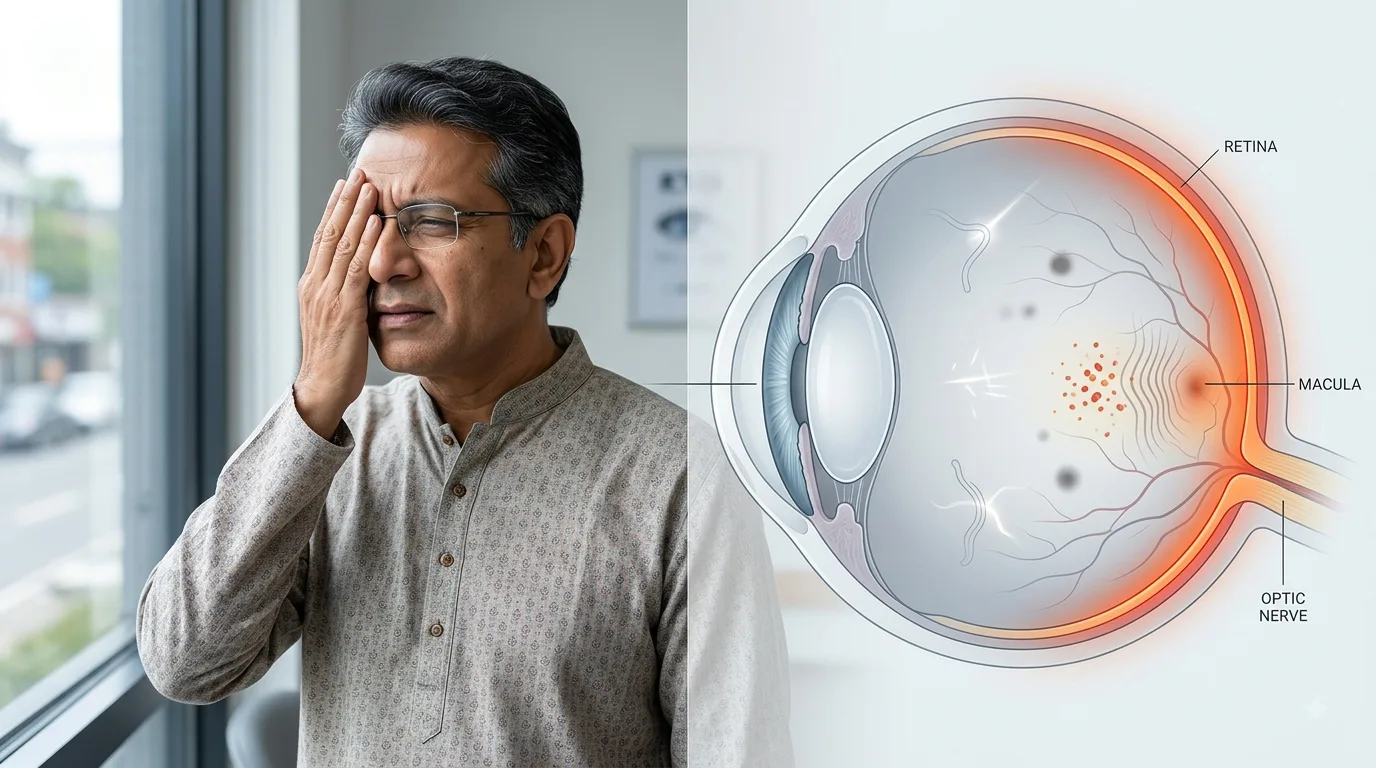
The retina is a light sensitive tissue at the back of the eye which in turn helps the brain to form images. Also some retinal diseases may present with no pain or clear visual symptoms which in turn may mean that retinal damage has developed before the person is even aware there is a problem.
Some retina symptoms may at first be mild. While others may present suddenly and require urgent medical attention. It is important to recognize these warning signs and to seek out timely eye care which in turn may help to protect vision.
What Does Retinal Damage Mean?
Retinal damage is a group of diseases which affect the retina or its blood vessels. Diabetic retinopathy, retinal tears, retinal detachment, macular edema, age related macular degeneration, and other retinal diseases can all cause the retina to do it’s job poorly.
The issue is that at first changes may be hard to notice. In the case of diabetic retinopathy for example which may at first not present any symptoms. The National Eye Institute reports that as it progresses symptoms may include blurred vision and floaters.
Why Can Retinal Problems Stay Silent?
Early retinal changes may present in a very localized fashion which in turn may not affect overall vision at all. Thus it is important for at risk individuals to have regular dilated eye exams which in turn may identify these changes before they produce retina symptoms.
Subtle Retina Symptoms You Should Not Ignore
Sudden New Floaters
As a few stable floaters may present normally. But a sudden onset of floaters dots, threads, cobwebs, black specks at the visual field should be brought in right away for a check as also may occur when there is a retinal tear or detachment at play.
Flashes of Light
Flashes of light may present as a result of the vitreous pulling on the retina. If these start out of the blue, return or appear with new floaters then they shouldn’t be written off as just eye strain.
A Curtain, Shadow, or Missing Area of Vision
A dark cover, veil, or shadow over part of what we see is a very serious indicator. The National Eye Institute reports that if sudden floaters, flashes, or a curtain like shadow present you should seek out medical care right away as these may be signs of retinal detachment.
Wavy or Distorted Central Vision
Bent and wavy lines, loss of ability to see fine details, or a blurred spot in the center may be a sign of macular involvement. These changes are seen in many retinal diseases which is why a exam is required to determine the cause.
Persistent Blur or Duller Colours
Persistent blur, reduced contrast, or duller colours are not specific to the retina, but new or worsening changes should be evaluated by an eye specialist.
| Visual change | Possible concern | Recommended action |
| Sudden floaters with flashes | Retinal tear or detachment may be possible | Seek urgent same-day assessment |
| Curtain or shadow in vision | Possible retinal detachment | Seek emergency eye assessment |
| Wavy central vision | Possible macular involvement | Arrange prompt ophthalmic review |
| Gradual unexplained blur | Retinal or another eye condition | Book an eye examination |
Who Is More at Risk?
Risk is a variable which may be influenced by various factors. In the case of diabetes it can cause retinal blood vessel damage, also severe myopia is a risk factor for certain retinal issues. Also, past retinal detachment, serious eye injury, certain types of eye surgery, and age related vitreous changes play a role in increased risk.
| Risk factor | Why it matters | Practical step |
| Diabetes | Retinal changes may develop before symptoms are obvious | Follow the retinal examination schedule advised by your ophthalmologist |
| High myopia | Linked with increased risk of retinal tears or detachment | Report sudden retina symptoms promptly |
| Previous eye injury or surgery | May increase retinal detachment risk in some people | Share your full eye history with your eye doctor |
| Previous or family history of retinal detachment | May increase individual risk | Ask whether periodic retinal checks are appropriate |
How Is Retinal Damage Diagnosed?
A retinal assessment usually begins with a health history and dilated eye exam. As per the issue at hand, an ophthalmologist may use retinal photography, optical coherence tomography (OCT), fluorescein angiography, or ocular ultrasound.
At an eye hospital we see patients with sudden or complex symptoms which require retinal tests. At Vasan Eye Care a skilled ophthalmologist will determine which tests or eye treatments are best for diagnosis.
Treatment, Recovery, and Follow-Up
Treatment of retinal damage is based on the diagnosis. For a retinal tear we may use laser or cryotherapy at times, but for retinal detachment we may need a surgical intervention. Also we see that some vascular and macular issues can be put in hand with eye injections, laser treatments, surgery, observation, or a mix which is chosen out the ophthalmologist. As far as
Prevent any further loss as opposed to fully restoring what may have been damaged already. That is why follow up exams are still very much a must even when vision seems stable.
Can Retinal Damage Be Prevented or Managed?
Not for all retinal conditions is there a prevention. But risk may be lessened or managed. Those with diabetes we tell them to work with their physician to manage the disease and show up at recommended dilated eye exams. Use of protective eyewear will reduce eye injuries. People with known retinal risk factors should continue routine eye care even if their vision feels normal.
When Should You Consult an Eye Specialist?
Immediate ophthalmic care is required if you notice a large number of new floaters, recurring flashes of light, a dark curtain or shadow in your vision, or sudden vision loss. These retina symptoms also present in conditions that need prompt care. For which symptoms are progressive, distorting or which you have no explanation for, see an eye care professional at once instead of waiting for the issue to get worse.
Conclusion
Retina damage does not always present with clear symptoms at first. Look out for early retina signs, get to know your risk factors, and get your eyes checked into it.
If you have noticed new floaters, flashes, distortion, a shadow in your vision, or any unexpected changes in sight, see an ophthalmologist. At Vasan Eye Care we do personal assessments and will put you in touch with the right eye treatment based on our diagnosis. For urgent or persistent symptoms go to a trusted eye hospital don’t delay in getting in for an evaluation.
Frequently Ask Questions
Yes. Some retinal diseases, also at the early stage of diabetic retinopathy which is a common one, may present no signs at all. For people that have risk factors of, regular dilated eye exams are key as retinal changes may be seen before they affect daily vision.
No. While floaters are very common and often related to age related vitreous changes. It is also true though that a sudden appearance of many floaters, along with flashes of light or a visual shadow, may be a sign of retinal tear or detachment which in turn requires prompt attention.
It is based on the issue, the degree of severity, and which area it is in. We see that some retinal conditions can be treated or at least their progress can be stopped but some vision loss is permanent. Early diagnosis is key to protecting what vision is left, so any new or changing symptoms should be brought to the doctor’s attention as soon as possible.
Usually the eye doctor will do a dilated eye exam of the retina. Also they may order other tests like OCT, retinal photos, fluorescein angiography, or ultrasound which are used as needed to look at retinal structure, swelling, blood vessels, or hard to see areas.
Sudden flares, a quick onset of floaters, a curtain or dark shadow over vision, or sudden total loss of sight should be raised as red flag symptoms. Go to see an ophthalmologist or head to the eye hospital right away for evaluation.