
A pupil will dilate in low light and in high light will decrease in size. When the pupil remains abnormally large the condition is called mydriasis. Change may be temporary after an eye exam or due to injury, medications, eye issue, or neurologic problem.
Understanding Dilated Pupils
Patients report to us that they notice which eye appears larger and that is when they find out what mydriasis is. Mydriasis definition which is an abnormal or prolonged dilation of the pupil is what we are seeing. The iris muscles and the nerves which control them are what we look at in this issue. When these are affected mydriasis occurs.
The mydriasis meaning which is different from what one sees in darkness is that the pupil may stay large when it should close. To simply, define mydriasis is an enlarged pupil in relation to lighting, medicines, symptoms and eye health. Also see how mydriasis is spelled out there online, although that is not the medical standard.
What Causes Dilated Pupils?
Possible unilateral mydriasis causes include dilating drops, certain medications, chemical exposure, Adie tonic pupil, third cranial nerve issues, acute angle closure glaucoma, and iris injury. NCBI reports also note that which of the former play a role in it also include medication effects, Adie pupil, nerve palsy, and trauma. which is which is used as a space filler as we are only to present the paraphrase and not the filler words
| Possible cause | What may be noticed |
| Dilating drops or medicines | Temporary pupil enlargement |
| Eye or head injury | Pain, glare, blurred vision |
| Nerve-related problem | Eyelid or eye-movement changes |
| Adie tonic pupil | Slow reaction to light |
| Acute eye condition | Pain, redness, reduced vision |
Traumatic and One-Sided Pupil Dilation
Traumatic mydriasis can result from damage to the iris sphincter muscle at the time of injury. The pupil may appear irregular or unable to fully constrict. In some cases improvement is seen, in others it is a permanent issue. For which new onset of pupil enlargement occurs after an eye or head trauma, that should be looked at right away.
Unilateral mydriasis is a condition in which only one pupil is abnormally large. It is not a definite danger but sudden onset does require evaluation. An eye doctor will compare both pupils in varying lights also they will test vision, eye movement, lids, and the front of the eye.
Miosis and Dilated Pupils
Understanding the difference between miosis vs mydriasis is that they represent opposite responses. Miosis is contraction, and dilation is the hallmark of mydriasis. In comparison mydriasis vs miosis may help identify an abnormal pupil
| Feature | Dilated pupil | Constricted pupil |
| Pupil size | Larger | Smaller |
| Normal response | Dim light | Bright light |
| Concerning pattern | Fixed or unexpectedly large | Fixed or unexpectedly small |
| Clinical check | Light response, medicines, trauma | Light response, medicines, nerve signs |
How Are Dilated Pupils Evaluated?
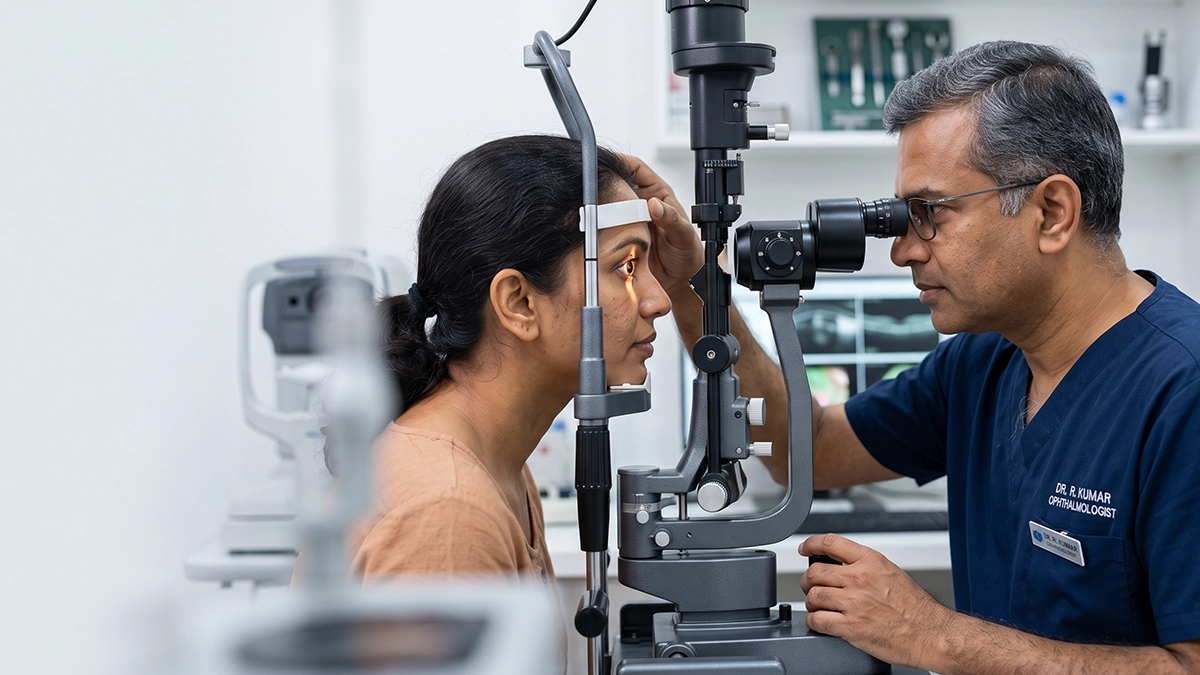
An eye specialist will ask when the changes began and what may have brought them on like medication, eye drops, surgery, or injury. We may also do a pupil light response test, vision test, study of eye movement, measurement of eye pressure and a slit lamp exam. If mydriasis is related to neurological symptoms we may order some imaging studies.
When Should You Seek Urgent Care?
Sudden mydriasis calls for immediate care which may present with severe headache, eye pain, blurred or lost vision, double vision, a drooping eyelid, abnormal eye movement, confusion, weakness, vomiting, or recent head trauma. A fixed dilated pupil with third nerve palsy symptoms at times will require urgent neurological evaluation.
Persistent but painless mydriasis should also be assessed. Visiting an eye hospital can help distinguish a temporary reaction from a condition needing treatment.
Treatment and Eye Care at Vasan Eye Care
Treatment is based on the cause of mydriasis. In case of medication related dilation it will resolve as the drug’s effect does. With injury related changes we may require monitoring or treatment for iris damage. Other causes will be managed based on the specific condition
At Vasan Eye Care we have eye specialist which does an assessment of atypical pupil changes and also puts forth the best eye treatment options after we have a diagnosis. Timely eye care is key when symptoms present suddenly or after an injury
Conclusion
Most of the time pupil dilation is harmless, but unexplained mydriasis requires a proper work up. An exam at which we look for medications, eye issues, trauma, or the nervous system may present as causes. Early in the game an eye doctor evaluation is key to identify which conditions need urgent treatment.
Frequently Asked Questions
- Is a dilated pupil always serious?
No. Pupil dilation may be a short term thing but sudden and unexplained changes should be looked into.
- Can an eye injury permanently enlarge the pupil?
Yes. Significant injury to the iris sphincter may cause the pupil to stay enlarged for a long time.
- Can only one pupil become dilated?
Yes. One sided dilation may have harmless causes but a new change should be noted.
- When should I see an eye doctor?
Seek prompt care if mydriasis starts suddenly or occurs with pain, headache, vision loss, double vision, or trauma.