
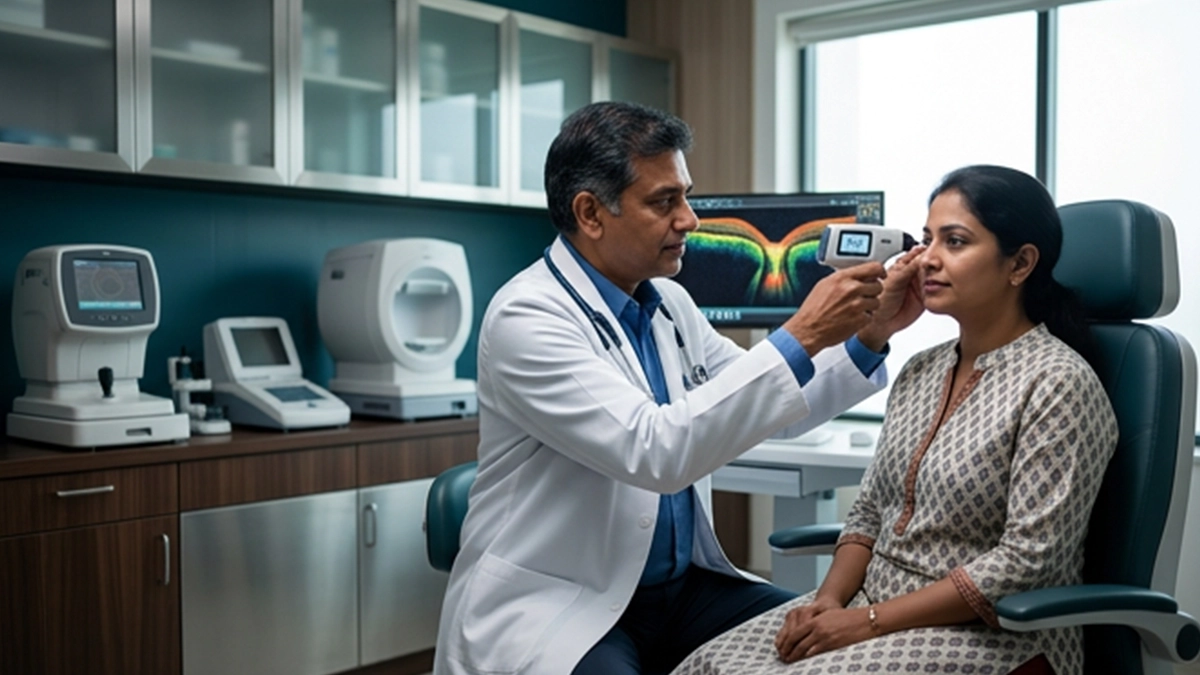
Ocular hypertension is a condition of high intraocular pressure which does not have associated glaucoma related optic nerve damage or visual field loss. Ocular hypertension treatment with raised intraocular pressure are treated. An ophthalmologist will look at the pressure level, corneal thickness, optic nerve, visual field and also other risk factors before determining between close observation and pressure reducing treatment.
What Is Ocular Hypertension?
The eye at all times produces a biofluid which is called aqueous humour. This fluid usually exits through tissue at the angle between the iris and cornea. When the fluid outflow becomes less so, pressure in the eye may go up.
Eye pressure without glaucoma is seen to be different from that of non glaucoma which is that raised pressure does not in fact indicate damage to the optic nerve. A person may have high eye pressure for years and still not develop glaucoma. Also it is possible for low tension glaucoma to affect the optic nerve even when the measured pressure is in the normal range. A single pressure reading is also not a sufficient determination of long term risk. Intraocular pressure may fluctuate between tests and at different times of the day.
Ocular Hypertension vs Glaucoma: What Is the Difference?
Understanding the difference between ocular hypertension vs glaucoma will clarify why we treat them differently. Ocular hypertension is characterized by high eye pressure which does not yet include damage to the optic nerve. Glaucoma is a group of diseases which do include damage to the optic nerve which at times is a result of high pressure and at other times may present with no high pressure.
| Feature | Ocular hypertension | Glaucoma |
| Eye pressure | Often raised | May be raised or within a typical range |
| Optic nerve damage | Not detected | Present |
| Visual-field loss | Not detected | May develop progressively |
| Symptoms | Usually none | Often none in early stages |
| Management | Monitoring or pressure reduction based on risk | Pressure-lowering treatment and long-term monitoring |
People concerned about what are the first signs of glaucoma should remember that early open-angle glaucoma often causes no obvious symptoms.
Are There Ocular Hypertension Symptoms?
Most often there are no signs of ocular hypertension. Also we don’t have great means for a person to tell if their intraocular pressure is high. That is why it is important for people to have regular exams if they have high intraocular pressure or are at risk for glaucoma. Headaches or temporary visual disturbances should not be assumed to be a result of eye pressure. It may be that during an ocular migraine which has other causes that one has visual symptoms.
Severe eye pain, sudden blurred vision, halos around lights, redness, headache, nausea or vomiting are issues that present at onset which require immediate evaluation. These symptoms may be associated with acute angle closure glaucoma and should not be treated as that of routine ocular hypertension.
How Is High Eye Pressure Assessed?
A proper assessment goes beyond pressure measurement at which tonometry excels. Tonometry measures intraocular pressure and pachymetry of corneal thickness which in turn affects pressure reading.
An ophthalmologist may also look at the drainage angle, optic nerve and retina. In Optical Coherence Tomography (OCT) the optic nerve structures are assessed and visual field testing is done for functional vision loss. At Vasan Eye Care we have a glaucoma eye test which includes pressure measurement along with assessment of optic nerve and visual field.
| Test | What it assesses | Why it matters |
| Tonometry | Intraocular pressure | Confirms and monitors raised pressure |
| Pachymetry | Corneal thickness | Helps interpret pressure and glaucoma risk |
| OCT | Optic nerve structure | Looks for early structural damage |
| Visual-field testing | Peripheral vision | Detects functional glaucomatous changes |
| Gonioscopy | Eye drainage angle | Helps identify the cause of pressure elevation |
These tests help distinguish eye pressure without glaucoma from established optic nerve disease.
How Does Ocular Hypertension Treatment Work?
Ocular hypertension treatment is aimed at reducing the chance of development of glaucoma in those that have a high risk which would benefit from it. Some patients do better with a watch and wait approach which we put into practice by way of scheduled exams instead of right away medication. In the Ocular Hypertension Treatment Study we looked at 1,636 adults which had high eye pressure but no glaucoma. At the end of five years 9.5% of the untreated group developed primary open angle glaucoma as opposed to 4.4% in the group which received pressure lowering meds.
However that is not to say that all patients will require high eye pressure treatment. In the 20 year follow up of OHTS we saw that 25% of participants did in fact develop glaucoma related vision loss in at least one eye. The National Eye Institute instead advocates for individual risk assessment and against the automatic treatment.
When treatment is appropriate, eye drops are the common form of ocular hypertension treatment we use. They reduce pressure by means of decreasing production of aqueous humour or improving fluid outflow.
Who Is More Likely to Need Treatment?
In many cases which factor may cause the decision for high eye pressure treatment is a combination of variables. We see that higher measured pressure, advanced age, thin central cornea, atypical optic nerve characteristics and a relevant family history play a role in risk of glaucoma. Also some eye diseases may cause increased pressure. For example in pigmentary glaucoma pigment plays a role in drainage issues and damage to the optic nerve.
Ocular hypertension treatment therefore focuses on the individual’s overall risk rather than one pressure value.
Are Laser or Surgery Used for Ocular Hypertension?
Most patients don’t require surgery for high eye pressure. We see that medical treatment or regular monitoring is enough in many cases. In some cases of selected patients laser treatment may be a benefit when pressure isn’t well controlled by medication or when patients have had enough of long term drug use.
Information about glaucoma laser surgery explains the role of laser procedures in lowering pressure. More invasive surgery usually has a clearer role after glaucoma develops or when pressure remains inadequately controlled.
Why Is Long-Term Monitoring Important?
Ocular hypertension can remain stable and may also develop into glaucoma in some persons. With monitoring an ophthalmologist is able to compare pressure, OCT results, optic nerve looks and field testing over time. Also it is not necessary to begin immediate ocular hypertension treatment but regular follow up is very important. A change in the pressure or sign of optic nerve injury may at which point change the treatment plan.
Eye Care at Vasan Eye Care
Vasan Eye Care also does evaluation for raised intraocular pressure and glaucoma risk. What we do is based on what we find out from our exam which may include tonometry, pachymetry, OCT, gonioscopy and visual field testing.
Patients who present with high intraocular pressure that does not come down can have appropriate follow up to determine a management plan which may include watchful waiting or ocular hypertension treatment. Severe sudden eye pain, reduced vision, redness, halos, nausea or vomiting requires prompt ophthalmic assessment.
Frequently Asked Questions
1. Does ocular hypertension always turn into glaucoma?
No. Many people have high eye pressure without glaucoma. Risk is variable among individuals. We do regular pressure checks, optic nerve assessment and visual field tests to determine when ocular hypertension treatment is needed.
2. What pressure level requires ocular hypertension treatment?
In fact there is a single pressure value which is used for all patients. An ophthalmologist looks at pressure also in relation to corneal thickness, age, optic nerve appearance, visual fields and other glaucoma risk factors.
3. Can ocular hypertension treatment prevent glaucoma?
Pressure reducing treatment may lower the chance of glaucoma in high risk groups. The OHTS reported that they saw an almost clear 5 year outcome in terms of glaucoma development but what the benefit is exactly has a large degree of variability based on individual patient risk.
4. Can high eye pressure return after treatment?
Yes. High intraocular pressure fluctuates over time and also what treatment does or doesn’t do can be very variable. Routine follow up is very important even when the high eye pressure treatment which we were treating at your last visit appears to be managed.
References
- National Eye Institute — Ocular Hypertension Treatment Study and 20-Year Follow-Up
https://www.nei.nih.gov/eye-health-information/clinical-trials/landmark-clinical-vision-and-eye-research/glaucoma-research? - Kass MA, et al. — The Ocular Hypertension Treatment Study: A Randomized Trial Determines That Topical Ocular Hypotensive Medication Delays or Prevents Primary Open-Angle Glaucoma
https://pubmed.ncbi.nlm.nih.gov/12049574/?