
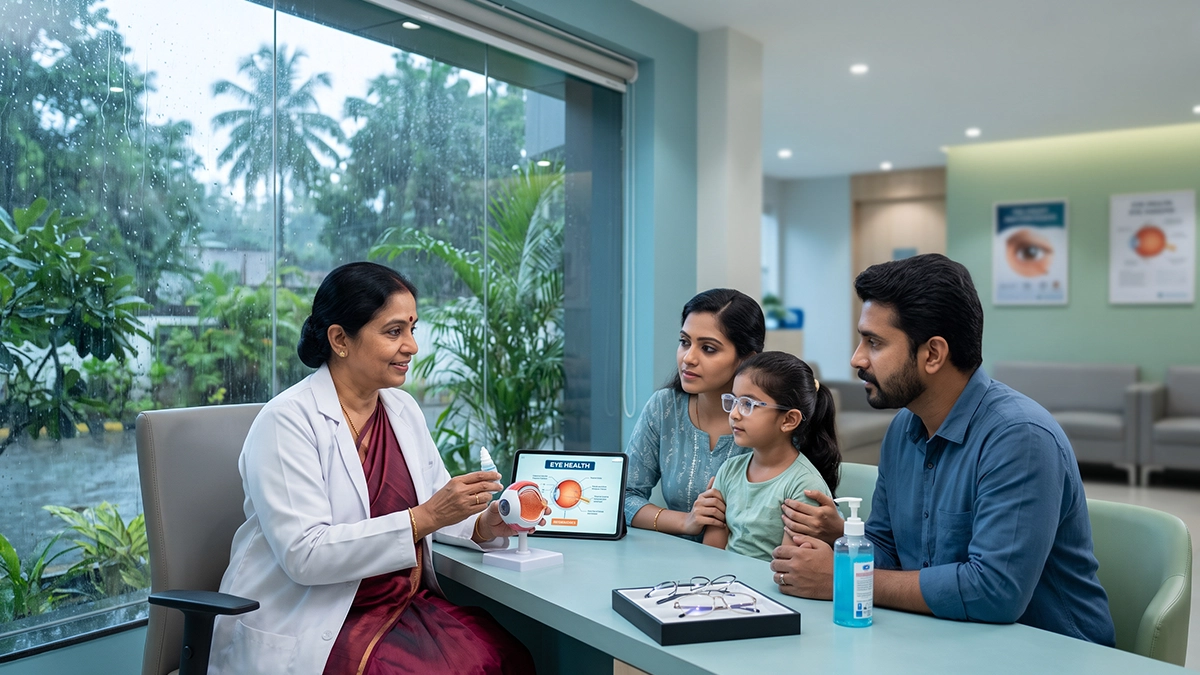
Monsoon weather puts our eye health at risk. We see that shared towels, large groups of people, and the fact that we are all touching our faces more in this time plays into the spread of eye disease. An eye infection may present with redness, watering, irritation, or discharge. Good rainy season eye care we are focused on good hygiene practices and early intervention.
Why Eye Infections Need Attention During Monsoon
An eye infection may affect the conjunctiva, eyelids, cornea, or other eye tissues. We see that conjunctivitis is very common but that not all red eyes are infectious. Allergies and irritation also present with the same signs. That is why it is to the point in the rainy season eye care that we stress hygiene over self diagnosis.
Viral and bacterial conjunctivitis is a transmissible disease via contaminated hands and shared items. The CDC puts forth that frequent hand washing and avoidance of shared towels, eye drops, cosmetic products, and eyewear is a part of conjunctivitis prevention. Also do not use left over antibiotic drops for an eye infection as viral conjunctivitis does not respond to them.
| Situation | Safer Habit |
| After touching shared surfaces | Wash and dry hands before touching the eyes |
| Eyes feel itchy or watery | Avoid rubbing the eyes |
| Someone has conjunctivitis | Keep towels, cosmetics, and eye products separate |
| Contact lenses cause discomfort | Remove lenses and seek advice |
Practical Prevention Tips
Effective during the rainy season eye care you must wash your hands first. Put them to use before you touch your eyes, put in those which are prescribed, or handle contact lenses. This is a very basic step in conjunctivitis prevention because it is easy for infections to transfer when infected hands come in contact with the eyes.
Avoid the irritation of your eye by not rubbing it. Rubbing may increase the discomfort and also pass an eye infection to the other eye. If there is discharge around the eyelids, gently clean it out with clean hands, a fresh cotton pad or clean cloth. Do not share the cloth. This supports the cause of rainy season eye care and also conjunctivitis prevention.
Contact wearers require extra care. Stay away from water and take out your lenses before you go for a swim or to the shower. At first sign of an eye infection do not wear the contacts and see an eye care professional before you put them back in. This is very much a part of conjunctivitis prevention and rainy season eye care.
Symptoms You Should Not Ignore
A mild eye infection will present with redness, wateriness, an itchy or burning sensation, discharge, or crusting. If you experience pain, very redness, light sensitivity, blurred vision, if your symptoms worsen, or you have heavy discharge then see a doctor immediately. The National Eye Institute reports to seek medical care when symptoms are severe, do not improve, or if you are a contact lens wearer.
| Symptom | Possible Concern |
| Mild redness and watering | Irritation, allergy, or viral conjunctivitis |
| Sticky discharge | Possible bacterial eye infection |
| Itching in both eyes | Often linked with allergy |
| Pain or blurred vision | Needs prompt evaluation |
Protecting Family Members and Colleagues
If a member of the family gets an eye infection it is important in terms of hygiene. For Conjunctivitis prevention we put forward that which includes frequent hand washing, use of separate towels, changed pillowcases, and that shared make up or eye drops are avoided. Also as a part of rainy season eye care for children we teach them not to rub their eyes or share handkerchiefs.
Wash your hands after handling an affected eye. These measures for conjunctivitis prevention also reduce the spread of eye infection.
When to Visit an Eye Specialist
An eye infection which causes great pain, visual changes, swelling, very red eyes, light sensitivity, or persistent discharge should be seen by an eye care professional. For proper rainy season eye care it is important to identify the cause of the issue before starting treatment.
At Vasan Eye Care we have an eye specialist doctor that will assess your symptoms and put you onto the best eye treatments.. It is very important to visit an eye hospital at the first sign of an eye infection which affects vision, causes great discomfort, or is getting worse. Also timely diagnosis plays a key role in conjunctivitis prevention.
Conclusion
Most seasonal eye issues are handled better with good hygiene and timely care. For consistent conjunctivitis prevention, careful rainy season eye care, and prompt assessment of what may be an eye infection we protect the patient and also those around them. Any eye infection which affects vision or causes great pain requires professional assessment.
FAQs
1. Can rainwater directly cause an eye infection?
Rain out is not a cause of eye infection but what you get in the rain and what you put in your eyes can introduce germs in. We can reduce avoidable eye rainy season eye care
2. What is the best conjunctivitis prevention method?
The best ways to conjunctivitis prevention are by frequent hand washing, avoiding the rub of eyes, and not to share towels, make up, eye drops, pillow cases, contact lenses or eyewear.
3. Should I use antibiotic drops for red eyes?
No. Redness is a symptom of allergy, irritation, viral conjunctivitis, or bacterial eye infection. Antibiotics which should only be used upon proper evaluation and prescription.
4. Can I wear contact lenses during an eye infection?
It is best to stop contact lens use during an eye infection until you are given the go ahead by an eye care professional. For good rainy season eye care include practicing safe lens care.
Reference Links
- Centers for Disease Control and Prevention (CDC) – How to Prevent Pink Eye CDC conjunctivitis prevention guidance