
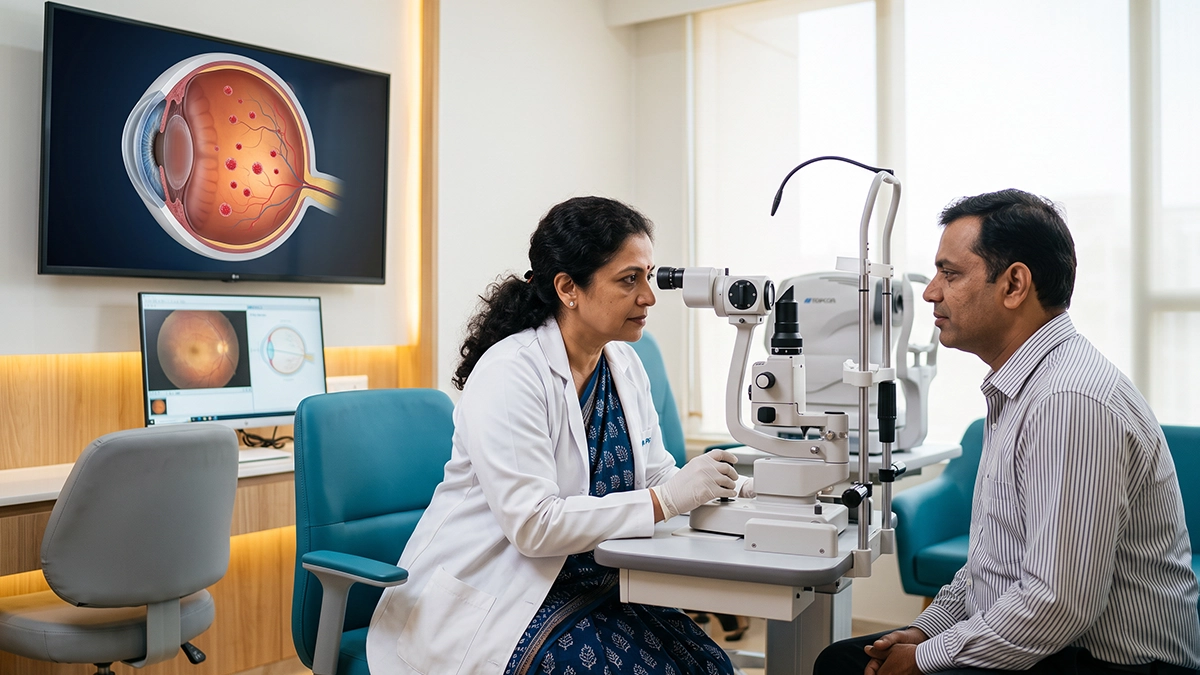
Eye redness and blurred vision may present in a way that is not out of the ordinary, but in Behcet syndrome these signs may in fact be a sign of internal eye inflammation. Behcet syndrome is a rare long term inflammatory disorder which affects blood vessels and may play out in many parts of the body. When the eyes are affected, uveitis may develop which in case of severe or recurring inflammation can threaten sight. Early identification of Behcet’s disease is important for timely care.
How behcet syndrome Affects the Eyes
In Behcet syndrome, an abnormal immune response which causes blood vessel inflammation. Eye involvement is common as uveitis which may affect the front of the eye or the retina. The National Eye Institute reports that Behçet’s disease may cause blurred vision, eye pain and redness also may have periods of remission.
Historically Behcet syndrome has been labeled as silk route disease or silk road disease which is a report of its greater incidence in parts of the Middle East and Asia. These are descriptive terms which are not separate conditions. Searches for behcett, bechet syndrom and bechet syndrome usually refer to the same disorder. The shorter term behcet also usually reports on the same disorder.
| Eye involvement | Possible symptoms |
| Anterior uveitis | Redness, pain, light sensitivity and blurred vision |
| Posterior uveitis | Floaters, hazy vision or reduced vision |
| Recurrent inflammation | Symptoms that improve and later return |
Symptoms That Need Prompt Attention
Because of the organs affected by behcet syndrome which may go beyond the surface of the eye, new symptoms should not be put off. If you have or may have Behcet syndrome you should seek prompt assessment for blurred vision, pain, redness, light sensitivity, floaters or a sudden change in your vision. Repeated inflammation may cause damage to eye structures.
Other symptoms may point to Behcet syndrome. Repeated mouth ulcers are a common one, also some people develop genital sores, skin changes, joint issues or blood vessel problems. The term Behcet ulcer is used for the recurring oral and genital ulcers related to the disease. Ulcers by themselves do not confirm the diagnosis.
How behcet syndrome Is Diagnosed
There is no one lab test that confirms behcet syndrome. Diagnosis is based on symptoms, medical history and clinical presentation. An ophthalmologist will check the front and back of the eye post pupil dilation. If there is a case of retinal or macular inflammation imaging will be recommended.
Patients with possible behcet syndrome may need coordinated care from an eye specialist and a rheumatologist or another behcet’s disease specialist, because the condition can affect other organs.
| Assessment | Purpose |
| Dilated eye examination | Looks for inflammation in the front and back of the eye |
| Vision and eye-pressure testing | Checks visual effect and monitors complications |
| OCT or retinal imaging | Assesses retinal or macular involvement when needed |
behcet syndrome Treatment for Uveitis
Treatment is based out of the site and degree of inflammation. In mild anterior uveitis which may at times present with no symptoms, we may use prescribed corticosteroid eye drops also other eye medicines will do. In more severe cases of posterior uveitis, retinal vasculitis or when there is a threat to sight we may have to go in for systemic corticosteroids and meds that play into immune response.
The NHS reports that eye inflammation in Behçet’s disease should be very closely watched by an ophthalmologist as in serious cases it may cause vision loss. Behcet’s disease treatment may use corticosteroids, immunosuppressive drugs and in some severe cases biologics for treatment. Also treatment has to be very much tailored to the individual, and out of medical advice patients should not start or stop their medicine.
At Vasan Eye Care we see that which in-depth eye care assessment we do may reveal what is causing persistent redness, pain or visual changes. Also should we behcet syndrome we have an ophthalmology team that does the assessment of the inflammation and will put in place the specialist care that is required.
Can Behçet’s Disease Cause Vision Loss?
Yes. Behcet syndrome also at its worst may cause permanent visual damage which is a result of severe or repeated inflammation that affects the retina, optic nerve or other key structures. But vision loss is not a given. Early diagnosis, regular follow up and appropriate treatment play a key role in reducing complications.
Anyone with behcet syndrome who develops sudden vision loss, severe eye pain or rapidly worsening redness should seek urgent assessment at an eye hospital.
Conclusion
Behcet syndrome is rare, yet its eye complications are what we should pay attention to. Early diagnosis of uveitis and referral to a specialist for treatment may help save sight. If you have recurrent ulcers that go along with unexplained eye inflammation see an eye specialist doctor who will determine if in depth investigation is required. At Vasan Eye Care we provide a full range of eye treatments services for inflammatory eye issues.
Frequently Asked Questions
1. What is Behçet’s disease?
Behcet syndrome is a chronic inflammatory disease which may affect the eyes, mouth, skin, blood vessels and other organs.
2. Can the condition affect both eyes?
Yes. behcet syndrome may affect one or both eyes, and inflammation can recur.
3. Is Behçet’s disease curable?
There is no cure for Behcet syndrome, but we can control the inflammation and also prevent complications.
4. Which doctor treats Behçet-related eye inflammation?
An ophthalmologist will manage eye inflammation which is often in conjunction with a rheumatologist or some other specialist that has experience in behcet syndrome.