
Dry eye disease isn’t a passing case of tired eyes. It develops when the tear film is unable to properly lubricate and stabilize the eye surface. Some people report a burning or a sandy feeling in their eyes; also it is common to see blur, redness and watering.
These symptoms tend to present more during periods of long screen use, driving, contact lens wear, or time in an air conditioned room. Also since many issues can play a role in causing the tear film problem this disease doesn’t have a single root cause or a one size fits all treatment.
What Happens in Dry Eye Disease?
A healthy tear film has oily, watery and mucus elements which spread over the eye at every blink. In dry eye disease the eyes may produce too few tears, tears may evaporate too quickly, or the composition of the tears may become unstable. The National Eye Institute reports in their dry eye guidance that these issues also cause discomfort and in some cases vision changes.
| Tear-film problem | Possible effect |
| Too little tear production | Dryness, irritation and a gritty feeling |
| Tears evaporate too quickly | Burning and fluctuating vision |
| Unstable tear film | Discomfort that may improve after blinking |
What Are the Common Dry Eye Causes?
Also it is from aging, use of electronic devices for great lengths of time, contact lens use, smoke, wind, dry indoor air and some medicines Also related to eyelid inflammation, meibomian gland issues, hormonal changes, diabetes, thyroid problems and autoimmune disorders. It is also noted that we blink less when we are focused on the screens.
This low blink rate increases tear evaporation and in turn worsen the dryness. Also as reported by MedlinePlus in their dry eye syndrome overview they note age, environment, medicines and contact lenses as recognized factors.
How Can You Recognise Dry Eye Symptoms?
Typical dry eye symptoms are burning, stinging, grittiness, redness, sensitivity to light, tired eyes, and fluctuating vision. Also, it is not uncommon for eyes to water as irritation causes the production of extra tears although the tear film is unstable.
When symptoms present themselves again an eye exam can help to tell between dry eye and allergy, infection, lid disease or another ocular surface issue.
How Is Dry Eye Disease Diagnosed?
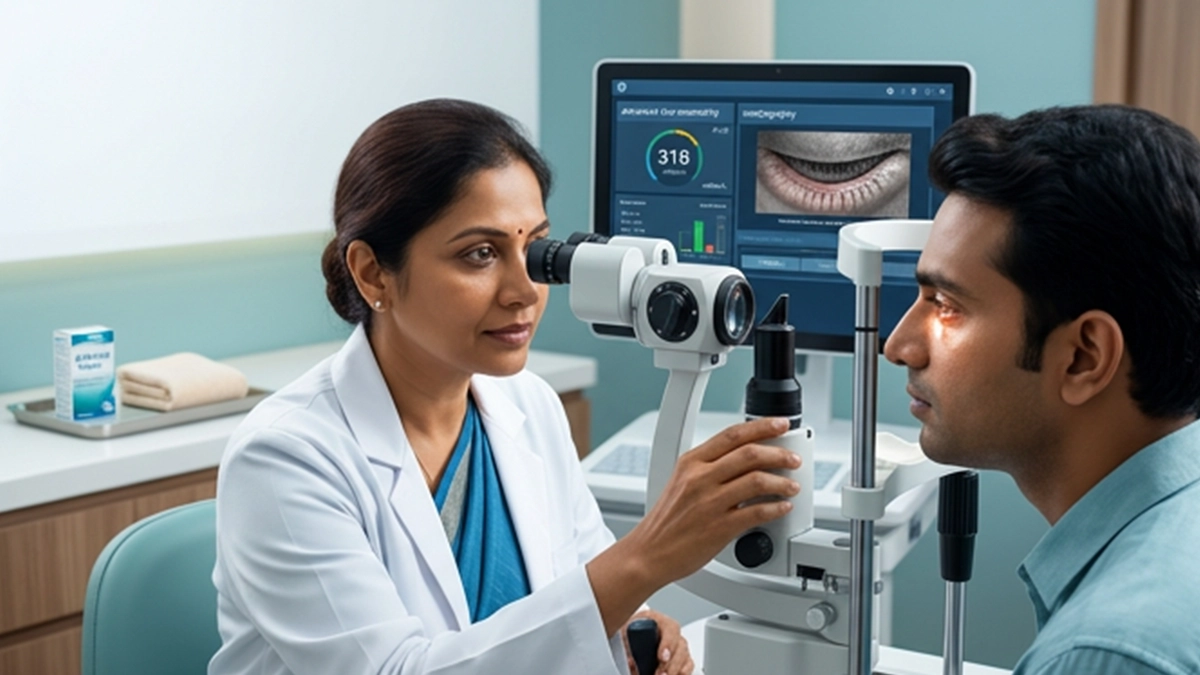
An ophthalmologist typically looks at symptoms and examines the eyelids, tear film and cornea in his evaluation of dry eye disease. In some cases also evaluated is tear production and tear film stability. The National Eye Institute reports that for dry eye we use slit lamp exam, Schirmer test and tear break up time as methods of diagnosis.
| Assessment | What it helps check |
| Slit-lamp examination | Eyelids, tear film and corneal surface |
| Schirmer test | Tear production |
| Tear break-up time | Tear-film stability after blinking |
| Surface staining | Areas of irritation or surface damage |
Treatment Options
The appropriate dry eye treatment is based on what is causing the issue. For mild dry eye disease we see improvement with the use of lubricating drops, taking breaks from the screen, being conscious of blink rate and also by avoiding direct air flow from fans or air conditioning. Warm compresses and better eyelid hygiene may help in the case of blocked oil glands or lid inflammation.
For more persistent cases we may require to prescribe drops, treat inflammation, use punctal plugs or refer to a specialist. Good management is that which goes to the root of why the tear film is failing instead of just adding moisture.
At Vasan Eye Care we evaluate patients that have recurring dry eye through our Ocular Surface Disease care program which is also at Vasan Eye Care we identify them for the best eye treatments Vasan Eye Care Eye Treatments based on their symptoms, what we find in the exam and the root causes.
When Should You See an Eye Specialist?
At some times dryness may present with minor issues, but what you should really look into is dry eye disease when you have a discomfort which is repeated or which interferes with reading, work, driving or contact lens wear. Persistent discomfort, pain, marked redness, light sensitivity or a change in vision requires professional assessment.
Identifying dry eye causes early will guide in a more appropriate care plan. With proper evaluation many people with dry eye disease can control their discomfort and protect the eye surface over time.
Frequently Asked Questions
1. Is dry eye disease permanent?
dry eye disease is a chronic condition which may be put into remission when the causes and base issues are determined and treated.
2. What are the most common dry eye symptoms?
Common dry eye symptoms are burning, grittiness, redness, watering, light sensitivity and fluctuating vision.
3. Can screen time cause dry eye disease?
Long term screen use may exacerbate dry eye disease which is made worse by reduced blinking that in turn causes tears to evaporate faster.
4. Can dry eye disease affect vision?
Yes. dry eye disease causes transient or variable blur which is a result of unstable tear film.
5. When should dry eye disease be checked by a doctor?
It is recommended that you see an eye specialist when you have chronic, painful dry eye which also interfere with your daily life or which present with lots of redness or vision changes.