
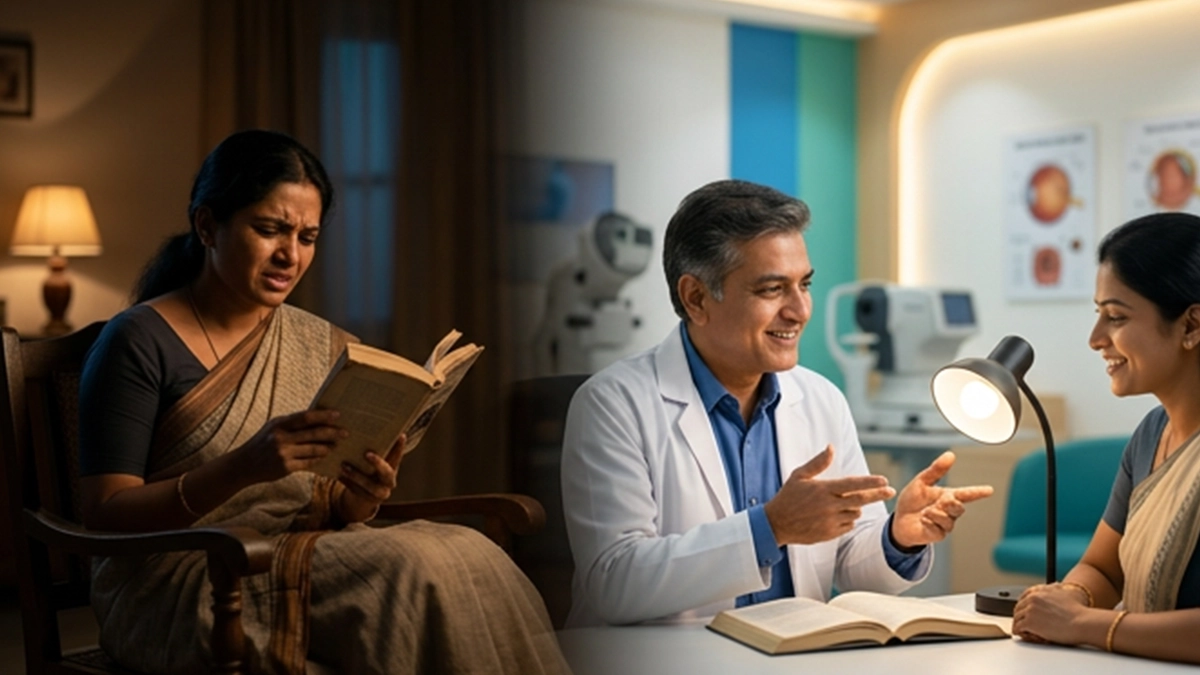
Reading in dim light does not usually result in permanently damaged healthy eyes however when you do Reading in dim light what is more likely is it will be a harder time focusing, may trigger temporary fatigue, headaches or blurry vision. It also will see that better lighting levels greatly improve your comfort, which if issues persist that recommend you get in for an eye exam.
Does Reading in Dim Light Damage Your Eyes?
The issue of reading in dim light causing permanent eye damage is a myth. What may happen is your eyes have to work harder to see the words out which in turn may be a issue in small print or during a long reading session.
This extra effort which in turn causes reading eye strain, which may present as tired eyes, squinting or a head ache. These symptoms usually improve with a break or once you move to a better lit area. was put forward that which reduces visual effort is a key element of reading and eye health. If symptoms persist an uncorrected glasses prescription or some other eye condition may be to blame. Persistent reading eye strain does not deserve self diagnosis or adjustment.
What Symptoms Can Poor Lighting Cause?
During reading in dim light some report blurred text, difficulty in focus, squinting or eye discomfort. These are to be usually short term and do not in itself mean that eyesight has been damaged.
Reading eye strain also develops from too much close work which may go beyond issues of poor lighting. Screen glare, small print, infrequent breaks and dry eyes may contribute to the discomfort. Repeat instances of reading eye strain should prompt a look at your reading habits and vision. Good lighting is a element of reading and eye health along with proper reading distance and regular breaks. Also include in the practices which support reading and eye health during study or work regular breaks.
Dim Light Versus Proper Lighting
| Reading condition | Possible effect | Helpful adjustment |
| Low lighting | Squinting or visual fatigue | Add a suitable reading lamp |
| Harsh glare | Discomfort or reflections | Reposition the light source |
| Uneven lighting | Shadows across the page | Use more even illumination |
| Comfortable task lighting | Easier reading | Direct light towards the page |
People that have issues with dim light eyesight may require brighter task lighting, larger print or a new prescription. If dim light eyesight has worsened from what it was before, in that case get an eye exam. Poor lighting by itself is a poor indicator that you have an eye disease. That which causes changes in dim light eyesight is variable so a professional exam is better than diagnosis by yourself.
How to Make Reading More Comfortable
Choose lamps which cast even light over the page. Place them to minimize shadows and reflections and do not look directly at a bright bulb. When reading in dim light conditions improve the light source which you have rather than that permanent damage has been done.
Increase text in books or use a larger setting in devices instead of holding text very closely.
Review daily habits that are secretly which may be causing you discomfort for instance reading for long periods without a break or using a screen from an uncomfortable angle. To better understand how mobile effect on eyes which in turn will improve digital reading which do as follows adjust the brightness to that of the surroundings, reduce reflections and take breaks regularly.
importance of hydration to health in general but water by itself does not fix all cases of dry eyes or blurred vision.
When Should You Arrange an Eye Examination?
If you experience headaches, blurred vision, the need to squint or have trouble focusing even in proper lighting, get an eye check-up. An eye care professional will do a vision test and see if corrective lenses or more in depth evaluation is what you need.
Age related presbyopia which by middle age often does present with the issue of difficulty in near vision. Also cataracts and other eye health issues may play a role in clarity. It is also important that people follow up from cataract surgery recovery time to the instructions given by the health care provider which may vary according to the type of procedure and how well the person is healing.
Present to the emergency room at once with sudden vision loss, severe eye pain, or a red painful eye. Do not assume that these are a result of bad lighting.
Conclusion
In most of the cases what we see is that reading in dim light causes temporary discomfort as opposed to permanent damage. Better lighting, regular breaks and a comfortable reading distance may ameliorate fatigue. For persistent symptoms or changes in vision which do present themselves a professional exam may help in the identification of the cause and also in which care to direct.
Frequently Asked Questions
1. Can reading in dim light make eyesight worse?
Reading in dim light or in poorly lit areas doesn’t usually cause permanent damage to healthy eyes. It may cause temporary tiredness or discomfort. Should vision stay blurry or reading become very hard, see an eye care professional to check for other causes.
2. Is reading in low light harmful for children?
Low light may make reading hard for kids in some cases but usually it is not something that will cause permanent eye issues. See what the specialist has to say when a child squints or has trouble with the page.
3. What lighting is best for reading?
Choose lighting that is soft and does not produce glare or strong shadows. Place the reading lamp in a good spot. Brightness of the screen should be adjusted to what is comfortable for you as it may vary.
4. When should reading-related eye strain be checked?
If you see symptoms frequently, for a while after rest, or present with proper lighting they should be checked out. Headaches which are persistent, blurred vision or trouble focusing may be a result of a prescription issue or an eye condition which will require professional evaluation.
References
American Academy of Ophthalmology (AAO) — Common Eye and Vision Myths
https://www.aao.org/eye-health/tips-prevention/five-vision-myths
National Eye Institute (NEI) — Keep Your Eyes Healthy
https://www.nei.nih.gov/eye-health-information/healthy-vision/how-eyes-work/keep-your-eyes-healthy
American Academy of Ophthalmology (AAO) — Computers, Digital Devices, and Eye Strain
https://www.aao.org/eye-health/tips-prevention/computer-usage