
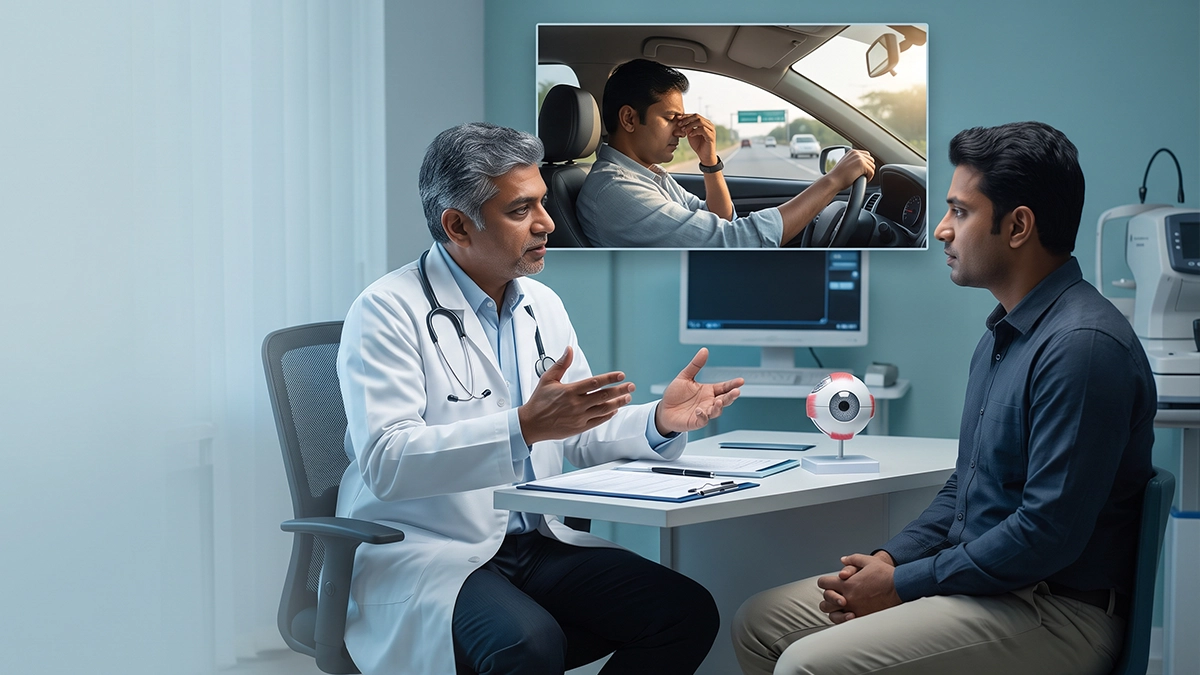
Eye strain while driving may present as tired eyes, blurred vision, headaches, difficulty in focus, or light sensitivity. It’s due to an uncorrected visual problem, dry eyes, glare, or fatigue. If you have continuous issues especially at night, see an eye care professional for the cause and for solutions that also will help improve your safety on the road.
What Causes Eye Strain While Driving?
During the course of a drive which is long or in heavy traffic many issues may cause eye strain while driving. What they see is the road, the mirror, the dashboard, far off objects they switch between almost non stop. Also poor lighting, glare and a not right glasses prescription may make this isotope even more so.
Common eye strain causes are refractive errors which include astigmatism, short and long sightedness. These issues may present with blurred distance or near vision. Also people may develop a squint in an attempt to see better which in turn may cause headaches and tiredness. Also note that they have dry eye syndrome which reports burning, watering, a grittiness, or fluctuating vision which in some is related to air conditioning.
How Do Symptoms Differ?
Driving eye fatigue can present with pressure in your eyes, difficulty in focus, or the fact that you pull over more often. Also which see that it includes general tiredness but what is key is that eye discomfort and sleepiness are different issues. If you notice your eyes feel sleepy and heavy while you are on the road it is best to pull into a safe area and take a break rather than to push through it.
At the first signs of eye strain while driving it is best to react proactively before it affects your concentration. You may notice a picture of symptoms but a professional exam is the way to determine the root cause.
| Symptom | Possible explanation | What to do |
| Blurred road signs or squinting | Uncorrected refractive error | Arrange an eye examination |
| Burning, gritty, or watery eyes | Possible dry eye or airflow irritation | Avoid direct air vents and seek advice if persistent |
| Headache or discomfort after focusing | Visual strain, glare, or fatigue | Rest safely and review vision if recurring |
| Strong sleepiness or difficulty staying alert | Driver fatigue or inadequate sleep | Stop driving and rest safely |
Why Can Night Driving Be More Difficult?
Night time driving eye strain is a result of head lights, street lights, and reflections which produce glare. Also reduced light may bring out vision problems which you had not noticed before. Astigmatism or a out of date prescription may cause blurred lights or halos which in turn makes it hard to make out road signs and distance.
If you are having frequent trouble with night driving eye strain try going in for an eye exam which in turn may bring up issues related to your present dashboard settings and also your tinted lenses. Also pay attention to keeping your windscreen, mirrors, and glasses clean and that you have the right prescription. As a rule do not wear dark sunglasses in the night time. Should you notice sudden changes in vision which is also brought on by pain in the eye or a new curtain like shadow in your field of view go and see a medical professional at once.
Persistent issue of eye strain while driving may require professional assessment which in turn may include difficulty with night time vision. Determining the eye strain causes will help the eye care professional to recommend the best approach.
Tips to Reduce Discomfort While Driving
Simple measures report to help reduce eye strain while driving but they do not do away with the assessment when symptoms persist. I have put in some placeholder elements that your output supports also note what may be safe travels.
- Check vision regularly: An ophthalmologist can assess your vision which in turn may require us to change your current glasses prescription.
- Reduce glare: Clean the wipers and wipe the frames out also, check the mirrors’ adjustment, don’t look at oncoming headlamps.
- Manage dry conditions: Do not point air conditioners at the eyes. See an eye care professional for dry eye treatment.
- Take safe breaks: During long trips it is best to pull over at a safe spot to rest. At the first sign of drowsiness do not get back on the road.
- Use suitable eyewear: Wear your prescribed glasses and stay away from unapproved night driving glasses which claim to get rid of glare.
| Driving concern | Helpful step | When to seek advice |
| Glare from headlights | Clean glass and adjust mirrors | If glare remains severe or vision is blurred |
| Dryness or irritation | Redirect air vents and take breaks | If discomfort or fluctuating vision persists |
| Difficulty reading signs | Check the current prescription | If signs remain unclear despite glasses |
| Sleepiness or poor alertness | Stop safely and rest | Seek medical advice if excessive sleepiness recurs |
In the case of heavy eyes in morning that may be a sign of poor sleep quality or some other issue as compared to a related eye problem. Good sleep is for alertness, though persistent tiredness, blurry vision, or headaches call for a medical review. For Navratri eye care also include getting adequate rest before travel and to not drive when you are spent. Reoccurring driving eye fatigue is not to be automatically written off as just strain, also general fatigue plays a role in safe driving.
When Is an Eye Check-Up Important?
Recurrent eye strain while driving requires attention which in turn may present as a lot of headaches, blurred vision, or trouble reading what’s on the road. At the ophthalmologist’s office they may test visual acuity, check your current glasses prescription, and see into issues like dry eye and other problems. A through evaluation is key to determine what is truly of visual in nature and what may be from other causes.
Present to the emergency room for sudden loss of vision, severe eye pain which also reduces your vision, or the appearance of new flashes and floaters which also may include a curtain like shadow. These are signs of conditions that require immediate attention. Do not attempt to drive if your vision or alertness is impaired; arrange for safe transport.
Eye Care at Vasan Eye Care
Vasan Eye Care which does ophthalmic evaluation for vision issues which include that of persistent eye strain while driving. Based on symptoms which may look at refractive errors, dryness and other possible causes before Vasan Eye Care recommend what care is best. Also a regular eye check-up will help to determine if glasses are required or if further evaluation is needed.
Conclusion
A few tips which may help to reduce eye strain while driving, but do not ignore if the issue persists. Go for an eye check up, reduce glare, manage dry eye issues, and pull over for breaks in safe locations. If the issue still present, see an eye check-up professional before it affects your road safety.
Frequently Asked Questions
1. Can glasses help with eye strain while driving?
Yes. If you have blurred vision or focus issues it may be from a refractive error, that which is corrected by a proper prescription. An eye exam will see if your glasses need an update and also if there is another issue at play.
2. Is night driving eye strain always caused by glasses?
No. Night driving eye strain may be related to glare, dry eyes, astigmatism, or other vision issues. If you have persistent or worsening symptoms which include headlights that appear very blurred or a halo effect around them you should have your eyes checked.
3. Can dry eyes cause driving eye fatigue?
Yes. Dryness brings about burning, irritation, watering, or variable vision which in turn makes driving uncomfortable. Also if you are experiencing driving eye fatigue which is a sign of general tiredness pull over if your alertness goes down and seek advice if the symptoms persist.
4. When should a driver seek medical help?
Arrange for an eye doctor’s visit for on going issues like headaches, blurred vision, or trouble with road signs. In the case of sudden vision loss, very severe pain or the appearance of many new flashes and floaters with a curtain like shadow go to the emergency room immediately. At no time should you drive when your vision is impaired.
References Links
- National Eye Institute — Refractive Errors
https://www.nei.nih.gov/eye-health-information/eye-conditions-and-diseases/refractive-errors - CDC/NIOSH — Driver Fatigue on the Job
https://www.cdc.gov/niosh/motor-vehicle/driver-fatigue/