
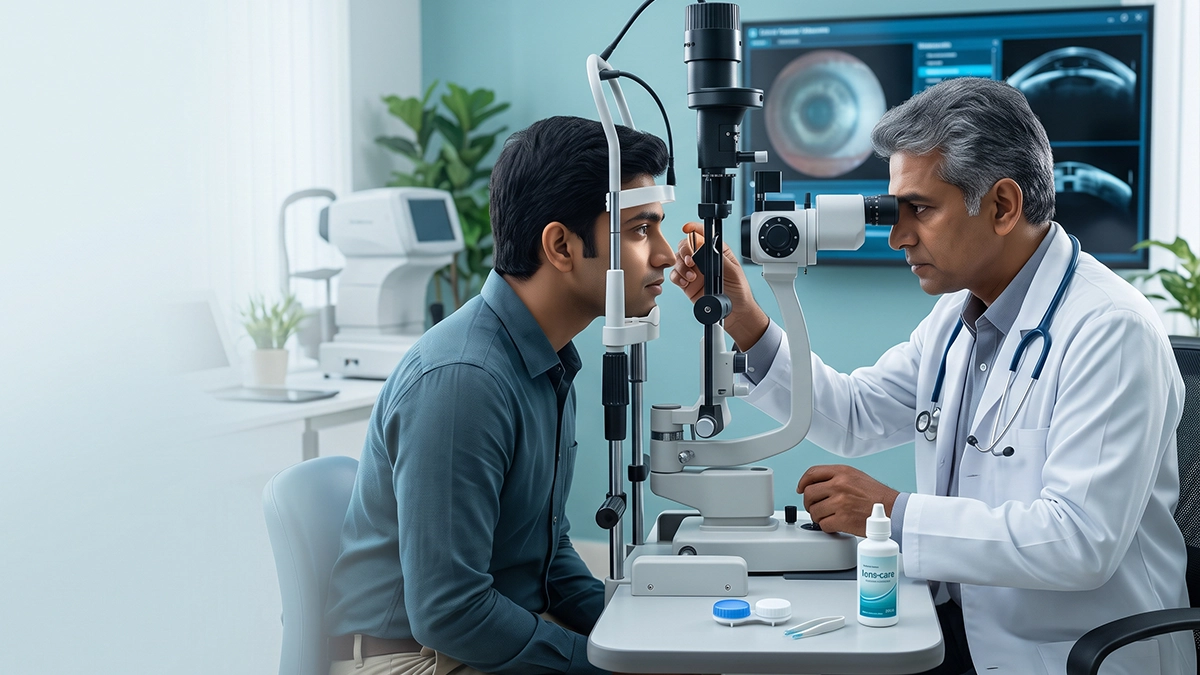
Acanthamoeba keratitis symptoms which is a rare eye infection of the cornea from this parasite often presents with very painful eyes, redness, blurred vision, light sensitivity, excessive tearing and a foreign body sensation. Diagnosis and treatment delay may cause acanthamoeba eye infection to threaten vision. Contact lens wearers who experience pain, redness, or reduced vision should take out their lenses and get in to see the eye specialist as soon as possible.
What Is Acanthamoeba Keratitis?
Acanthamoeba which causes Acanthamoeba keratitis may enter the cornea through a small break in the corneal surface. These microorganisms are present in water, soil, and dust which is their natural habitat. Also these organisms may enter the eye after getting in through contact lenses or in case of trauma.
Contact lens wear out of which risk may be increased when you put your lenses in tap water, swimming pools, hot tubs or shower water. Also an acanthamoeba eye infection may follow corneal trauma or environmental exposure in people that do not wear lenses.
In 2024 an Indian hospital network report presented that out of 1,945,339 new patients evaluated between 2016 and 202 that they identified 245 with Acanthamoeba keratitis. In that 4.49% of cases reported contact lens wear as the cause this points to the fact that trauma and environmental exposure also play a role.
Patients seeking information about related corneal disorders may also read about keratoconus symptoms and Vasan Eye Care’s corneal services.
What Are the Main Acanthamoeba Keratitis Symptoms?
Early acanthamoeba keratitis symptoms may present like that of bacterial, fungal or viral keratitis. Pain may be more severe than what is reported in the initial exam, although some patients don’t report much pain.
| Symptom | What It May Indicate | Urgency |
| Severe or persistent eye pain | Corneal inflammation or infection | Prompt assessment |
| Red eye | Active corneal inflammation | Prompt assessment |
| Blurred or reduced vision | Corneal involvement affecting clarity | Urgent if worsening |
| Light sensitivity | Corneal irritation or inflammation | Prompt assessment |
| Excessive tearing | Ocular-surface irritation | Assess with other symptoms |
| Foreign-body sensation | Corneal surface involvement | Prompt review if persistent |
A contact lens eye infection is to not be assumed to be the same as irritation which in turn presents as pain or vision changes which are constant. Severe eye pain while wearing contact lenses, increased light sensitivity or a change in vision requires prompt attention. Also similar symptoms may present with a contact lens corneal ulcer which is caused by bacteria, fungi or other microorganisms. Vasan’s info on corneal ulcer and keratitis reports that contact lens associated corneal infection requires timely assessment.
How Is Acanthamoeba Keratitis Diagnosed?
An ophthalmologist will diagnose acanthamoeba keratitis symptoms from contact lens routine, water exposure history and recent ocular injury. With the help of a slit lamp vasan eye care will look at the corneal surface for signs of inflammation.
In that which is of the acanthamoeba eye infection presentation is similar to other infections laboratory confirmation may be had. Corneal scraping and culture, polymerase chain reaction testing, or in vivo confocal microscopy may be used to identify Acanthamoeba.
| Diagnostic Method | What It Evaluates | Why It May Help |
| Slit-lamp examination | Corneal surface and infiltrates | Assesses location and severity |
| Corneal scraping/culture | Organisms in corneal tissue | Helps identify the cause |
| PCR testing | Acanthamoeba genetic material | Supports organism detection |
| Confocal microscopy | Microscopic corneal structures | May identify cyst-like forms |
Prompt diagnosis helps distinguish this condition from another contact lens eye infection or contact lens corneal ulcer, where treatment may differ substantially.
How Is Acanthamoeba Keratitis Treated?
Acanthamoeba keratitis treatment is usually treated with prescription anti-amoebic eye medication which requires close ophthalmic supervision. Also treatment may be of a prolonged nature as Acanthamoeba can form resistant cysts. Do not self treat with left over antibiotic or steroid eye drops.
The exact acanthamoeba keratitis treatment is based on the degree of disease, corneal involvement and response to therapy. In severe cases which have extensive scarring or structural damage surgery may be required.
Patients who need information about surgery can review types of corneal transplants and Vasan Eye Care’s cornea transplantation service.
How Can Contact Lens Users Reduce the Risk?
Prevention mainly consists of keeping out of non-sterile water with contact lenses. Do not use tap water to rinse or to put your lenses in. Before going for a swim, a shower or in a hot tub take out your lenses. Also before handling your lenses make sure to wash and dry your hands. As for the care and replacement of your lenses follow the instructions given to you by your eye care professional and the lens manufacturer. Use a fresh disinfecting solution which is replaced as it is used instead of adding to the old solution.
Proper lens removal also reduces unnecessary corneal trauma. Vasan Eye Care’s guide on how to remove lens from eyes safely provides practical steps. People deciding whether lenses suit their routine may also review contact lenses vs glasses.
When Does a Contact Lens Eye Infection Need Urgent Attention?
Remove your contact lenses right away if you notice pain, atypical redness, blurred vision or that light is bothering you more than usual. Do not go back to wearing them until you see an eye care professional which will determine it is appropriate.
Severe pain from a contact lens eye infection, a suspected contact lens corneal ulcer, or very bad eye pain which does present very quickly. Fluctuating vision, intense pain or a see-through grayish area on the cornea is a reason for you to get in touch with an ophthalmologist urgently.
Eye Care at Vasan Eye Care
Vasan Eye Care also does evaluation for corneal infections and other ocular surface conditions. They may do a slit lamp exam and more in depth diagnostic testing as the case may require. They stress early evaluation which is very important in the case of acanthamoeba keratitis symptoms that present after contact lens use, water exposure or eye trauma.
Persistent and improving symptoms should be paid attention to. An ophthalmologist can determine what is causing your issue whether it is an acanthamoeba eye infection, another corneal infection or a different eye condition and will advise on the best management.
Frequently Asked Questions
1. Can Acanthamoeba keratitis cause permanent vision loss?
Yes. Untreated or very severe cases may result in corneal scarring, which causes permanent vision damage. Identifying early acanthamoeba keratitis symptoms and beginning proper medical care can improve chances of avoiding more serious problems.
2. Does severe eye pain while wearing contact lenses mean Acanthamoeba?
Not at all. Severe eye pain which is a result of wearing contact lenses may be a sign of bacterial keratitis, a contact lens corneal ulcer, corneal abrasion or other conditions. Take the lenses out and see an eye care professional right away instead of trying to diagnose what is going on at home.
3. Can Acanthamoeba infection occur without contact lenses?
Yes. Although contact lenses are a large issue in terms of risk in many countries, Acanthamoeba does also infect injured corneas as a result of environmental or contaminated water exposure. In India it is seen that many patients who present for diagnosis do not report to be contact lens users.
4. How long does Acanthamoeba keratitis treatment take?
Treatment time of the disease is based on the severity of the infection and the patient’s response. In some cases of Acanthamoeba eye infection you may require long term therapy which is due to the fact that the cyst form of the organism resists treatment. Follow up with your ophthalmologist’s plan for when to stop medication.
References
- Centers for Disease Control and Prevention — Acanthamoeba Keratitis
https://www.cdc.gov/acanthamoeba/about/about-acanthamoeba-keratitis.html - Das AV, et al. — Clinical Profile and Demographic Distribution of Acanthamoeba Keratitis: An Eye Care Network in India
https://pubmed.ncbi.nlm.nih.gov/37084281/?