
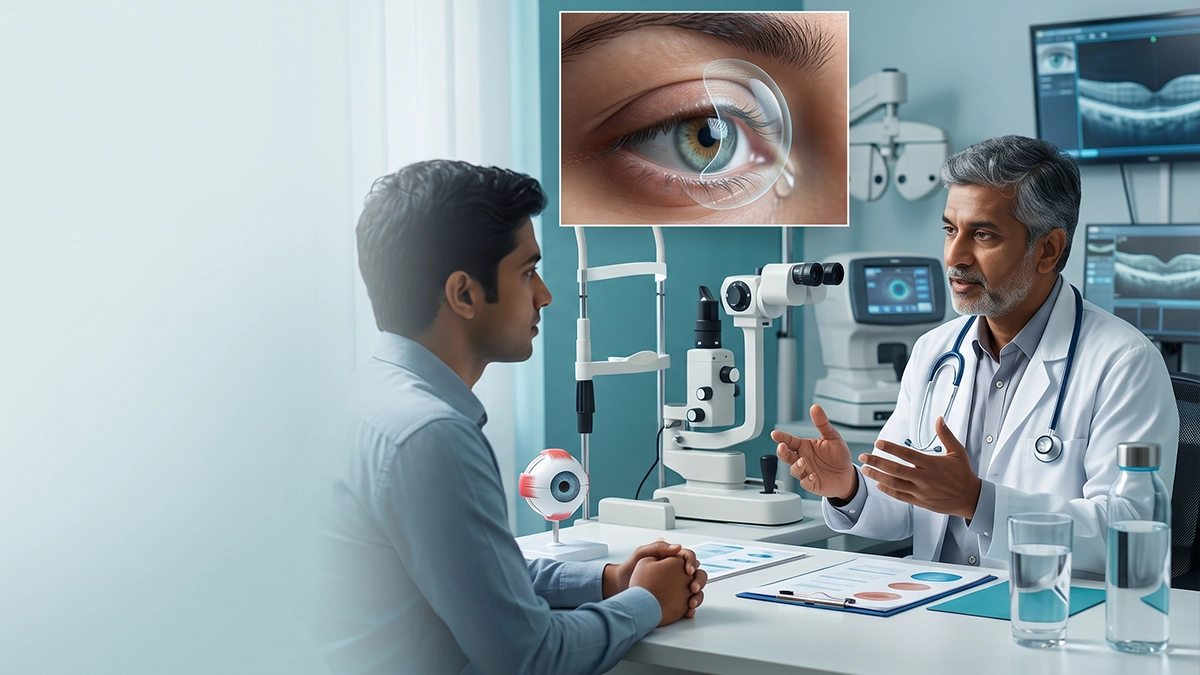
Adequate fluid intake is key to proper hydration and eye health as water is involved in many body processes which also include tear production and maintenance of the eye’s moisture balance. It does not fix refractive errors, improve vision, or cure dry eye disease, but replacing lost fluids may bring some relief in case of dehydration. For persistent dryness a full evaluation is needed as tear film issues may be a symptom of a number of different health issues.
How Are Hydration and Eye Health Connected?
The ocular surface is a function of a stable tear film. Tears include a water base that also has oils, mucus, proteins and other elements which in turn lubricate and protect the cornea. That is to say that hydration and eye health are related but water is only a piece of the tear film health puzzle.
The National Eye Institute also reports that dry eye may be a result of the eyes producing too few tears, the quick evaporation of tears, or from tears which do not function properly. In the U.S. alone we see almost 16.4 million people affected by dry eye which is a very large scale.
People wanting to understand the wider causes can review Vasan Eye Care’s dry eye causes guide.
| Factor | Possible Effect on the Eyes | What May Help |
| Inadequate fluid intake | May accompany thirst, fatigue and reduced overall hydration | Replace fluids appropriately |
| Long screen sessions | Reduced blinking can increase tear evaporation | Screen breaks and conscious blinking |
| Fan or air-conditioning airflow | Can increase tear evaporation | Redirect airflow away from the face |
| Eyelid inflammation | Can disturb the oily tear layer | Eyelid assessment and appropriate care |
What Happens With Dehydration and Eyes?
The relationship between dehydration and eyes becomes more relevant when the whole body has lost fluid. That is research which reports the connection between total body fluid loss and tear osmolarity which is the measure of how much tear fluid has diluted. Also reported is that more research is required before they may use tear measures as routine indicators of systemic dehydration.
This means issues of hydration and eye health are not to be put into a box which says that all cases of dry and irritated eyes are a result of not enough water. Dry eyes also may result from aging, extended screen time, contact lens use, certain medicines, autoimmune conditions, environment exposure or issues with the lid oil glands.
Vasan Eye Care reports on what is causing an increase in dry eye cases and also looks at the connection between tear-film issues and day to day activities.
Does Drinking More Water Prevent Dry Eyes?
Drinking water does for the eyes what is required to maintain normal hydration which is a must when they have lost body fluids due to heat, exercise, illness or other causes. At the same time it is important to note that water should not be looked at as a substitute for what are already in place dry eye prevention methods or for proper treatment.
There is not a single water target for all people. What is seen that fluid requirements do in fact vary by body size, climate, level of physical activity, diet, pregnancy and health issues. People that have kidney, heart or other health issues which require a restricted fluid intake should follow the care team’s advice instead of increasing your water intake. For best eye health, include water in a comprehensive routine.
Use of digital devices for long periods of time, low indoor humidity and reduced blinking may still be issues even if you are drinking enough water. Vasan’s screen-related dry-eye relief guidance explains additional steps for people with prolonged device exposure.
| Approach | Role in Eye Comfort | Important Limitation |
| Regular fluid intake | Supports normal overall hydration | Does not cure established dry-eye disease |
| Frequent blinking | Helps spread tears across the cornea | May not correct severe tear deficiency |
| Screen breaks | Can reduce prolonged reduced blinking | Does not treat underlying inflammation |
| Lubricating eye drops | May provide temporary surface lubrication | The correct product depends on the cause |
| Eyelid care | Can help when lid or oil-gland problems contribute | Should match the diagnosed eyelid condition |
Why Can Eyes Stay Dry Even When Hydration Is Good?
Good hydration and eye health habits do not prevent all causes of dry eyes. Some people produce too few tears. Also some have tears that evaporate fast because the meibomian glands do not put out enough oil.
Blepharitis also affects the eyelid margin and tear film. In case of repeated lid irritation patients may look up information on blepharitis treatment and Vasan’s clinical info on that and dry eye disease.
For persistent symptoms it is best to use eye water along with, rather than in place of, evaluation and proper dry eye treatment.
Practical Dry Eye Prevention Beyond Water
Effective for dry eye prevention is a multi factor issue. Regular breaks from continuous screen use, which also includes keeping fans and air conditioners at a distance, adding moisture to the indoor air and proper care of the eyelids are included.
People that are using eye drops should also note that redness, allergy, infection and dryness require different products. Vasan’s guide to eye drops for dry eyes and other conditions also puts forth that it may be misleading to choose drops based only on symptoms.
When Should Persistent Dryness Be Checked?
Hydration and eye health may improve what at times is thought to be a case of mild dehydration. An eye exam is important when you see burning, grittiness, redness, or fluctuating vision which keeps coming back. Severe eye pain, very red eyes, light sensitivity or sudden loss of vision should not be put off to dehydration. Sudden or large scale visual change requires prompt assessment by an ophthalmologist.
An ophthalmologist can evaluate tear production, tear stability, eyelids and the corneal surface. Patients with ongoing symptoms can review Vasan Eye Care’s dry eye treatment options and information on ocular surface disease care.
Eye Care at Vasan Eye Care
Vasan Eye Care provides ophthalmic evaluation for people that experience recurring eye dryness, burning and tear-film issues. Vasan eye care is able to determine if the dryness is due to the environment or to meibomian gland dysfunction, blepharitis or other eye surface issues. Appropriate treatment then depends on the cause which may not be solely an issue of hydration. Persistent or worsening symptoms should not be managed by increased water intake alone. Patients are encouraged to see a Vasan Eye Care specialist for evaluation when symptoms persist.
Frequently Asked Questions
1. Can drinking more water cure dry eyes?
No. Drinking water for eyes can support general hydration and it is a good practice if you are dehydrated, but in case of chronic dry eye it is usually due to issues with tear production, evaporation, eyelid inflammation and the like. Treatment should be directed at the root cause.
2. How does dehydration affect the eyes?
Dehydration and eyes can be connected when the body loses more fluid than normal. Some may report dryness and discomfort in the eye but these symptoms are not unique to dehydration which in fact may present in a number of eye conditions.
3. How much water should someone drink for healthy eyes?
There isn’t a set amount of fluids that apply to hydration and eye health. What you need varies person to person. Thirst, climate, your level of physical activity and what the doctor says should guide your intake which is especially true for people with health conditions which require them to restrict their fluid intake.
4. Is water enough for dry eye prevention?
No. Water intake is a component of dry eye prevention but may not be the most important. Regular eye movement, taking breaks from the screen, to reduce direct air flow, treatment of eyelid disease and getting care for persistent symptoms may play a greater role.
References
- National Eye Institute — Dry Eye
National Eye Institute: Dry Eye - Tear Osmolarity in the Diagnosis of Systemic Dehydration and Dry Eye Disease — peer-reviewed article available through PubMed Central
PubMed Central article