
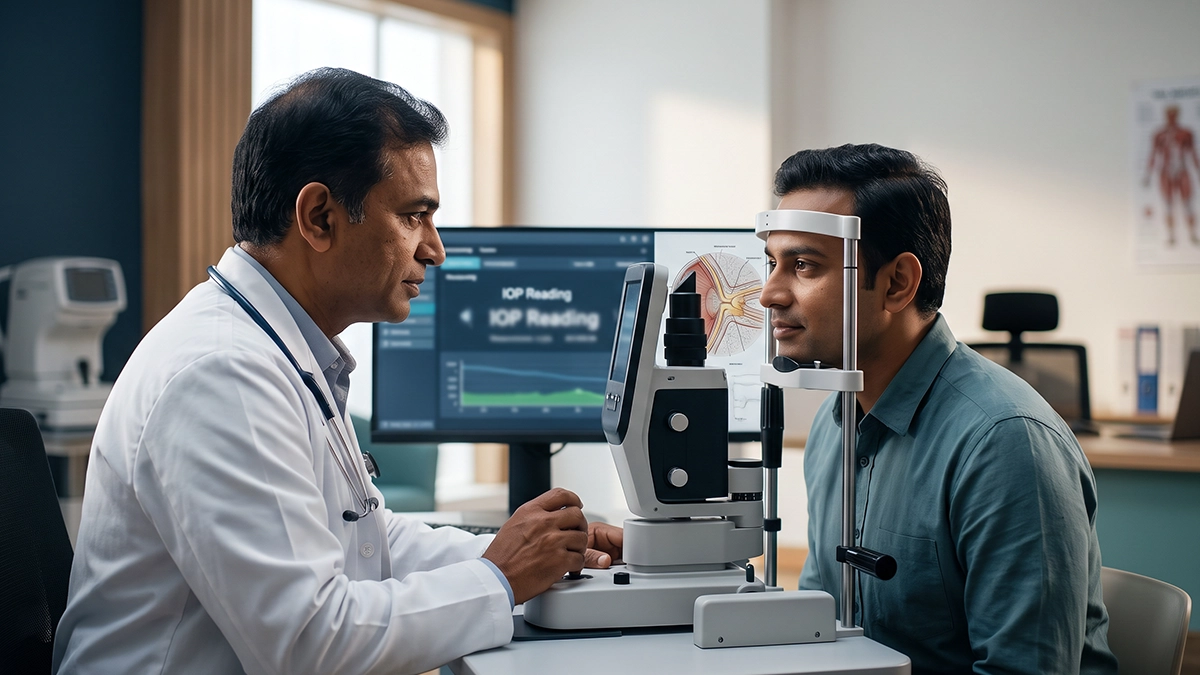
What Is Normal Intraocular Pressure?
In your eye there is a clear fluid. This fluid is constantly produced and the old drained out. That force of this fluid is what we call eye pressure.
Normal intraocular pressure runs between 10 to 21 mmHg (millimeters of mercury) for most people. That is a general guideline which may vary. Some healthy people sit a little outside it. Learning what the reading means for your eyes needs a doctor’s full check.
How Eye Pressure Is Measured
The test is called tonometry.
- Air-puff test: A brief puff of air reaches the eye.
- Applanation test: Numbing drops come first, followed by a small probe that lightly touches the eye to verify the measurement.
The thickness of your cornea, which is the clear front of the eye, may also play a role in where you fall in the IOP normal range. A thin cornea may give a lower reading than what is actual pressure. A thick cornea may give a higher reading.
Table 1: Understanding Your Eye Pressure Reading
| Reading (mmHg) | What It Usually Means | What Happens Next |
| Below 10 | Lower than usual | Doctor checks the reason |
| 10–21 | Within the iop normal range | Routine checks, optic nerve still examined |
| 22–25 | Mildly raised (ocular hypertension) | Closer monitoring, more tests |
| Above 25 | High | Doctor checks for glaucoma and may start treatment |
Your doctor looks at your whole eye, not just where you sit in the normal eye pressure range.
How Your Reading Can Shift Around the IOP Normal Range
Eye pressure is not fixed. It is a pressure that varies during the day. In many people, it is higher in the early morning. Also it may change with body position and certain medications. That is to say one reading may not be the whole story. Your doctor may test you at different times to determine your true normal eye pressure range.
The Glaucoma IOP Normal Range and Why It Matters
Glaucoma is a health issue which affects the optic nerve, the element which transmits images from your eye to your brain. High eye pressure is the main risk factor. Some people develop glaucoma which does not present with high pressure. This is normal-tension glaucoma.
So when people search for the glaucoma iop normal range, the honest answer is this: there is no single “safe” number for everyone. Read more about normal pressure with glaucoma and why the optic nerve must also be checked. In the field of glaucoma we set a pressure target for each patient and do not use a universal normal IOP range.
Early Symptoms of Glaucoma
The primary form of glaucoma which is open angle glaucoma often does not present with symptoms. What may happen is little by little side vision will fade out and the majority of the time people will not notice. This is also the reason why the early signs of glaucoma are so easy to miss.
Possible early symptoms of glaucoma include:
- Slowly losing side (peripheral) vision
- Missing things at the edge of your vision
Angle-closure glaucoma is different. It can cause sudden severe eye pain, halos and nausea, and needs emergency care.
Eye Pressure and Cataract Surgery
Many older adults have both cataract and raised eye pressure, and they often ask about the cataract surgery success rate. Before surgery, your doctor checks your eye pressure and optic nerve. This helps plan safe care and gives a better idea of your expected cataract surgery success rate.
Many seniors experience having both cataracts and high intraocular pressure at the same time and also bring up questions about cataract surgery results. Pre surgery your doctor will do a check of your eye pressure and optic nerve. This is to design a safe care plan and also to give you a better idea of what to expect in terms of results from your cataract surgery.
Table 2: Who Needs Eye Pressure Checks More Often?
| Risk Factor | Why It Matters |
| Age above 40 | Glaucoma risk rises with age |
| Family history of glaucoma | Risk is higher in close relatives |
| High myopia (minus power) | Linked to higher glaucoma risk |
| Long-term steroid use | Can raise eye pressure |
| Past eye injury | Can damage the eye’s drainage area |
| Planned cataract surgery | Pressure is checked to support a good cataract surgery success rate |
Your Eye Pressure Check Schedule
Knowing how often to test keeps you one step ahead. Adults should generally have an eye check every one to two years to confirm they stay in the normal eye pressure range. It is recommended that adults have an eye exam every 1 to 2 years to see that they are in the normal range for intraocular pressure. If you are over 40 or have any risk factor listed in Table 2 we may put you on a more frequent schedule. Those on glaucoma medication may require a pressure lower than what is usual which is why we see them in for very regular visits. If you have glaucoma the normal IOP range may not apply to you.
Conclusion
Your eye pressure reading is a good indicator, but it is far from the full picture. We see that knowing what the normal iop range is and what is normal for eyes in general helps you ask better questions. Also the glaucoma iop normal range is a very personal thing and glaucoma may in fact present with normal intraocular pressure. Don’t wait for early glaucoma signs, which often don’t appear at all in the early stages. A check of the iop normal range is a quick and painless procedure. At Vasan Eye Care we do eye checks which include testing your eye pressure and the health of your optic nerve.
Frequently Asked Questions
1. What is the iop normal range?
It is usually about 10 to 21 mmHg. Your doctor will judge what is normal for your eyes.
2. Can I have glaucoma with normal intraocular pressure?
Yes. This is called normal-tension glaucoma. That is why the optic nerve is checked too.
3. Does a good cataract surgery success rate depend on eye pressure?
Pressure control is one part of safe surgery. Your doctor checks it before and after the operation.
4. Are the early symptoms of glaucoma painful?
Usually not. Most early glaucoma is painless, so regular eye tests are the best way to catch it.