
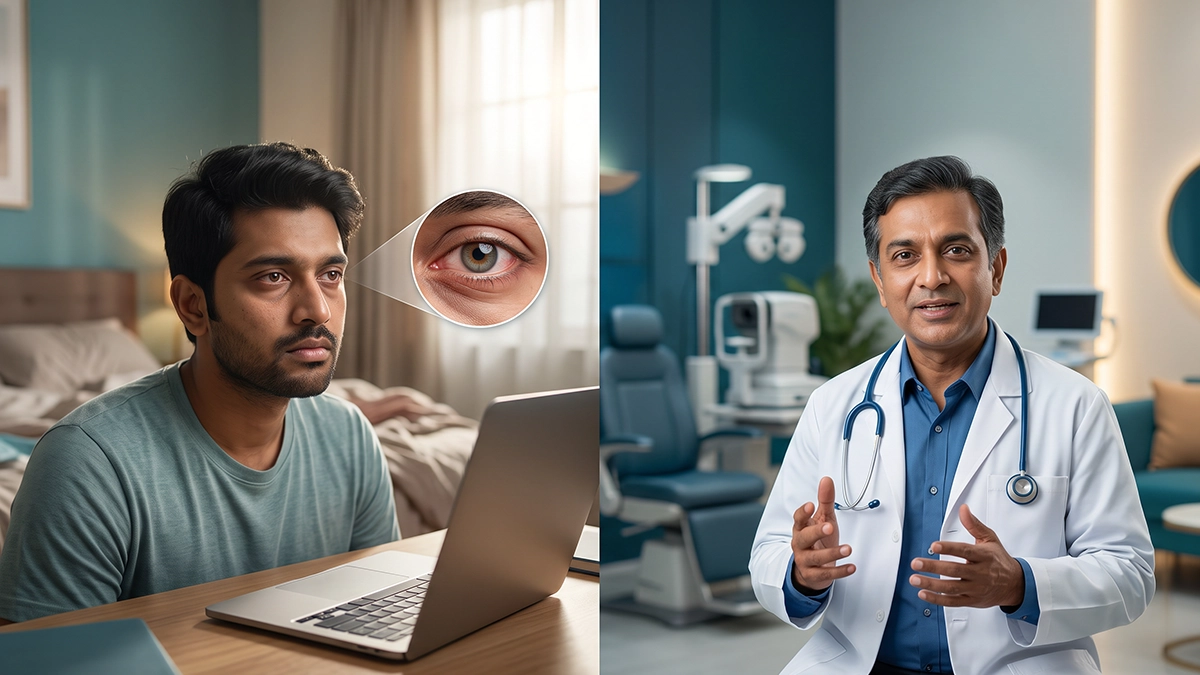
Why Your Eyes Need Sleep
Sleep is a time when the body repairs itself. Also your eyes are not an exception. As you sleep your eyes are closed and at rest. The tear film which is that thin layer of moisture on the eye has a chance to repair.
Almost all adults require 7 hours of sleep a night. As you consistently do not get your required amount of sleep your eyes are the first to let you know it. This is the reason doctors put sleep deprivation and eye health in the same breath.
Common Effects of Poor Sleep on Eyes
Many people want to know what a short night does to the eyes. Here are the most common changes.
1. Dry, Gritty Eyes
Less sleep produces less tears and a weaker tear layer. Your eyes may feel dry, sandy or burning. This is very typical of what happens to eyes from poor sleep.
2. Eye Twitching
A small repeated blink of the eye is what we call an eye twitch or myokymia. Also related to tiredness, stress and too much tea or coffee. It is usually harmless and goes away with proper rest.
3. Red Eyes
Tiny blood vessels which are present on the white of the eye may become more visible when you are tired. This results in a red, bloodshot appearance. It is another of the visible results of poor sleep which affect the eyes.
4. Dark Circles and Puffy Eyelids
Fluid may build up around the eyes which in turn may cause them to look puffy. When you are deprived of sleep dark circles may appear more prominent.
5. Sleep and Blurry Vision
Many report that they have a connection between sleep and blurred vision. Dry eye surface is a which causes hazy vision. Tired eye muscles also have trouble with focus.
6. Eye Strain
When you don’t sleep well, reading or staring at a screen just wears you out faster. By evening, your eyes feel tired and heavy, and you’re more likely to get headaches. It’s like your brain just wants to check out and call it a night.
Table 1: Tired Eyes From Lack of Sleep and What They Mean
| Symptom | Likely Reason | Usually Better With Rest? |
| Dry, gritty feeling | Weaker tear film | Yes, often |
| Eyelid twitching | Tiredness, stress, caffeine | Yes, usually |
| Red eyes | Tired, irritated eye surface | Yes, often |
| Puffy lids, dark circles | Fluid build-up | Yes, often |
| Blurry vision | Dry surface, tired focusing muscles | Yes, if only due to tiredness |
| Headache with eye strain | Tired eyes, long screen use | Yes, often |
Most tired eyes from lack of sleep feel better after a few good nights. If they do not, something else may be the cause.
When Tired Eyes From Lack of Sleep Need a Doctor
Sometimes, the effects of poor sleep on eyes hide another problem. Watch for tired eyes that stay tired even after good rest. Ongoing dry out may be dry eye disease which requires appropriate treatment. If you still have sleep and blurry vision issues after resting, you may need a new prescription.
See an eye doctor if you notice:
- Blurry vision that does not clear after rest
- Eye pain or strong light sensitivity
- Twitching that lasts for weeks or spreads to other parts of the face
- A drooping eyelid
- Redness with discharge
These signs may not be just eye strain from poor sleep. They need a proper eye check.
Sleep Deprivation and Eye Health Over Time
A few late nights will not harm your eyes for good. But it is wise to know the long term effect of ongoing sleep problems.
One issue with sleep is obstructive sleep apnea which is a condition in which you stop and start to breathe many times during the night. Also we see that sleep apnea has a connection to eye issues like glaucoma which is when the optic nerve gets damaged, and floppy eyelid syndrome. Thus we find that sleep deprivation and eye health are more related than most people think.
If you snore loudly or wake up gasping, talk to your doctor.
Simple Habits for Better Sleep and Healthier Eyes
You can reduce the effects of poor sleep on eyes with a few easy habits. These habits also ease eye strain from poor sleep.
Table 2: Do’s and Don’ts for Rested Eyes
| Do’s | Don’ts |
| Sleep 7 or more hours a night | Use your phone in bed for hours |
| Keep a fixed bedtime | Drink tea or coffee late in the evening |
| Follow the 20-20-20 rule at work | Rub tired eyes hard |
| Use a cool, clean compress in the morning | Sleep with eye makeup on |
| Blink often during screen use | Sleep in contact lenses unless advised |
The 80/80/80 rule is a simple one to follow. For every 20 minutes of screen time take a break for 20 seconds and focus on an object 20 feet away which in turn will help with eye strain from that late night session and long hours in front of the screen.
Conclusion
The issue of poor eye health which we attribute to bad sleep is a fact, we see that mostly in the form of dryness, twitching, redness and puffiness which improve with better quality rest. If you notice a trend of sleep issues that go along with blurry vision and tired eyes from a bad night’s sleep which don’t improve, don’t ignore it. We see how sleep deprivation and eye health are very much a factor in the long term. Pay attention to the results of poor sleep on your eyes’ health which in turn will protect your vision. If your eyes keep that tired, blurry feeling book an eye check up at Vasan Eye Care.
Frequently Asked Questions
1. What are the main effects of poor sleep on eyes?
Dry eyes, twitching, red eyes, puffy lids and blurry vision are the most common.
2. Can sleep and blurry vision be linked?
Yes. Poor sleep can dry the eye surface and tire the focusing muscles, which can make vision look blurry.
3. How long does eye strain from poor sleep last?
It usually improves after one or two nights of good sleep. If it continues, get your eyes checked.
4. Are tired eyes from lack of sleep harmful?
Usually not in the short term. But long-term sleep problems can affect your eyes, so it is worth fixing your sleep.