
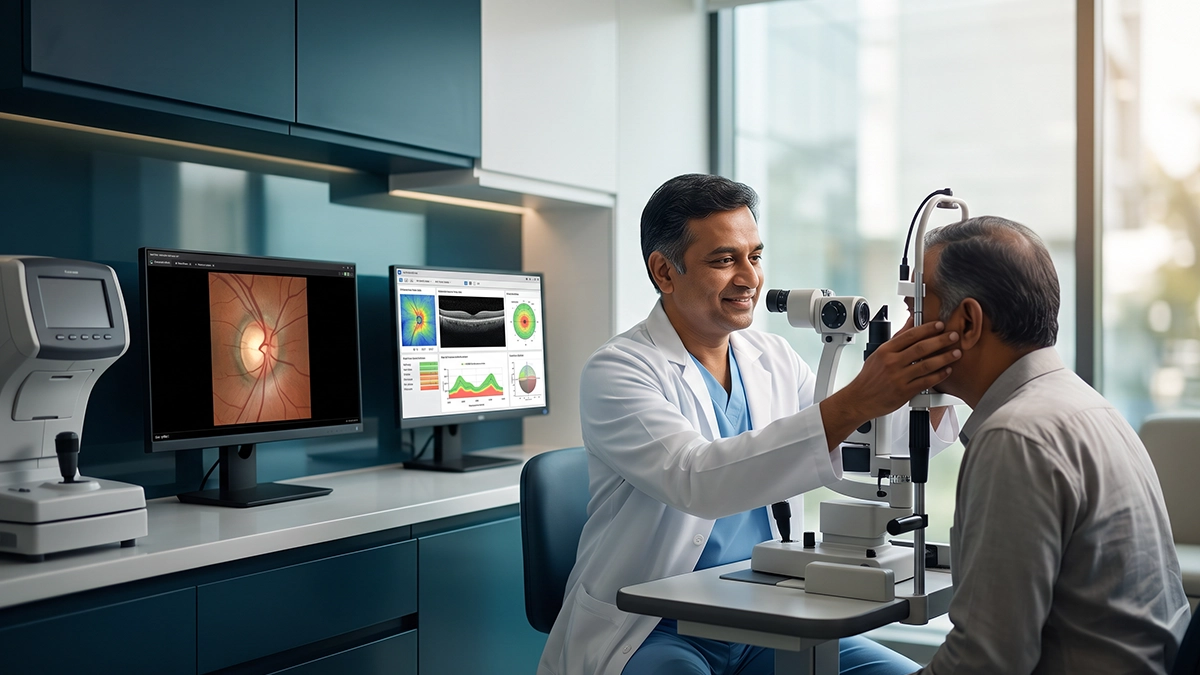
What Is Glaucoma?
Glaucoma is a collection of eye diseases that affect the optic nerve. That nerve is the wire which transmits pictures from your eye to your brain. Damage is often a result of high pressure within the eye, but it also may happen at normal pressure.
Once the optic nerve is damaged vision does not return. Many families report to us that they only realize what the early signs of glaucoma are after a relative is diagnosed. That is why it is so important to know what the early signs and symptoms of glaucoma are and to get regular eye checks.
Why the Early Signs and Symptoms of Glaucoma Are Easy to Miss
The most present are open angle which is by far the most common. It progresses very slowly. It’s first to affect side (peripheral) vision which you may not notice at all as central vision will remain unaffected. Learn why there are no early symptoms in most cases.
At first it may be nothing you notice. Early symptoms of glaucoma are what an eye care professional will see before you do.
6 Subtle Signs of Glaucoma to Know
Even though early glaucoma may not present symptoms at all in some cases, some people indeed notice very early changes. I have listed six primary early signs and symptoms which are important to recognize.
1. Patchy Side Vision
It’s easy to miss stuff out of the corner of your eye. That’s actually one of the first signs of glaucoma.
2. Bumping Into Things
You may knock into door frames or miss a step on one side. This is one of the early signs and symptoms of glaucoma that people often blame on clumsiness.
3. Trouble in Dim Light
Seeing in low light or at night may have changed. This is some early sign of glaucoma which some people see.
4. Halos Around Lights
Rainbow-like rings around light are a warning of angle closure glaucoma which also may present with blurred vision.
5. Headache With Eye Pain
At times you may experience eye pain, headache or blurred vision in the evening which may indicate narrow drainage angles. These are signs of glaucoma which require quick attention.
6. Cloudy or Enlarged Eyes in Babies
In infants glaucoma can present with very large cloudy eyes, watering and light sensitivity. These are urgent signs of glaucoma in children.
Table 1: Signs of Glaucoma and What They May Mean
| What You Notice | What It May Mean | What to Do |
| Missing things at the side | Early side vision loss | Book an eye test soon |
| Bumping into objects | Shrinking side vision | Book an eye test soon |
| Halos around lights | Possible narrow angles | See a doctor quickly |
| Sudden severe eye pain, red eye, nausea | Angle-closure attack | Emergency, go now |
| Cloudy, large eyes in a baby | Childhood glaucoma | See a doctor urgently |
These early signs and symptoms don’t guarantee you have glaucoma, but don’t brush them off. Pay attention and get them checked out.
Later Glaucoma Symptoms
If left untreated glaucoma will progress. As the disease advances it causes tunnel vision which is only seeing what is straight ahead and in the end loss of central vision. This is the long term effect that early care tries to prevent.
Severe ophthalmic pain, redness of the eye, blurred vision, halos, headache, nausea and vomiting. This is a medical emergency.
How Glaucoma Is Found
Since the early signs and symptoms of glaucoma are hard to feel, eye tests are your best protection. The test that catches it is usually a full eye exam that includes:
- Eye pressure test: Checks intraocular pressure.
- Optic nerve check: Sees into the back of the eye for damage.
- Visual field test: Extends your field of view.
- Gonioscopy: Determines whether the drainage angle is open or narrow.
Table 2: Screening Guide by Risk Group
| Group | Suggested Check |
| Adults under 40, no risk factors | Every 1–2 years, or as advised |
| Adults over 40 | Regular checks, as advised by your doctor |
| Family history of glaucoma | Earlier and more frequent checks |
| Diabetes, high myopia or long-term steroid use | More frequent checks |
| Already being treated | As often as your doctor advises |
Find out who should be screened at your nearest centre. Screening is the best way to catch early signs of glaucoma which may lead to vision loss.
Glaucoma Treatment Options
Lost vision does not return. But in the case of glaucoma we may at least slow or even stop the progression of the damage. Knowing what treatment starts with helps you feel ready.
- Eye drops: usually the first step to lower eye pressure
- Laser treatment: helps fluid drain better or opens narrow angles
- Surgery: creates a new drainage path when drops and laser are not enough
Most glaucoma treatment is lifelong. Use your drops daily and never stop without your doctor’s advice.
Conclusion
The early signs and symptoms of glaucoma may go by unnoticed which is why we ask that you do not wait till you feel something is amiss. What to look out for in terms of early signs of glaucoma and also the later symptoms will help you act in time. Regular eye tests are key in the detection of early signs of glaucoma and early treatment of glaucoma will in turn help to protect your sight. If you are over 40 or have a family history of the disease go in for an eye check up at Vasan Eye Care to check for early signs of glaucoma.
Frequently Asked Questions
1. What are early signs of glaucoma?
Often there are none. Some people notice patchy side vision or bumping into things.
2. Are glaucoma symptoms painful?
Usually not in open-angle glaucoma. A sudden angle-closure attack is very painful.
3. Can I check what are early signs of glaucoma at home?
No. Only an eye exam can find glaucoma early.
4. Can signs of glaucoma appear in children?
Yes. Babies may have large, cloudy, watery eyes and should see a doctor quickly.