How Vision Adjustment From Dark to Bright Works
Your eyes are adapted to bright sunlight and in dim light. Two main elements which do so.
The Pupil
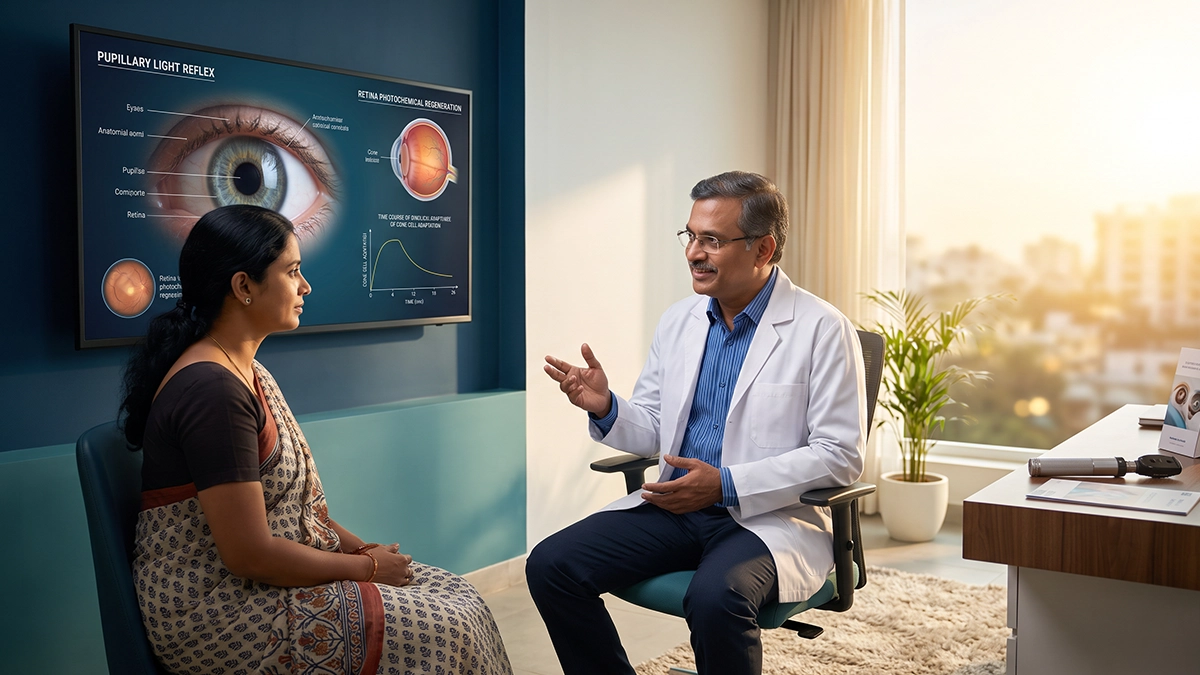
The pupil is that which we see as a black circle in the center of our eye. In the dark it opens fully to let in more light. In bright light it quickly closes down to protect the eye. Learn how the pupil adapts to sudden changes. This happens within about a second.
The Retina
The retina is the light-sensing layer at the back of the eye. It has two kinds of cells:
- Rods: Best for low light and which also improve night vision.
- Cones: Work in the bright light and improve your color and detail recognition.
In the dark the rods do the major work. Upon stepping into bright light the rods are overwhelmed with light. Then the cones take over. This switch is the main aspect of light adaptation in eyes.
Light Adaptation vs Dark Adaptation
Many people are surprised to learn that vision adjustment from dark to bright is actually much faster than going the other way.
Table 1: Eyes Adjusting to Light vs Adjusting to Dark
| Change | What Happens | Usual Time |
| Dark to bright (light adaptation) | Pupil shrinks, cones take over | A few seconds to about a minute |
| Bright to dark (dark adaptation) | Pupil widens, rods slowly recover | Several minutes, full adjustment can take 20–30 minutes |
So when your eyes adjusting to light take a few seconds, that is normal. The short glare you feel is the eye protecting itself.
What Causes Slow Vision Adjustment?
Some people report that they have trouble with vision adjustment from dark to bright. Here are what we call out.
1. Age
With time the process of light adaptation in the eyes slows. Pupils reduce in size and to a greater extent do so slowly. The lens within the eye also becomes more cloudy. Many elderly adults report slow vision adjustment and more glare.
2. Cataract
A cataract is a clouded lens. It distorts light inside the eye which in turn causes glare and foggy vision. This is one of the most common reasons for glare and night driving problems in older adults.
3. Dry Eye
A dry eye surface which may present with bright light that is very harsh. Also it may contribute to light sensitivity.
4. Eye Inflammation or Infection
Conditions of uveitis, conjunctivitis or corneal ulcer present with strong light sensitivity, pain and redness. They require care from a doctor.
5. Retina Problems
Diseases of the retina like age related macular degeneration or diabetic eye disease cause the eye to recover slower after exposure to bright light. Also some inherited retina conditions play a role in how the eye adapts.
6. Medicines and Eye Drops
Dilation drops used during an eye exam which open the pupil for a few hours. Also some other medications may affect pupil size.
7. Vitamin A Deficiency
Vitamin A is required for rods to function. Deficiency of it causes night blindness and poor vision in dim light.
When Is It a Warning Sign?
Not all vision delays from dark to bright are a problem. But you should know when slow adaptation is a symptom of something more.
Table 2: Signs That Need an Eye Check
| What You Notice | Possible Reason | What to Do |
| Glare and haze that keep getting worse | Cataract | Book an eye test |
| Bright light causes eye pain and redness | Inflammation or infection | See a doctor quickly |
| Very slow recovery after bright light | Retina problem | Book an eye test |
| Poor night vision, dry eyes | Possible vitamin A deficiency | See a doctor |
| Sudden light sensitivity with headache, nausea, blurred vision | Possible glaucoma attack | Emergency, go now |
If slow vision adjustment affects your driving, work or daily life, do not ignore it.
Simple Tips to Help Your Eyes
These simple habits can make vision adjustment from dark to bright more comfortable.
- Wear good-quality UV-protective sunglasses outdoors.
- Give your eyes time to adjust to the light before you move on, particularly for stairs.
- Use soft warm lighting at night instead of very bright.
- Keep your car’s windshield and glasses clean to reduce glare.
- Eat up on vitamins from carrots, green leafy veggies, eggs and mangoes.
- Get in for an eye exam at age 40 and beyond.
Conclusion
Most vision changes from dark to light quickly and we notice that the pupil shrinks and the cones take over which within seconds improves vision. But slow vision adjustment, strong glare or painful brightness may indicate a cataract, dry eye, inflammation or a retina issue. By understanding how the eyes adapt to light and your eyes’ response to light you may identify what is normal. If you notice that your vision from dark to bright is delayed or uncomfortable — book an eye check up at Vasan Eye Care.
Frequently Asked Questions
1. Is it normal for vision adjustment from dark to bright to take a few seconds?
Yes. For a short time glare and squinting is typical as the pupil constricts and the retina adapts.
2. Why do my eyes adjusting to light hurt?
Mild symptoms are to be expected. Severe pain is a sign of dry eye, inflammation or infection in which case see an ophthalmologist.
3. Can cataracts affect the light adaptation of eyes?
Yes. A hazy lens which breaks up the light is what causes glare and we have trouble with very bright light.
4. Is light sensitivity a sign of a serious problem?
Sometimes. Mild light sensitivity is a common issue, but if you also experience pain, redness or blurred vision that’s an issue which requires quick attention.