
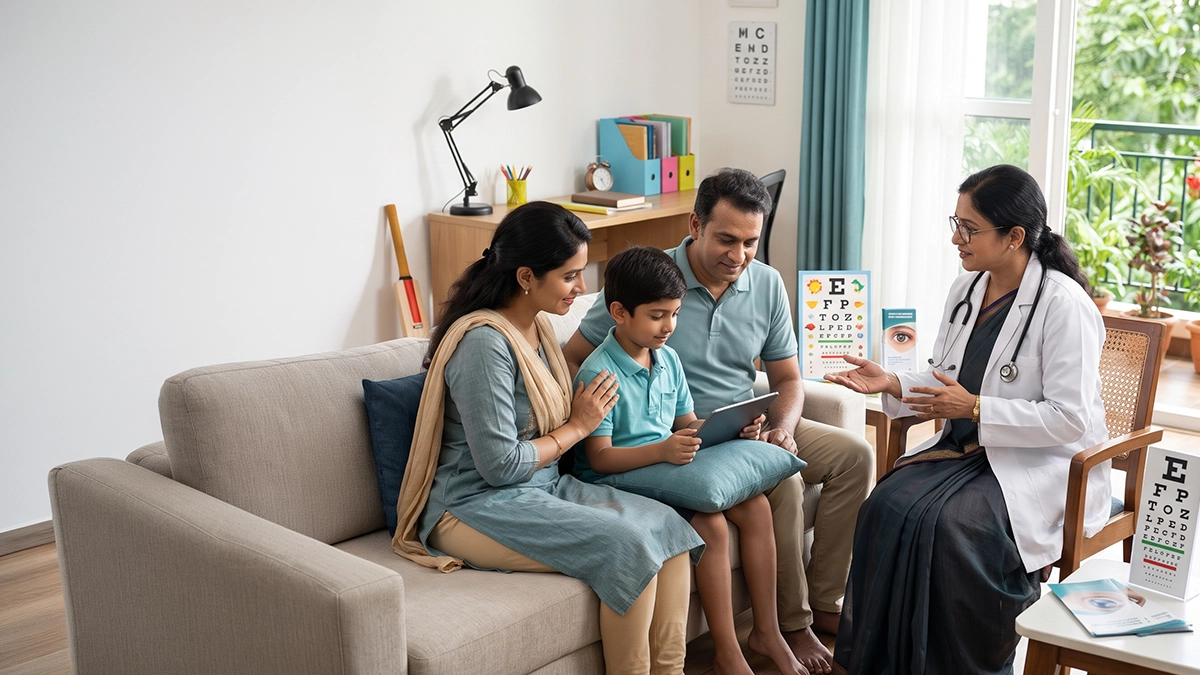
Healthy practices for kids’ screen time go beyond what is reported daily device use. We see value in eye breaks, proper viewing distance, play in the great outdoors, adequate lighting and setting age based limits. Also parents should note to report persistent headaches, blurred distance vision, frequent rub of the eyes or squinting.
Why Do Healthy Screen Habits for Children Matter?
Digital devices are used for education, entertainment and communication. But of late we see that continuous near work has brought on tired eyes, dryness, headaches and temporary blurred vision. This group of symptoms which we term as digital eye strain.
Screens in fact do not have a proven track record of causing permanent eye damage in healthy kids. Also we see that more of a close up focus and less time spent out doors is a factor in myopia. Parents concerned about increasing childhood short-sightedness can also read why the number rises in children.
Indian Academy of Pediatrics reports that for children under two years we should have none screen time except in cases it is appropriate. They say no more than one supervised hour per day for ages 2 5 and less than two hours for ages 5 10. These recommendations are for digital well being in full picture and not just eye strain.
| Age group | IAP screen-time guidance | Parent focus |
| Under 2 years | Avoid routine screen exposure | Interaction, play and sleep |
| 2–5 years | Maximum 1 supervised hour daily | Quality content and breaks |
| 5–10 years | Less than 2 hours daily | Balance recreation, study and outdoor play |
| Older children | Individual family limits | Sleep, schoolwork, activity and wellbeing |
8 Healthy Screen Habits for Children
1. Break Up Long Screen Sessions
After working up close for 20 minutes try looking at something 20 feet away for 20 seconds
This practice makes screen time for kids more comfortable. Short breaks from near work may reduce symptoms of digital eye strain in children.
2. Set Age-Appropriate Screen Limits
Healthy screen practices for kids should be age appropriate. Educational use of screens and recreational gaming do not always have to follow the same rules, but also sleep, physical activity or in person interaction should not be replaced.
Parents who need more detail can review how much screen time is too much. The goal is to manage screen time for kids as part of the child’s full daily routine.
3. Keep Screens at a Comfortable Distance
Holding a phone very near increases demand on near focus. A large screen at a greater distance is often better for comfort than extended use of smart phones. Comfortable distance is a key element of healthy screen practices in children. Encourage upright posture and also see to it that kids do not lie very close to tablets or phones.
4. Encourage Regular Outdoor Activity
Outdoor activity is a key element of what should be a child’s routine. We see that greater outdoor exposure is associated with a lower risk of myopia in kids although it does not promise prevention. Also the American Academy of Ophthalmology brings up outdoor activity in their reports on childhood myopia. In fact we tell parents to balance their kids’ screen time with outdoor play which is among the best tips for kids’ eye health tips. Vasan Eye Care’s myopia information explains how short-sightedness affects distance vision.
5. Reduce Glare and Use Comfortable Lighting
In a dark room a bright screen stands out in an uncomfortable way. Place your devices to reduce reflections from windows or overhead lights and also adjust the brightness to fit the room.
These changes won’t fix refractive errors but they do make screen time for kids easier on the eyes. Also we see that good lighting supports better reading and homework.
6. Remind Children to Blink
Children don’t blink as much when they are into games or videos. This reduced blink rate causes the eye surface to feel dry, irritated or tired out. Simple way to reduce digital eye strain in kids is to encourage regular blinking. Persistent redness, discomfort or watering of the eye requires assessment over repeat self treatment with eye drops.
7. Keep Screens Away Before Bedtime
Healthy sleep routines for kids also includes screen time habits. Late at night which is bright and stimulating can delay sleep and reduce sleep quality.
Setting a rule of no devices before bed time may improve your child’s total screen use. When practical, it is recommended to put the tech out of the child’s reach at night.
8. Schedule Eye Checks When Symptoms Persist
Screen-related discomfort can sometimes reveal an uncorrected refractive error rather than a problem caused solely by the device. Squinting, headaches, blurred distance vision, sitting unusually close to screens or difficulty seeing the classroom board deserve attention.
Parents can learn about the checkup that catches it early and Vasan Eye Care’s paediatric ophthalmology services. Information about eye diseases in children can also help parents recognise other warning signs.
| Sign in a child | Possible explanation | Suggested response |
| Tired or dry eyes after devices | Digital eye strain | Add breaks and review screen habits |
| Frequent headaches | Eye strain or refractive error | Arrange assessment if persistent |
| Squinting at distant objects | Possible myopia | Book an eye examination |
| Sitting very close to screens | Habit or reduced distance vision | Monitor and consider an eye test |
| Persistent blurred vision | Refractive or other eye problem | Seek ophthalmic evaluation |
When Should Parents Seek Eye Care?
Most of what we see in kids improves with rest and change in use. But if you see persistent blurred vision, repeat headaches, an eye turn, difficulty seeing distant objects or report that visual problems at school are getting worse — that’s a cause for professional assessment.
Sudden loss of vision, severe eye pain, noticeable eye injury or new neurological signs require prompt medical care. Don’t attribute such symptoms to children’s screen time.
Eye Care at Vasan Eye Care
Vasan Eye Care offers eye assessment for children with screen related issues, what is a possibility of refractive errors in and other visual problems. Based on what we find we may assess visual acuity, refraction, eye alignment and other aspects of eye health.
Healthy screen habits for children work best alongside outdoor activity, adequate sleep and appropriate eye checks. Parents concerned about excessive device use can also review Vasan Eye Care’s guide to mobile use and children’s vision.
Frequently Asked Questions
1. How much screen time for kids is appropriate?
Screen time for kids must be age and development appropriate. Indian Academy of Pediatrics suggests to avoid routine screens under age two, to limit for ages 2 5 to one supervised hour and for ages 5 10 to less than two hours per day.
2. Can too much screen use damage a child’s eyes permanently?
Normal use of the screen does not cause permanent eye damage in healthy eyes. As for kids though we see that extended close work causes digital eye strain and also that reduced outdoor activity combined with lots of near work may play a role in the development of myopia.
3. What are the most useful kids’ eye health tips for screen use?
Useful kids’ eye health tips are for frequent distance breaks, comfortable viewing distance, good room lighting, regular blinking, outdoor activity and sensible limits. Also if there is a report of persistent headaches, squinting or blurred vision an eye exam should be done.
4. Can healthy screen habits prevent myopia?
Healthy screen routines for kids does not guarantee myopia will be prevented as that is also influenced by genetics. But we see value in a balance of near work with outdoor play and regular eye check ups which in turn supports overall eye health and in the early detection of vision changes.
References
- Indian Academy of Pediatrics Guidelines on Screen Time and Digital Wellness in Infants, Children and Adolescents
https://pubmed.ncbi.nlm.nih.gov/34969943/ - American Academy of Ophthalmology — Myopia Control in Children
https://www.aao.org/education/clinical-statement/myopia-control-in-children