
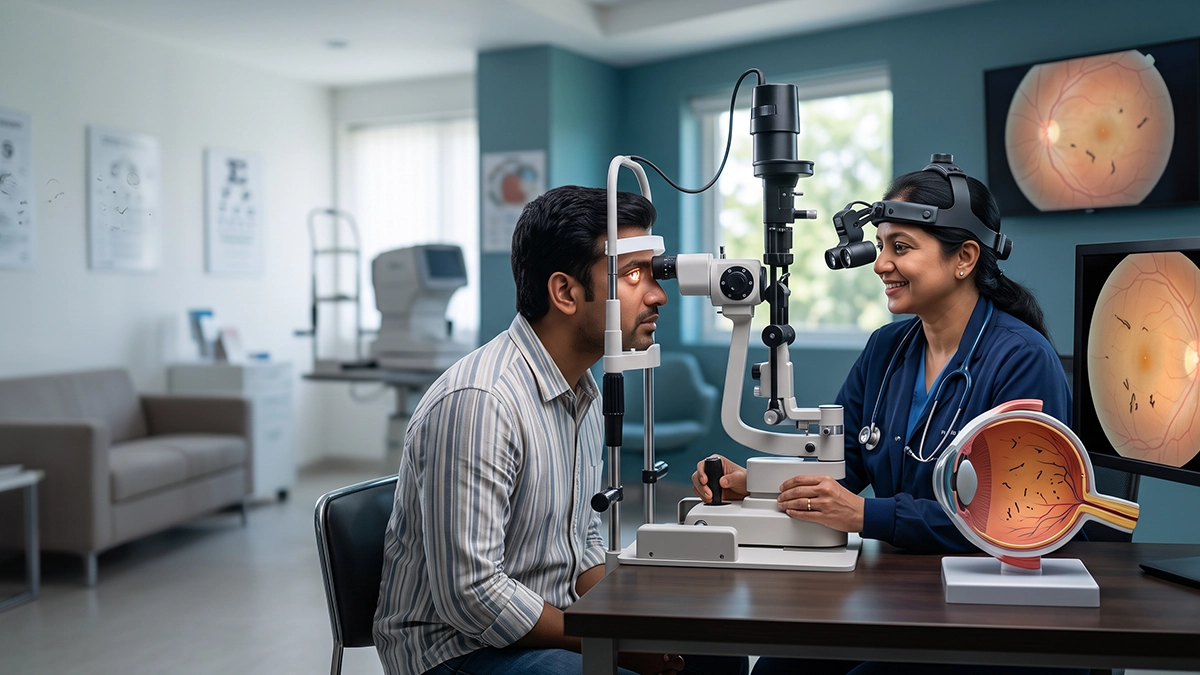
Have you seen small dots, threads or cobwebs moving across your sight? These are called floaters. Most people see a few at some point in life. But that which you notice as new floaters in vision may be a sign of a health issue at the back of the eye. In this guide that goes over the common causes of eye floaters, which ones are harmless, and when to see an eye doctor for floaters. Vasan eye care puts it in simple terms so you and your family know exactly what to do.
What Are Floaters?
Your eye is filled with a clear, jelly-like gel called the vitreous. The retina is the thin, light-sensing layer at the back of the eye.
Sometimes tiny clumps form inside this gel. These clumps cast shadows on the retina which in turn appear as floaters. They move as your eye moves and tend to dart out of focus when you try to look at them. Many people live with a few old floaters for years. But new floaters in vision need more attention, especially if they appear quickly.
Common Causes of Eye Floaters
As age is the most common reason is that the vitreous gel which is in the eye becomes watery and shrinks. It may detach from the retina. This is what doctors term Posterior Vitreous Detachment or PVD. It is very common after age 50 and is usually harmless.
Other causes of eye floaters include:
- High short-sightedness (high minus power)
- Past cataract surgery or an eye injury
- Swelling inside the eye, called uveitis
- Bleeding inside the eye, for example from diabetic eye disease
- A tear or hole in the retina
Causes of Eye Floaters and What They Mean
| Cause | Who Is More Likely to Get It | How Serious Is It? |
| Age-related gel changes (PVD) | People over 50 | Usually harmless, but needs one check-up |
| High short-sightedness | People with high minus power | Higher risk of retina problems |
| Eye injury or past eye surgery | Anyone | Needs a check-up |
| Diabetic eye disease (bleeding) | People with diabetes | Can be serious |
| Uveitis (swelling inside the eye) | Any age | Needs treatment |
| Retinal tear | Older adults, people with high power | Serious, needs urgent care |
Are New Floaters in Vision Dangerous?
In fact for the most part that is what happens. Vasan eye care sees that many new floaters in vision are a result of normal vitreous gel changes. Over a few weeks to months they tend to diminish in noticeability and your brain gets used to them.
At times the shrinking gel pulls at the retina which in turn may cause a tear. If not treated the fluid can get in through the tear and pull the retina away. This is what is known as retinal detachment which in turn may cause permanent vision loss. Read more about detachment and the retinal risk to understand why acting fast matters.
Sudden Eye Floaters
Sudden eye floaters are a different issue from the floaters you may have had for years. When many new spots show up all at once that is a sign of bleeding or a retinal tear. If you are wondering what a sudden shower means,your eye’s alarm went off. With sudden eye floaters an exam by an eye doctor is a must.
Flashes and Floaters Together
Flashes look like tiny lightning streaks or camera flashes, often at the side of your vision. They happen when the gel tugs on the retina. Flashes and floaters together are a stronger warning sign than floaters alone. Many people notice flashes and floaters more in a dark room.
When to See an Eye Doctor for Floaters
Knowing when to see an eye doctor for floaters can protect your sight. Use the simple guide below. You can also learn more about when floaters are a warning sign.
How Quickly Should You Act?
| What You Notice | What It May Mean | What To Do |
| A few old floaters, no change | Normal gel changes | Mention it at your next eye check-up |
| A few new floaters in vision | Possible PVD | See an eye doctor within a day or two |
| Sudden eye floaters in large numbers | Possible bleeding or retinal tear | See an eye doctor the same day |
| Flashes and floaters together | Gel pulling on the retina | See an eye doctor the same day |
| A dark shadow or curtain in side vision | Possible retinal detachment | Emergency: go to an eye hospital now |
| Sudden blurred or lost vision | Serious eye problem | Emergency: go to an eye hospital now |
Do not wait to see if sudden eye floaters go away on their own. Treating a retinal tear early is often simpler than treating a detachment.
What Happens at the Eye Check-Up?
The doctor will perform drops in your eyes to dilate the pupils. This is part of what is known as a dilated eye exam. You may notice some blurriness of vision, also light sensitivity for a while so do not try to drive yourself home.
If unsure at all about when to see an eye doctor for floaters that have appeared go ahead and get in to see the doc. Also report to your physician any which new floaters appear post eye injury.
Treatment Options
Most floaters need no treatment. If a retinal tear is found, the doctor may seal it with a laser or a freezing treatment. A retinal detachment usually needs surgery. In rare cases, when floaters are so dense that daily life becomes hard, a surgery called vitrectomy may be considered.
Conclusion
Most of the time floaters are harmless, but it is asked that you pay attention to any new floaters in your vision. Know what to look out for and also when to see an eye doctor for floaters. For your peace of mind they often suggest you get an eye check up at Vasan Eye Care if you do notice new floaters in vision. Our retina specialists will do a full exam of your eyes and it will guide you on what to do next.
Frequently Asked Questions
1. Do floaters go away on their own?
Many become less noticeable over weeks or months. But new floaters in vision should still be checked once by an eye doctor.
2. Can screen time cause floaters?
No. Bright screens can make floaters easier to notice. The real causes of eye floaters are changes inside the eye, such as the gel shrinking with age.
3. Are flashes and floaters an emergency?
They can be. If they appear suddenly, see an eye doctor the same day.
4. Can I prevent floaters?
Age-related floaters cannot be prevented. Controlling diabetes, protecting your eyes from injury and getting regular eye check-ups can help.
References
- Floaters – National Eye Institute (NIH)
https://www.nei.nih.gov/learn-about-eye-health/eye-conditions-and-diseases/floaters - Floaters – MedlinePlus, U.S. National Library of Medicine
https://medlineplus.gov/ency/article/002085.htm - Retinal Detachment – MedlinePlus, U.S. National Library of Medicine
https://medlineplus.gov/retinaldetachment.html - National Programme for Control of Blindness & Visual Impairment – Ministry of Health and Family Welfare, Government of India
https://npcbvi.mohfw.gov.in/