
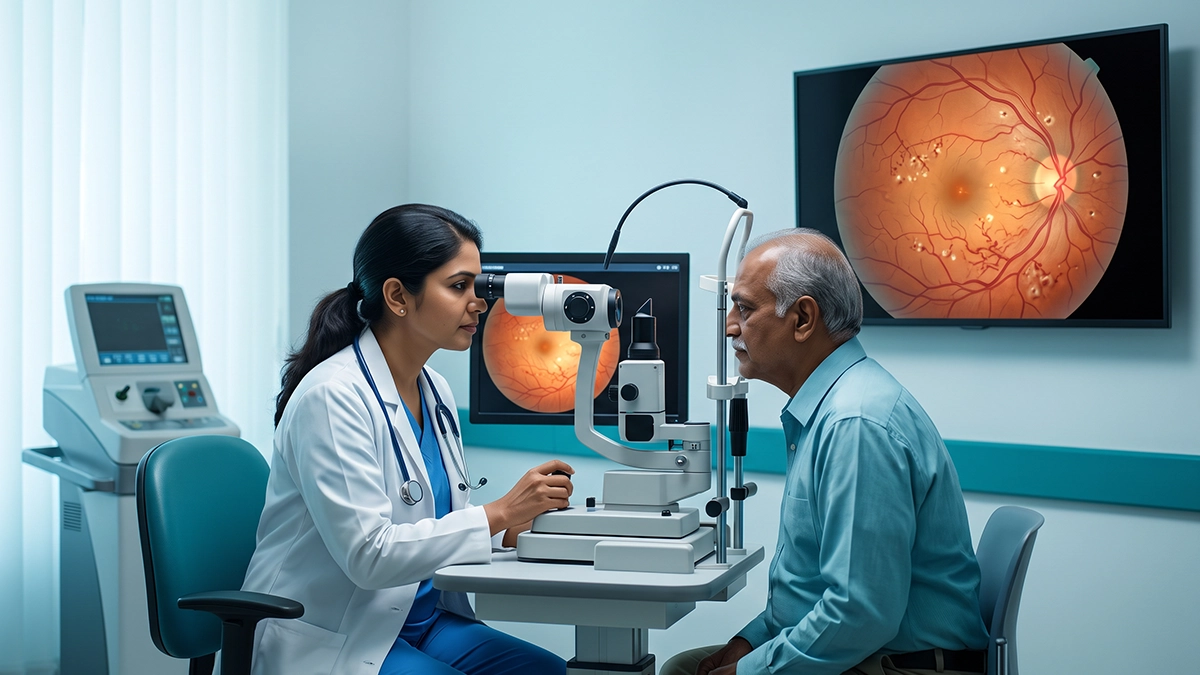
Diabetes over time affects the eyes which is why we do retina screening even if your vision seems great. Proliferative diabetic retinopathy is the advanced stage of Diabetic Retinopathy. It presents when blood flow to the retina is reduced which in turn causes growth of very fragile new blood vessels that may bleed, produce scar tissue, and in turn put sight at risk.. In PDR ophthalmology we stress early detection which is critical as the medical intervention is aimed at protecting useful vision before serious complications set in.
What Is Proliferative Diabetic Retinopathy?
Proliferative diabetic retinopathy is what happens when damaged retinal blood vessels don’t supply enough oxygen to parts of the retina. The eye in response grows abnormal new blood vessels on the retina or the optic disc which is a process called neovascularization. These new vessels are weak and they may bleed into the vitreous gel.
For those that are curious how PDR eye disease varies from other stages of diabetic retinopathy, the main thing to note is abnormal vessel growth. Once these vessels present themselves the condition is diagnosed as proliferative retinopathy and should be evaluated by a retina specialist.
According to the National Eye Institute on diabetic retinopathy report at later stages of the disease we see vitreous hemorrhage, floaters, blurred vision and vision loss. Proliferative diabetic retinopathy may present before there is any large scale vision change.
Symptoms of Proliferative Diabetic Retinopathy
Some in the early stages of proliferative diabetic retinopathy may not have many symptoms. As abnormal vessels break and bleed out patients may notice floaters, dark strings, blurry vision or a shadow which is present in some areas of the visual field. With large scale vitreous hemorrhage there may be sudden and major vision loss.
| Symptom or Finding | What It May Indicate |
| New floaters or dark spots | Bleeding from fragile vessels |
| Sudden blurred or hazy vision | Vitreous haemorrhage or macular involvement |
| Dark or missing areas | Retinal damage or bleeding |
| Sudden severe vision loss | Major haemorrhage or retinal detachment |
In any sudden visual change in a person with diabetes prompt assessment is required. Proliferative diabetic retinopathy also produces scar tissue which pulls at the retina and may cause tractional retinal detachment.
How Is PDR Diagnosed?
A major element of diabetic retinopathy diagnosis is the dilated retinal exam. In what may be a varying scope of practice an ophthalmologist may use fundus photography, optical coherence tomography or fluorescein angiography to study abnormal vessels, bleeding and macular swelling. A retina test which also serves to document the condition at hand also plays a role in determining follow up.
In PDR ophthalmology, we also report on diabetic macular edema, vitreous hemorrhage and retinal traction which in turn may modify the treatment plan.
Proliferative Diabetic Retinopathy Treatment
The proliferative diabetic retinopathy treatment is based on disease activity, macular involvement, bleeding and retinal traction. Panretinal photocoagulation which is also known as PRP laser is a well proven treatment which does the job of reducing the stimulus for abnormal vessel growth. Anti-VEGF injections also may be put forward for certain patients to manage neovascularisation and related macular edema.
The NIDDK report on diabetic eye disease states that for advanced cases treatment options include medicine, laser procedures, surgery, or a mix of these. If proliferative diabetic retinopathy leads to persistent vitreous hemorrhage or tractional retinal detachment vitrectomy or some other form of retina surgery may be considered.
| Treatment Approach | When It May Be Considered |
| PRP laser | Active abnormal retinal vessel growth |
| Anti-VEGF injections | Neovascularisation and/or macular oedema |
| Vitrectomy | Persistent bleeding or tractional retinal detachment |
| Diabetes control | Alongside eye treatment to reduce ongoing damage |
Good also include control of blood sugar, blood pressure and cholesterol. For retina issues we have eye procedures which address retinal complications, and diabetes management which in turn helps reduce ongoing vascular damage.
Why Regular Retina Follow-Up Matters
A person with proliferative diabetic retinopathy may require more regular follow up than that which a person without retinal disease has. Follow up also helps to determine if abnormal blood vessels have shrunk, if new bleeding has appeared and if further proliferative diabetic retinopathy treatment is needed.
At Vasan Eye Care we have that patients with PDR eye may present for retinal assessment and get care that is based on the stage and activity of the disease.All of a sudden if you see floaters, flashes, blurred vision or unexplained visual loss that should be paid attention to. We see that early evaluation of proliferative retinopathy which if caught early may reduce the risk of preventable complications.
FAQs
1. Can proliferative diabetic retinopathy cause blindness?
Yes. Untreated diabetic retinopathy can cause a very serious loss of vision from blood, scar tissue or retinal detachment.
2. Is proliferative diabetic retinopathy reversible?
We will do what we can to stop disease progress and reduce more damage in some cases that may result in preexisting retinal injury which is beyond repair.
3. What is the main treatment for PDR?
PRP laser and anti-VEGF injections are key options. For right sided proliferative diabetic retinopathy treatment the treatment is based on retinal findings.
4. When is surgery needed for PDR?
Surgery may play a role when proliferative diabetic retinopathy is a cause of persistent vitreous hemorrhage or tractional retinal detachment.
5. How often should a person with diabetes have an eye examination?
Many people with diabetes need at least yearly dilated exams, but proliferative diabetic retinopathy may require more frequent follow-up.