
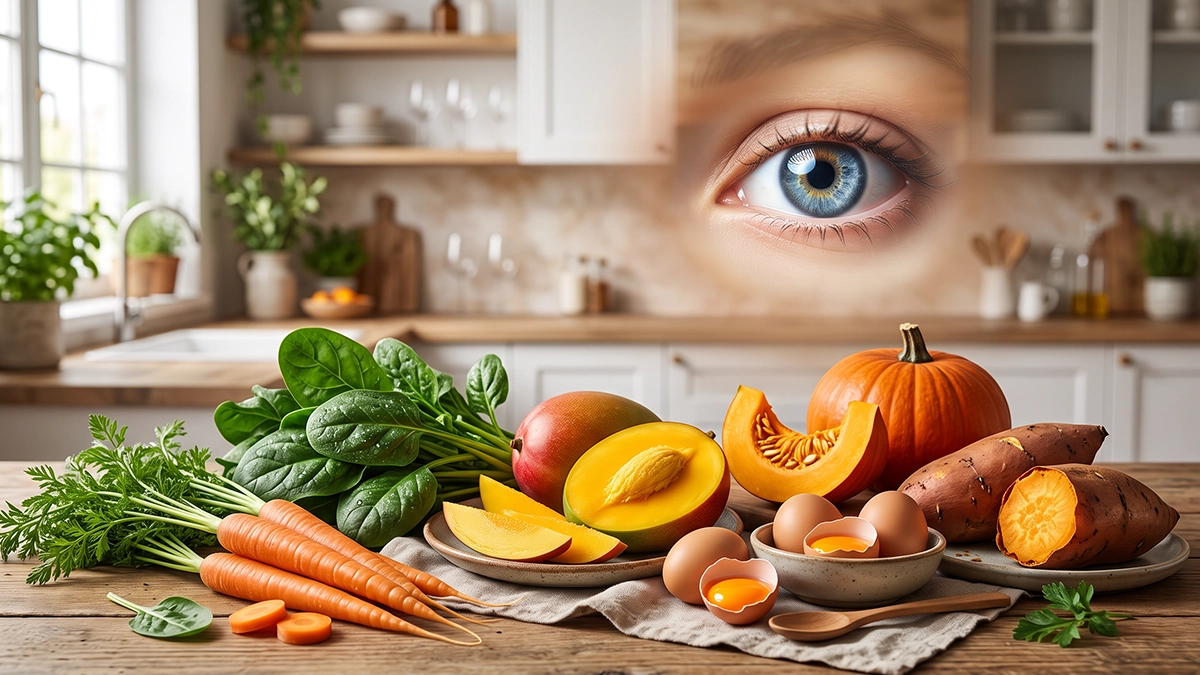
Indeed, there was some truth behind what our grandparents said regarding carrots and eyesight. Vitamin A assists us in seeing in low-light situations and maintains good health of the eye’s anterior part. However, despite this fact, there are still many Indian families, especially with small kids, who lack sufficient amounts of vitamin A. The current blog is an easy-to-understand guide focused on vitamin A for eye health, complete with tips on which vitamin A-rich foods to add to your daily meals.
How Vitamin A for Eye Health Works
Vitamin A does two big jobs for your eyes.
1. It Helps You See in Dim Light
The retina is the light-sensing layer at the back of the eye. It uses vitamin A to make a pigment called rhodopsin. This pigment helps the eye work in low light. You can read more about what vitamin A does in the retina. Without enough vitamin A, night vision becomes poor.
2. It Keeps the Eye Surface Healthy
Vitamin A helps keep the cornea and the thin membrane over the eye’s white surface moist and healthy. Understanding these vitamin A benefits for eyes makes it less likely that they will become dry and develop infections. It becomes clear from the above reasons why prioritizing vitamin A for eye health is so essential.
Vitamin A Deficiency and Vision
Vitamin A deficiency and vision often appears first in the eyes. Its connection to vision problems is well established, and among children worldwide, it remains a leading cause of preventable blindness.
Table 1: Signs of Deficiency
| Stage | What Happens | What You May Notice |
| Night blindness | Retina cannot work well in low light | Trouble seeing at dusk or in a dark room |
| Dry eyes (xerosis) | Eye surface becomes dry | Dry, rough-looking eyes |
| Bitot’s spots | Foamy, grey-white patches form on the white of the eye | Small patches near the cornea |
| Corneal damage | The cornea softens or ulcers form | Serious risk of blindness, needs urgent care |
Night blindness often appears first. Severe vitamin A deficiency and vision loss occur most often among young children, pregnant women, and people whose diets are poor or who have had long-term diarrhoea. Liver or gut disease may also limit the body’s absorption of vitamin A.
Vitamin A Rich Foods for an Indian Diet
The good news is that many vitamin A rich foods are easy to find in Indian kitchens. Learn more about the foods that carry it and how to add them to your meals.
Vitamin A comes in two forms. Animal foods give ready-made vitamin A. Plant foods give beta-carotene, which the body turns into vitamin A.
Table 2: Foods Good for Eyesight
| Food Group | Examples |
| Orange and yellow vegetables | Carrots, pumpkin, sweet potato |
| Green leafy vegetables | Spinach, drumstick (moringa) leaves, amaranth, fenugreek leaves |
| Fruits | Mango, papaya |
| Dairy | Milk, curd, butter, ghee |
| Eggs | Especially the yolk |
| Fish and liver | Fish, fish liver oil, chicken or goat liver |
These foods good for eyesight also provide fibre, minerals and other vitamins. Eat them with a little oil, ghee or curd. Fat helps your body absorb vitamin A better.
Simple Ways to Eat More
Include chopped carrots in parathas and upma. The palak dal and methi sabzi can be eaten quite often, and the inclusion of fruits such as mangoes and papayas is easy. Eating one egg or consuming milk will also be beneficial. These daily dietary practices play a vital role in supporting vitamin A for eye health.
Who May Need a Supplement?
Most healthy adults get enough vitamin A from a balanced diet, which is the best way to support vitamin A for eye health. But some people may need extra. Ask your doctor when a supplement is warranted for you or your child.
In India, the government gives vitamin A doses to young children through public health programmes. This helps prevent deficiency and protects their eyes.
Be Careful With High Doses
Include finely cut carrots in the preparations of parathas and upma. It is possible to eat palak dal and methi sabzi regularly, and fruits such as mangoes and papayas can be easily included in your diet. An egg should be eaten, and one may drink some milk as well. These daily practices will contribute immensely toward maintaining optimal vitamin A for eye health.
Common Myths
Many people believe that the advantages of vitamin A for eyes will be able to fix poor eyesight. This is false. Shortsightedness, longsightedness, and cataracts would still require glasses, contact lenses, or even surgery. It is a fact that consuming foods rich in vitamin A would help preserve your eyesight, but it would definitely not take the place of an eye test. Real vitamin A for healthy eyes would go a long way in helping the eyes but it would not restore lost vision. Consider the many advantages of vitamin A for the eyes to be helpful in this situation and continue to take vitamin A for eye health.
Frequently Asked Questions
1. What does vitamin A do for your eyes?
Vitamin A supports vision in low light and helps keep the eye surface moist and healthy.
2. Which vitamin A-rich foods are suitable for children?
Carrots, mango, papaya, green leafy vegetables, eggs and milk are good choices.
3. Can vitamin A deficiency and related vision problems be reversed?
Treatment often improves early symptoms, including night blindness. Once severe corneal damage occurs, though, the resulting loss of vision may be permanent.
4. Can foods that support eye health eliminate the need for glasses?
No. Good food supports eye health, but it cannot correct a glasses power.
Conclusion
Supporting eye health with vitamin A can start with everyday meals. Include vitamin A rich foods and other foods linked to healthy vision, then pay attention to changes such as difficulty seeing at night. Regular eye tests still matter; nutrition works alongside them, not instead of them. Build these habits in the kitchen and involve everyone in the family, from children to grandparents. If you or your child struggles to see in dim light, book an eye check-up at Vasan Eye Care.
References
- Vitamin A and Carotenoids: Fact Sheet for Consumers – Office of Dietary Supplements, National Institutes of Health
https://ods.od.nih.gov/factsheets/VitaminA-Consumer/ - Vitamin A – MedlinePlus, U.S. National Library of Medicine
https://medlineplus.gov/ency/article/002400.htm - Vitamin A Deficiency – StatPearls, National Library of Medicine (NIH)
https://www.ncbi.nlm.nih.gov/books/NBK482362/ - Micronutrient Supplementation – National Health Mission, Government of Goa
https://nhm.goa.gov.in/micronutrient-supplementation/