LASIK is a solution for many people to put an end to their glasses and contact lens dependence. But it isn’t the right choice for all. What you get out of it depends not only on your degree of refractive error but also the state of your cornea health, shape and thickness, the stability of your prescription and your overall health.
That is what we put forward for performing LASIK eligibility via a detailed eye exam before surgery. In some cases LASIK may just have to be put off. In others we may go with a different vision correction procedure which is safer.
Identifying which patients to avoid LASIK in will help you make a more informed decision with your eye doctor.
What Determines LASIK Eligibility?
LASIK eligibility is not determined by your spectacle prescription. Prior to surgery which we recommend, an ophthalmologist will check your cornea, tear film, refractive error and the health of your eyes.
The National Eye Institute reports that which is true for most people getting LASIK you should have a comprehensive eye exam. Conditions like keratoconus, dry eye, glaucoma, cataract and some eye infections may play a role in increasing your risk of complications.
Your eye specialist may also measure corneal thickness and curvature, pupil size, stability of your prescription and if any present condition will affect healing.
Who Should Not Get LASIK Surgery?
People With an Unstable Eye Prescription
One of the key factors in LASIK eligibility is prescription stability.
If you have had a large change in your spectacle or contact lens power within the last year your ophthalmologist may suggest you wait. Performing the procedure when your refractive error is still in flux makes for a less predictable outcome.
The FDA reports that recent changes in prescription are an issue in refractive instability. Younger adults, pregnancy, breastfeeding, certain drugs and some health conditions may cause these fluctuations.
People With Keratoconus or Abnormal Corneal Shape
Laser in eye surgery which is what they do for LASIK, they remove a precise amount of corneal tissue. Also for this to be done the cornea has to be of a certain structure.
People there is progressive thinning and bulge in the cornea with keratoconus. For these patients LASIK may not be an option because we don’t want to weaken the cornea which may in turn increase the risk of serious complications. The National Eye Institute reports that keratoconus is included among the conditions which see increased LASIK complications.
Corneal topography is key in terms of LASIK eligibility. Corneal topography is key in terms of LASIK eligibility.
People With Very Thin Corneas
A cornea of adequate thickness is what we see for safe laser recontouring.
If the cornea is too thin we run the risk of weakening its structure with removal of more tissue during LASIK. The FDA reports that thin corneas is a very important risk which must be determined prior to refractive surgery.
Having a thin cornea is not a reason to rule out vision correction. An experienced eye specialist can evaluate which if any other refractive procedure is appropriate.
People With Severe or Uncontrolled Dry Eye
LASIK is known to temporarily decrease corneal nerve sensitivity and change tear production. Which is to say that a person which already has severe dry eye issues may report increased discomfort post op.
Dryness is a very common LASIK side effects.. Symptoms may present as burning, irritation, fluctuating vision or a gritty feeling.
The FDA reports that LASIK does in fact cause dry eye to do more damage which also is reported by the National Eye Institute who put dry eye forward as a risk which is present beforehand and also one which is known to occur after surgery.
An ophthalmologist will advise to treat the ocular surface first and at a later time reevaluate LASIK eligibility.
Pregnancy and Breastfeeding
Pregnancy and breastfeeding bring on hormonal changes which for a while may affect vision and prescription stability.
For which reason LASIK is delayed at these times. The FDA reports that pregnancy and breastfeeding are the conditions which cause refractive instability.
Patients at which time they may speak to their ophthalmologist about the possibility of surgery once their vision has stabilized.
Certain Autoimmune Diseases and Healing Problems
Some medical issues can affect normal wound healing or increase chances of complications.
The FDA reports that people with conditions which affect healing should take extra care, this includes certain autoimmune diseases, immunodeficiency states and diabetes. Also some drugs play a role in healing or refractive stability.
This does not mean that all patients with a systemic health issue will be turned down for LASIK. Evaluation for LASIK eligibility is very individual; we look at disease control, medications, eye health and other related factors.
Never stop a prescribed medication in order to qualify for LASIK without talking to your prescriber.
People With Active Eye Infection or Inflammation
LASIK is usually not performed for active eye infections or at signs of great inflammation.
Conditions which present with keratitis, ocular herpes, uveitis or severe blepharitis require proper evaluation and management first. Also the FDA and National Eye Institute report that preexisting eye disease or infection is a key issue in the work up for refractive surgery.
Good pre op eye care which in turn creates a better environment for healing.
People With Cataract or Certain Other Eye Diseases
Not at all does every case of blurry vision come from spectacle power.
Cataract, glaucoma and other eye issues may present with independent affect on vision which is not related to refraction. In such cases which we see in practice, correction of spectacle power with LASIK may not solve the root issue.
The National Eye Institute reports that glaucoma and cataract are conditions that increase risk for LASIK.
At an ophthalmologist’s we do a thorough evaluation at an eye hospital which will identify the cause of your vision reduction which in turn will guide us in which refractive procedures to pursue.
What Are the Possible LASIK Risks and Side Effects?
Even before you decide on LASIK surgery, it is wise for you to be aware of what the procedures’ LASIK risks are.
You may experience temporary dry eyes, glare, halos which appear around lights, blurry and double vision, and light sensitivity which are recognized LASIK side effects. The National Eye Institute reports that these issues usually improve within a few months post procedure, though in some people they may be persistent. Also less common but more serious areLASIK risks of infection, corneal healing issues and a drop in visual quality.
Discussing what you can expect to gain from a procedure, what the limitations are, and what possible complications may arise is a key element of informed consent.
What If You Are Not Eligible for LASIK?
Being out of the question for LASIK doesn’t mean that you will forever wear glasses.
Based on your cornea’s structure, your degree of refractive error, age, and the state of your eyes in general, other eye treatments may be put forth. The National Eye Institute reports that besides LASIK which includes PRK and phakic intraocular lens implantation there are other refractive procedures which are available.
The right choice is based on the patient’s individual case instead of a specific technology.
How Is LASIK Eligibility Checked?
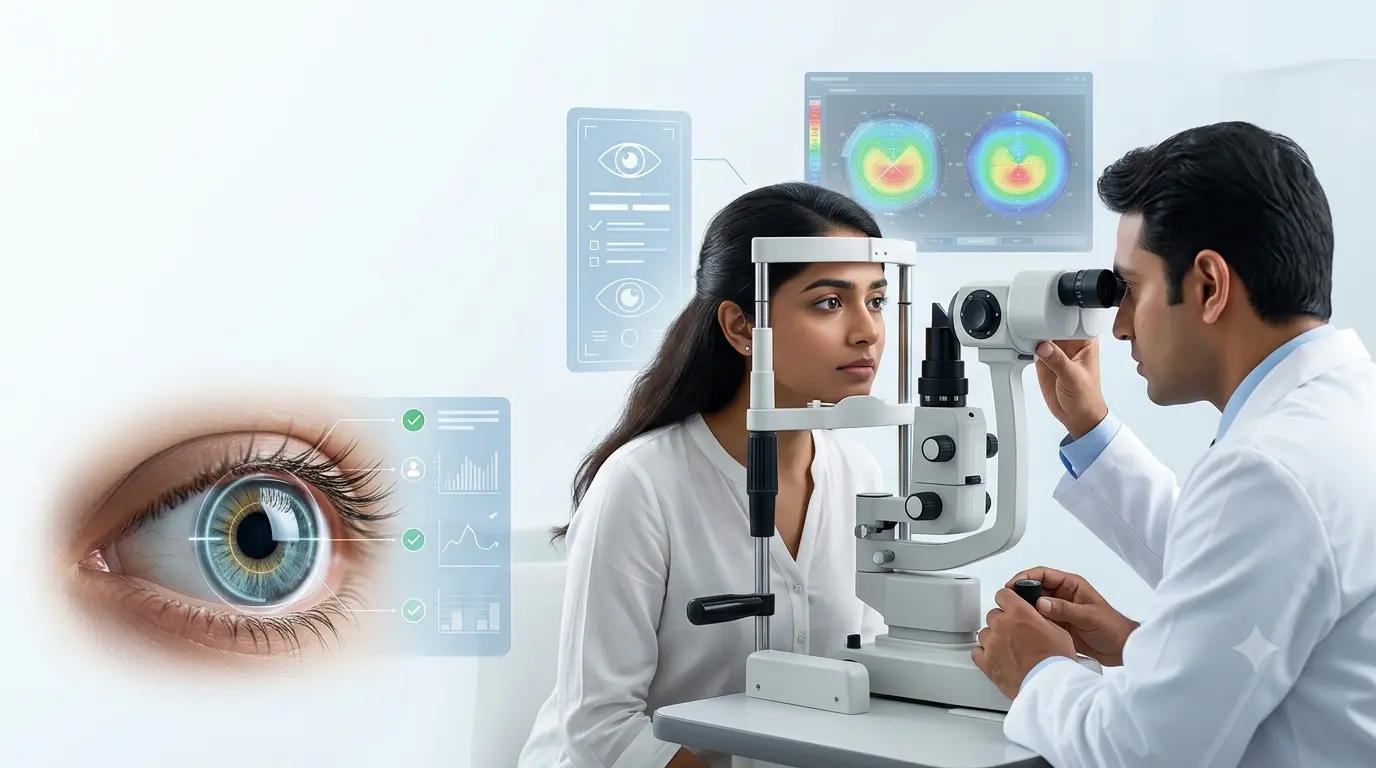
A thorough pre-LASIK evaluation does more than determine spectacle power. Your ophthalmologist will look at prescription stability, corneal shape and thickness, tear film quality, pupil features and the health of various internal eye structures.
This at the same time we will go over your health habits, work life, medical past, what drugs you are on and what you expect out of the surgery.
At Vasan Eye care patients that are looking at laser vision correction can get in to see an experienced eye doctor for a full assessment and to determine what treatment option will work best for their individual eyes.
Conclusion
LASIK has very good outcomes for proper candidates but it is also very important to choose patients carefully. An unstable prescription, thin or abnormal cornea, severe dry eye, advanced eye disease, pregnancy, and some systemic health issues may play a role in disqualifying a patient from having LASIK eligibility.
Instead of going by spectacle power or age we ask that you come in for a full eye exam at a laser vision correction eye hospital. A skilled eye doctor will do a thorough LASIK risks assessment, go over what complications may present themselves LASIK side effects and put forth the best option for your particular case which also includes the best care for the future of your eye care.
Frequently Asked Questions
1. Who is not a good candidate for LASIK?
People which may not be suited to the procedure include those with unstable prescriptions, keratoconus, low corneal thickness, very dry eyes, active eye infections or certain health issues. Pregnancy and breastfeeding can also put you out of the question for LASIK eligibility at present. We will require a full exam to determine what is best for you.
2. Can I get LASIK if I have dry eyes?
It is dependent on the degree and cause of the dryness. In some cases LASIK may worsen dry eye symptoms which is a reason for treatment to be done prior to surgery. Your ophthalmologist can reevaluate the ocular surface post treatment which in turn will determine if LASIK is still appropriate.
3. Can someone with a thin cornea get LASIK?
Not always. LASIK removes corneal tissue which is a reason to see that you have enough healthy tissue to go around after the procedure. If your cornea is not a good fit for LASIK your eye specialist will present alternative options which are based on your corneal measures and what your particular case needs.
4. Is LASIK safe for everyone?
No surgery is for everyone. We do careful screening which also brings to light people that may have a greater LASIK risks. Your eye condition, corneal structure, prescription, medical history and what you expect post surgery all play a role in the decision to go ahead with it.
5. What happens if I am not eligible for LASIK?
Not being a LASIK candidate doesn’t mean you have no options for vision correction. Based on the health of your eyes the ophthalmologist may bring up other procedures or may put you back on glasses or contacts which may be the safe bet in your case.