
What are Multi-Pathology Eyes?
Multi-Pathology Eyes refer to cases where a patient has multiple eye conditions affecting different parts of the eye at the same time. These complex cases require a customized and coordinated treatment approach to manage all conditions effectively and preserve vision.

Multi-Pathology Eyes in India: Why They Are So Common
Some eyes come in with one problem. A cataract. A detached retina. A corneal infection. Treat the problem, follow up, move on. Other eyes do not cooperate so neatly. They come in with two or three conditions running at once, each one shaping how the others behave. A patient has a dense cataract, yes, but also advanced glaucoma that has already cost them half their optic nerve. Another has diabetic retinopathy, a thickened macula, a visually significant cataract, and a cornea that is beginning to decompensate. The standard single-condition playbook stops working in this territory.
A multi-pathology eye is one carrying two or more simultaneous ocular conditions that interact, complicate each other, and have to be planned for together. These eyes need a coordinated approach, which means a clinician with broad subspecialty knowledge, an institution that actually houses multiple services under one roof, and surgical capability for complex combined procedures.
Sequencing matters. Operate on a cataract without first controlling intraocular pressure in an uncontrolled glaucoma patient, and you will make the glaucoma worse. That is not a theoretical risk; it is a clinical reality that happens when the workup is rushed.
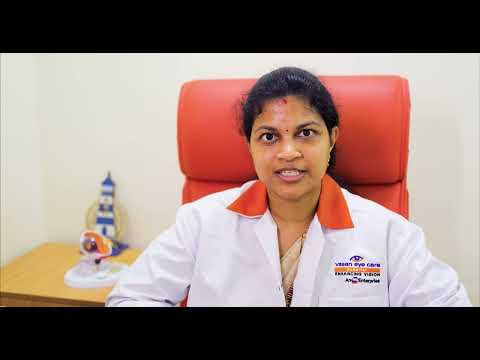
Vasan Eye Care’s multi-subspecialty team works in an integrated way on exactly this kind of case: combined anterior and posterior segment disease, coexisting corneal and lens pathology, glaucoma with concurrent cataract, and the post-traumatic eye with everything going on at once.
India’s demographic and disease landscape makes multi-pathology eyes the norm, not the exception, in busy clinics. An ageing population means a single patient can easily turn up with age-related cataract, primary open-angle glaucoma, and early age-related macular degeneration at the same time.
Diabetes is the bigger story. India has one of the largest diabetic populations in the world, and diabetic eye disease produces its own triad: diabetic retinopathy, diabetic cataract, and neovascular glaucoma. These conditions tend to show up together, and they feed each other. Post-traumatic eyes are another classic: corneal scarring, a subluxated lens, vitreous haemorrhage, and a peripheral retinal break, all in the same eye after a single injury.
Late presentation makes everything harder. Many patients in India reach a specialist only after vision has already taken a significant hit, by which point multiple pathologies are advanced and the options are narrower than they would have been a year earlier. The work, then, is not just surgical skill. It is judgement: deciding what to fix first, what to fix together, and what to leave alone for now.
Common Multi-Pathology Combinations in Clinical Practice
| Combination | Common Cause | Management Approach |
|---|---|---|
| Cataract plus Glaucoma | Age-related; steroid-induced | Combined phaco-trabeculectomy or phaco-MIGS |
| Cataract plus Diabetic Retinopathy | Diabetes mellitus | Sequential: stabilise the retina first, then cataract |
| Corneal Scarring plus Cataract | Trauma; prior infection | Combined keratoplasty and IOL implantation |
| Retinal Detachment plus Cataract | High myopia; trauma; post-vitrectomy | Combined vitreoretinal and cataract, or staged |
| Glaucoma plus Corneal Decompensation | Fuchs’ dystrophy; pseudoexfoliation | Glaucoma drainage device with keratoplasty |
| Keratoconus plus Cataract | Age-related cataract in a young KC patient | Careful IOL power selection; DALK with IOL if needed |
| Diabetic Retinopathy plus Neovascular Glaucoma | Ischaemic retina; VEGF-driven iris neovascularisation | Anti-VEGF, panretinal photocoagulation, glaucoma drainage |
How Diagnosis and Management Work
Assessing a multi-pathology eye starts with breaking it down. Each component gets a subspecialty-level look: visual acuity, anterior segment examination (cornea, anterior chamber, iris, lens), posterior segment examination (vitreous, retina, optic nerve), intraocular pressure, and targeted imaging.
The imaging package typically includes corneal topography, OCT of the retina and optic nerve, fundus photography, and fluorescein angiography where indicated. These tests provide objective documentation and, more importantly, make it possible to track each condition independently over time.
- Once every pathology has been mapped, the team asks four questions:
- Which condition poses the greatest immediate threat to vision?
- Can these be addressed in one combined procedure, or must they be staged?
- How will treating one condition affect the others? Cataract surgery can spike IOP in a glaucoma patient. Vitrectomy accelerates cataract. These ripples are anticipated, not discovered mid-surgery.
- What is the realistic visual prognosis given the combination?
Honest prognosis is part of good care. If the optic nerve is already hollowed out from advanced glaucoma, removing the cataract will clear the media but will not bring back the lost field. Telling a patient that up front, kindly but clearly, is better than disappointment on day one after surgery.
When Should You Seek Assessment?
- A known diagnosis of two or more eye conditions in the same eye (for example, glaucoma and cataract)
- Diabetes with new or worsening vision, suggesting concurrent retinopathy and cataract
- A history of eye trauma with multiple structural changes
- Vision that has not improved after treatment for one condition, which often points to a second unaddressed pathology
- A mismatch between the visual acuity and the degree of any single condition (for example, vision worse than you would expect for the cataract density, hinting at coexisting macular disease)
- Any patient with a systemic condition known to cause multiple ocular complications: diabetes, hypertension, autoimmune disease
Management: Step-by-Step
- Comprehensive multi-subspecialty evaluation: anterior segment, posterior segment, glaucoma, and cornea specialists contribute and share findings.
- Imaging: OCT, fluorescein angiography, corneal topography, visual fields, biometry, and ultrasound B-scan as required.
- Prioritisation: sight-threatening conditions (active neovascularisation, uncontrolled IOP, active retinal detachment) are addressed first.
- Surgical planning: combined versus staged procedures; IOL selection adjusted for corneal irregularity or macular compromise; anaesthetic plan for complex combined surgeries.
- Execution: procedures performed by surgeons with the right subspecialty expertise, often in dedicated combined surgical sessions.
- Post-operative monitoring: several systems tracked in parallel (IOP, graft health, retinal status, IOL position).
- Rehabilitation: low vision assessment and aids for patients left with permanent impairment from multiple pathologies.
How Much Does Multi-Pathology Eye Treatment Cost in India?
| Procedure | Approximate Cost Range (INR) |
|---|---|
| Combined phacoemulsification with trabeculectomy | 50,000 to 1,20,000 |
| Combined vitrectomy with cataract surgery | 80,000 to 2,00,000 |
| Combined keratoplasty with IOL implantation | 1,00,000 to 2,50,000 |
| Anti-VEGF with laser (diabetic / neovascular) | 15,000 to 50,000 per session |
| Complex multi-procedure case (glaucoma drainage with keratoplasty) | 1,50,000 to 3,50,000 |
Costs vary considerably based on the number and complexity of conditions. Vasan Eye Care works out a personalised surgical plan and estimate after initial evaluation.
Post-Treatment Care and Recovery
What to Expect After Multi-Pathology Surgery?
Recovery after a complex combined procedure is longer than after single-condition surgery. The eye is checked more frequently in the first few weeks to confirm that every treated element is behaving as expected. Visual recovery can be slower when multiple structures have been operated on.
In some eyes (particularly where the retina or optic nerve has already suffered irreversible damage) full visual recovery is not on the table. The goal shifts to preserving and maximising the remaining vision. This is not a failure of surgery. It is the honest mathematics of what the eye had left to work with.
Multi-pathology eyes also need long-term care. New conditions can develop over the years. Existing ones evolve. Regular follow-up is how you catch change early and intervene before a manageable problem becomes an irreversible one.
Post-Operative Care Tips
- Follow drop schedules carefully. Multi-pathology post-op care often involves several different drops with different dosing schedules. Skipping a dose is a common reason things go wrong.
- Attend every scheduled follow-up. Visit frequency is often higher than for single-condition surgery.
- Report new symptoms early: pain, sudden vision change, increased redness.
- Manage systemic disease. Diabetes and hypertension control directly protect ocular health long-term.
- Engage low vision rehabilitation services early if vision is significantly reduced. Waiting until vision is worse helps nobody.
- Discuss all medications with your ophthalmologist. Some systemic drugs affect IOP or retinal health in ways you may not expect.
References
- American Academy of Ophthalmology. Combined Cataract and Glaucoma Surgery.
- PMC / NCBI. Management of Combined Ocular Pathologies, 2019.
- National Eye Institute. Diabetic Eye Disease.












Frequently Asked Questions
It is an eye with more than one disease or structural problem happening at the same time. Cataract and glaucoma together. Retinal disease and corneal scarring together. Managing them well requires a team, not a single procedure done in isolation.
Not always. Some combinations benefit from one combined operation. Others must be staged, treated in sequence, with time in between for one eye to heal and be reassessed before the next step. The decision depends on the specific conditions, their severity, and how they interact. An experienced surgeon does not treat this as a matter of preference; the plan is built around the eye.
Sometimes, yes. Cataract surgery can temporarily raise IOP, which matters in a glaucoma patient. Vitrectomy accelerates cataract formation. These interactions are not surprises; they are anticipated and built into the surgical plan. That is precisely why these cases need careful preoperative thought.
Each pathology caps vision independently. The overall prognosis is set by the most severe or irreversible component. In an eye with cataract plus advanced glaucomatous optic nerve damage, the cataract can be removed beautifully, but the optic nerve still cannot regenerate. Vision will improve, but not to a level the cataract surgery alone would predict.
No. Some combinations are managed medically with drops, intravitreal injections, and laser, and never need an operating theatre at all. Surgery is planned only when it offers a meaningful benefit that less invasive treatment cannot match.
Typically six weeks to several months, depending on what was done. Vision often fluctuates during recovery because different parts of the eye heal at different rates. Patience in this window is genuinely useful.
Yes. A comprehensive eye centre with subspecialists in anterior segment, posterior segment, glaucoma, and cornea is the minimum. Vasan Eye Care’s integrated structure allows that coordination to happen inside a single centre, which saves patients the exhausting shuffle between hospitals.
Yes, and it often does. Diabetes can simultaneously produce diabetic retinopathy, diabetic cataract, neovascular glaucoma, and corneal changes. Managing all of these requires coordinated sequencing, because the treatments for one can affect another (anti-VEGF before intraocular surgery, for example, reduces the risk of bleeding).
Yes. Complex, multi-surgery plans are exactly the situation where a second opinion from a comprehensive eye centre is appropriate and often reassuring. Any good surgeon welcomes it.
Yes. Vasan Eye Care has subspecialists across anterior segment, posterior segment, glaucoma, cornea, and paediatric ophthalmology, working as a team on complex multi-pathology cases.
References
American Academy of Ophthalmology. Combined Cataract and Glaucoma Surgery.
PMC / NCBI. Management of Combined Ocular Pathologies, 2019.
National Eye Institute. Diabetic Eye Disease.