
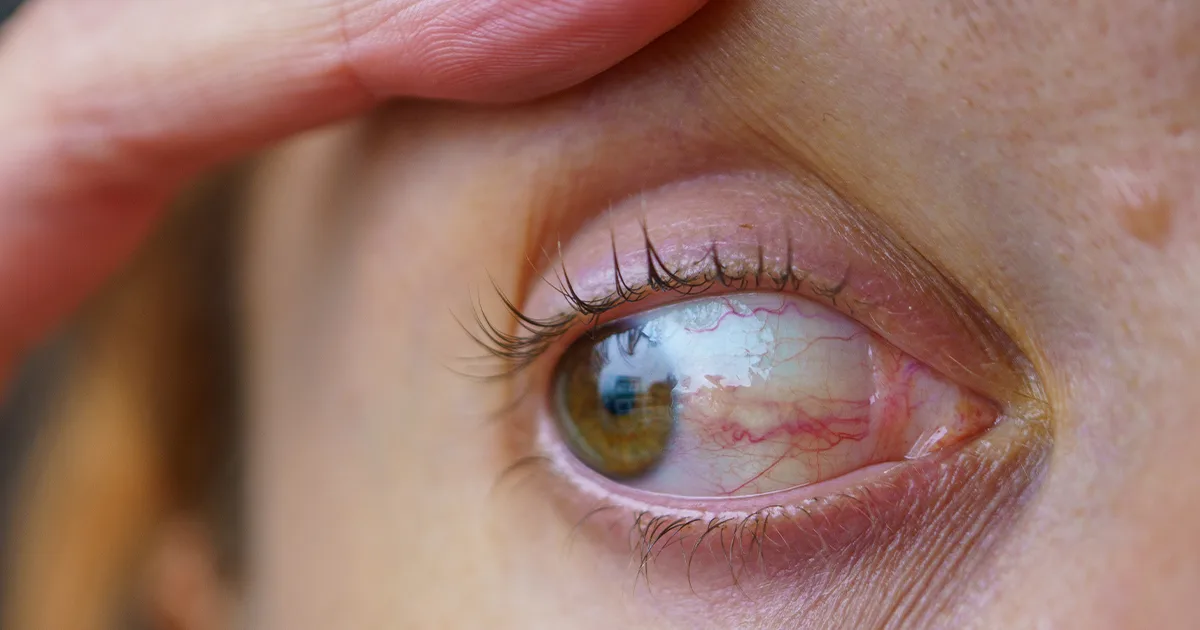
A small yellowish bump on the white of the eye, usually on the nasal side, is one of the commonest findings during routine eye checks. Most people never notice it, some pick it up in a photograph, and only a few are bothered by it. The medical name is pinguecula. It is driven almost entirely by long-term sun, wind, and dust exposure.
This guide walks you through what pinguecula is, why it forms, how to prevent it, and how to manage it when needed.
What Is Pinguecula?
A pinguecula is a benign, slightly raised, yellow-white patch of thickened conjunctiva. The conjunctiva is the clear tissue covering the white of the eye. In a pinguecula, this tissue undergoes changes known as elastotic degeneration, with deposits of proteins and fats that give it its typical yellow appearance.
Pinguecula does not usually extend onto the cornea. If it does, it becomes a pterygium.
How Does Pinguecula Differ From Pterygium?
| Feature | Pinguecula | Pterygium |
|---|---|---|
| Location | On the conjunctiva near the cornea | Starts on conjunctiva, extends onto cornea |
| Shape | Small, yellowish, slightly raised patch | Wing-shaped, fleshy, often with blood vessels |
| Vision impact | None usually | May cause astigmatism and blur |
| Growth | Usually stable | May grow over time |
| Treatment | Mostly observation | Observation, drops, or surgery |
What Causes Pinguecula?
1. Long-term UV exposure
The main driver. Outdoor workers in bright sunny environments are at higher risk.
2. Dust and wind
Chronic exposure in dusty, windy environments (construction, farming, driving, outdoor sports).
3. Dry climate
Dry indoor or outdoor environments.
4. Chronic eye irritation
Persistent exposure to smoke, chemicals, or allergens.
5. Age
More common with increasing age, though younger outdoor workers can develop it too.
6. Possibly genetic
Family clusters are reported.
7. Contact lens wear
May contribute in certain cases.
What Are the Symptoms of Pinguecula?
Most pingueculae are asymptomatic. When symptoms appear, they can include:
- A visible yellowish bump on the white of the eye (usually on the nasal side, sometimes temporal)
- Mild redness around the patch
- Gritty or foreign body sensation
- Dryness
- Occasional stinging or burning
- Mild light sensitivity
- Cosmetic concern
What Worsens Pinguecula?
- Unprotected sun exposure
- Dusty, windy environments
- Air-conditioning blowing directly on the face
- Smoking
- Chronic dry eye
- Allergies with eye-rubbing
- Certain irritating cosmetics near the eye
Avoiding these helps keep the pinguecula quiet and reduces the risk of flare-ups.
How Is Pinguecula Diagnosed?
- History of outdoor or dusty work
- Slit-lamp examination
- Comparison with pterygium and other lesions
- Tear film assessment
- Photo documentation for monitoring
A short visit at an eye hospital usually confirms the diagnosis within minutes.
How Is Pinguecula Managed?
Treatment depends on symptoms, appearance, and patient preference.
1. Lifestyle and protection
- UV-rated wraparound sunglasses
- Wide-brimmed hats outdoors
- Protective goggles in dusty or windy environments
- Humidifiers indoors
- Avoid smoking
- Reduce screen time in dry air
- Take regular eye breaks
2. Lubricating drops
Preservative-free artificial tears ease gritty or dry sensations. Suitable for daily use.
3. Short courses of anti-inflammatory drops
For episodes of redness and irritation, the doctor may prescribe short courses of mild steroid drops or NSAID drops.
4. Antihistamine drops
Useful when allergies are driving repeated flare-ups.
5. Avoid over-the-counter “redness remover” drops
They provide temporary relief but can worsen redness with long-term use.
6. Surgical removal
Considered in cases where the pinguecula:
- Becomes cosmetically bothersome
- Causes persistent irritation despite medical measures
- Shows recurrent inflammation
- Is enlarging or extending towards the cornea (evolving into pterygium)
The procedure is usually simple and performed under local anaesthesia.
7. Cosmetic options
Minor procedures including conjunctival excision with tissue closure or, in selected cases, use of amniotic membrane. Recurrence is possible without continued sun protection.
Supportive eye treatments such as lubricating drops and lid hygiene usually accompany any formal treatment plan.
How to Make Pinguecula Less Noticeable
- Consistent sun and dust protection
- Regular lubrication
- Avoid rubbing the eyes
- Manage allergies and dry eye
- Good hydration
- Balanced diet
- Avoid harsh cosmetics near the eye
- Surgical removal for persistent cosmetic concern
Pinguecula cannot be completely avoided once formed without surgery, but steady care keeps it quiet.
Does Insurance Cover Pinguecula Removal?
Insurance coverage varies:
- Most Indian health insurance plans do not cover pinguecula removal if the procedure is purely cosmetic
- Coverage may be available if there is clear documented irritation, recurrent inflammation, or if the pinguecula is evolving into a pterygium that affects vision
- Corporate and premium policies sometimes offer partial coverage
- Written pre-authorisation is the safer way to confirm
- The hospital’s insurance desk can help with documentation
Preventing Pinguecula
- Wear UV-rated sunglasses with wraparound design
- Use protective eyewear for outdoor sports and work
- Take regular breaks in dry air
- Avoid long exposure to dust and wind
- Treat chronic dry eye properly
- Manage allergies and avoid eye rubbing
- Use humidifiers in very dry environments
- Stop smoking
- Maintain hydration and a balanced diet
Pinguecula in Special Situations
Outdoor workers
Construction workers, farmers, drivers, and fishermen are particularly at risk. A pair of UV-rated safety glasses is a high-value preventive step.
Contact lens wearers
Proper lens hygiene, planned wear time, and lubricating drops reduce irritation.
Frequent travellers
Air travel and air-conditioned spaces worsen dryness. Use lubricating drops and hydrate well.
Older adults
Pinguecula becomes more common with age. Regular lubrication and sun protection are important.
Children
Rare but possible in heavily outdoor populations. Protective eyewear from a young age is useful.
When Should You See a Doctor?
Book a review if:
- You notice a new yellowish patch on the eye
- Existing pinguecula becomes red, painful, or itchy
- Symptoms return despite home care
- You are considering removal for cosmetic reasons
- Vision is affected (may indicate progression to pterygium)
- You work in high-risk environments and want preventive advice
- A child develops a visible patch on the eye
A short visit to an eye specialist hospital confirms the diagnosis and rules out more serious lesions.
Pinguecula Care at Vasan Eye Care
Vasan Eye Care has been looking after patients across India since 2002, now as part of ASG Enterprises. With more than 150 super-speciality centres, 500+ ophthalmologists, and over 5,000 trained eye care staff, the team handles pinguecula cases every day. A typical visit includes a slit-lamp examination, photo documentation, lifestyle guidance, lubricating drops, and, where needed, medical or surgical options.
Key Takeaways
- Pinguecula is a benign yellow patch on the conjunctiva from sun and dust exposure.
- It is not a cancer and usually does not affect vision.
- Symptoms include redness, irritation, and dryness; many cases are asymptomatic.
- UV protection, lubrication, and avoiding irritants form the core of management.
- Surgery is reserved for persistent symptoms or cosmetic concerns.
- A progressive pinguecula can evolve into a pterygium, which affects vision.
Frequently Asked Questions (FAQs)
A pinguecula does not usually go away on its own. Steady sun protection, lubricating drops, and avoiding dust, wind, and smoke keep it quiet. Short courses of anti-inflammatory drops settle inflamed flare-ups. Surgical removal is an option for persistent irritation or significant cosmetic concern. Continued sun protection after surgery is important to reduce recurrence.
The main cause is long-term exposure to ultraviolet light from sunlight, often combined with dust, wind, and dry air. Outdoor work in bright or dusty environments is the strongest risk factor. Chronic eye irritation, smoking, and certain genetic factors also contribute. Age increases susceptibility, though younger outdoor workers can develop pinguecula too.
Cover varies. Most Indian health insurance plans do not cover pinguecula removal if it is purely cosmetic. Some plans may cover it when there is documented persistent irritation, recurrent inflammation, or progression to a pterygium affecting vision. Corporate and premium policies sometimes offer partial coverage. Written pre-authorisation from the insurer is the safer way to confirm before surgery.
Unprotected sun exposure, dusty and windy environments, direct air-conditioning on the face, smoking, chronic dry eye, frequent eye rubbing, and certain irritating cosmetics near the eye can all worsen pinguecula. Avoiding these triggers, wearing UV-rated sunglasses, and using lubricating drops reduce flare-ups and keep the patch quiet.
References
- American Academy of Ophthalmology. Pinguecula and Pterygium. https://www.aao.org/eye-health/diseases/pinguecula-pterygium
- National Center for Biotechnology Information. Pinguecula. https://www.ncbi.nlm.nih.gov/books/NBK459333/
- WebMD. Pinguecula. https://www.webmd.com/eye-health/pinguecula
- National Eye Institute. Eye Conditions. https://www.nei.nih.gov/learn-about-eye-health
Treatments We Offer: Eye Treatments | Cataract Surgery | LASIK Eye Surgery | Squint Eye Treatment | Retinal Diseases | EPI LASIK | Corneal Services | Refractive Surgery | Oculoplasty Surgery | Dry Eye Treatment | Contoura Vision Surgery | Anti VEGF Agents Treatment | Photorefractive Keratectomy | Vitrectomy Surgery | Epi Contoura Eye Surgery | Customised LASIK Surgery | Retinal Laser Photocoagulation Treatment | Implantable Collamer Lens |Cataract Surgery in Bangalore | Cataract Surgery in Hyderabad | Cataract Surgery Chennai | LASIK Eye Surgery in Hyderabad | LASIK Eye Surgery in Bangalore | LASIK Eye Surgery in Chennai | Retina Services in Hyderabad | Retina Services Chennai | Squint Eye Treatment in Bangalore | Squint Eye Treatment in Hyderabad | Squint Eye Treatment in Chennai | Glaucoma Treatment in Bangalore | Glaucoma Treatment in Chennai | Glaucoma Treatment in Hyderabad
Eye Conditions We Treat: Glaucoma Treatment | Orbital Trauma | Macular Hole | Retinopathy of Prematurity | Uveitis | Traumatic Treatment | Retinal Detachment | Cataract Diseases | Posterior Subcapsular Cataract | Diabetic Retinopathy | Rosette Cataract Surgery | Squint Eye Disease