
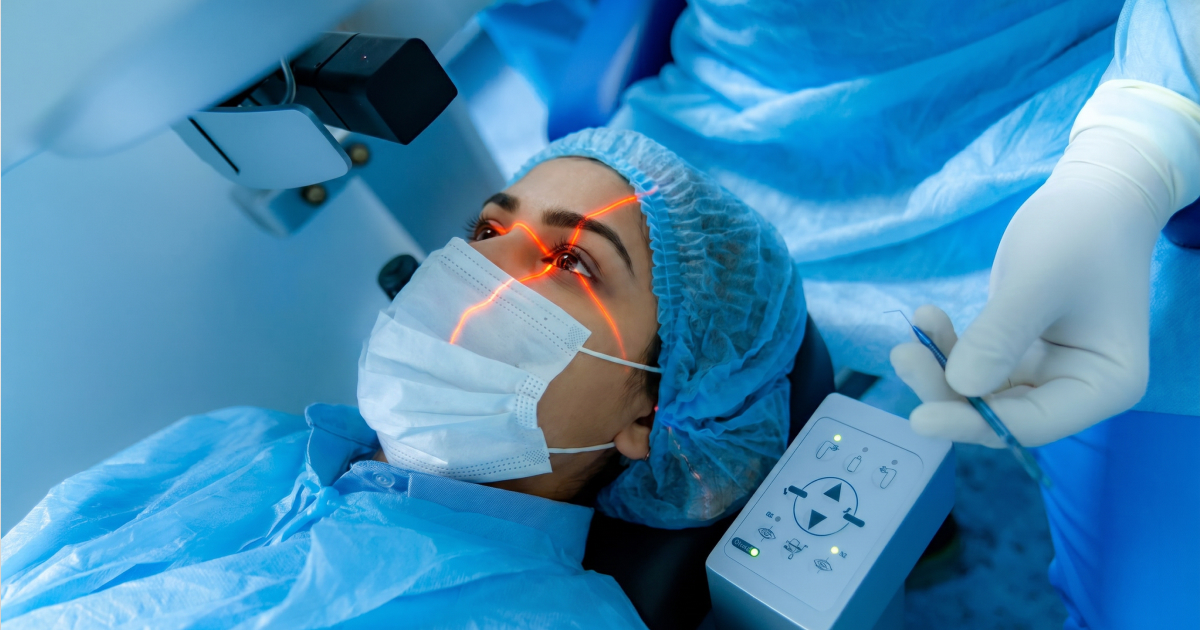
Cataract is a very common age related eye issue in which the natural lens within the eye becomes cloudy and to the degree which affects clear vision. As soon as this cloudiness steps in to interfere with reading, driving, screen work, or daily activities doctors may recommend cataract surgery lens replacement. In this procedure the cloudy natural lens is taken out and it is put in a clear artificial intraocular lens also known as an IOL.
In India we see that patients today have access to better surgical techniques, improved diagnostic tests, and a great many lens options. This is why people often search for cataract lens types india before meeting an eye specialist. To better understand cataract surgery lens replacement options patients and families are able to ask the right questions which in turn helps them choose a lens that fits their eyes, lifestyle, and budget.
What Happens During the Lens Replacement Procedure?
In cataract surgery lens replacement procedure we remove the cloudy natural lens and put in an artificial one which in turn restores clear passage for light. The artificial lens is left in place permanently and functions as a permanent focus. The surgery is typically performed after we do an in depth eye measure, go over your medical history and determine the proper power of the new lens.
At Vasan Eye Care we focus on the patient’s eye health, visual requirements, and what is best for each person’s situation which in turn makes our cataract surgery lens replacement very patient centered. For a person with astigmatism, diabetes, corneal weakness, retinal issues, or a dense cataract we may take a different approach than we would for someone with a simple cataract. Also at Vasan Eye Care we go over what modern cataract procedures we perform which include phacoemulsification, laser cataract surgery, MICS and also we detail the different IOL options.
Why Lens Choice Is Important
Many patients ask which lens is best for cataract surgery in india because the lens selected during surgery can affect daily comfort after recovery. What is the best lens isn’t always the most expensive option. It is the lens that fits your eye health, vision goals, occupation, time spent on screens, reading habits, night time driving needs and what your doctor recommends.
For example many patients put forth which lens is best for cataract surgery in India what they don’t know is that the lens you choose at the time of surgery may not be the most expensive but the one that is right for your eye health, vision goals, occupation, screen time, reading habits, night time driving issues and what the doctor says.
Stigmatism may be treated with a toric lens. As for those seeking to reduce their dependence on glasses, we evaluate them for multifocal, trifocal, or EDOF lenses. That is to say cataract surgery lens replacement should always be a very personal choice.
Latest Cataract Surgery Techniques in India
In present times cataract care has shifted to small incision and precise surgery. Phacoemulsification is very much in practice which is a process of using ultrasound energy to break the cloudy lens into small pieces which we then remove. Micro incision cataract surgery which uses very small incisions is used in selected patients. Also there is the femtosecond laser-assisted cataract surgery which we term as FLACS that uses laser for certain planned steps of the procedure.
The aim of which is to make cataract surgery lens replacement safe, accurate, and comfortable. But the latest method may not be the best for each patient. The surgeon looks at the cataract hardness, corneal health, pupil size, eye pressure, retina health, and overall health of a patient before determining the best approach.
| Cataract Surgery Technique | How It Works | Common Suitability |
| Phacoemulsification | Uses ultrasound to break and remove the cloudy lens through a small incision | Routine cataract cases |
| Micro-Incision Cataract Surgery | Uses a very small incision for cataract removal and IOL placement | Selected patients needing faster healing |
| Femtosecond Laser-Assisted Cataract Surgery | Uses laser assistance for specific planned steps | Selected cases needing higher precision |
| Small Incision Cataract Surgery | Removes the cataract through a self-sealing tunnel | Mature or dense cataracts when advised |
Cataract Lens Types Available in India
When comparing cataract lens types in India, patients are made aware of monofocal, toric, multifocal, trifocal and EDOF lenses. Each of these lenses is designed for a different purpose. Some are meant primarily for distance vision and some to improve vision at multiple ranges. What lens is right for you in your cataract surgery lens replacement is determined by clinical test results and not what may at first seem best to you.
A monofocal lens will give you clear vision at what is usually a primary distance and may require you to use reading glasses. Toric lenses are for astigmatism. Multifocal and trifocal lenses we see as a way to reduce your dependence on glasses for near, intermediate and distance tasks in right candidates. EDOF lenses which we note correct for an extended range of vision especially for distance and intermediate use.
| Lens Type | Main Benefit | What Patients Should Know |
| Monofocal Lens | Clear vision at one main distance | Reading glasses may still be needed |
| Toric Lens | Helps correct astigmatism | Accurate testing and placement are important |
| Multifocal Lens | Supports near and distance vision | May not suit some retinal or corneal conditions |
| Trifocal Lens | Supports near, intermediate, and distance vision | Night glare and halos should be discussed |
| EDOF Lens | Offers an extended range of vision | Fine near work may still need glasses |
How to Choose the Right Cataract Lens
The question which lens is best for cataract surgery in India has no single answer. For others we see the use of toric, multifocal, trifocal or EDOF lenses. Best results come from a personalized approach that matches the lens to the patient’s eye health and lifestyle, which is why cataract surgery lens replacement is a very individual issue.
A person which is a frequent night time driver may require a different lens plan than a person who spends more time reading indoors. A work professional which uses a laptop for long hours may require better intermediate vision. A patient with diabetes or retina changes may require close screening before premium lens selection. This is why it is important to have an open discussion with the ophthalmologist regarding cataract surgery lens replacement.
Cost and Lens Selection in India
The outlay for cataract surgery lens replacement is a function of the type of surgery, choice of lens, diagnostic tests, city, hospital facilities, surgeon’s recommendation, medicines, and follow up care. In India patients comparing cataract surgery costs should ask what is included in the estimate which they are given instead of the base price alone.
The eye cataract surgery cost can change when a patient chooses a premium lens, laser-assisted technique, or additional investigations. Vasan Eye Care presents info on cataract surgery for patients which want to go into greater depth on the procedure, technology, recovery, and lens options. A thorough consultation which we at Vasan Eye Care also perform, is what we do to help patients see that the variable cost of cataract surgery lens replacement is based from person to person and that also it is important for care and lens choice to take in to account medical and lifestyle issues.
How to Prepare for Surgery
Before the cataract surgery lens replacement the doctor will do a series of tests on your eyes. We’ll be looking at the power of your eye, the cornea measurements, retina health, blood sugar levels, blood pressure, and what medications you are on. Also please share with us your history of diabetes, heart disease, asthma, allergy, eye injury, prior eye surgery, or use of blood thinners. This information will help our team plan for a safe procedure.
After cataract surgery lens replacement it is usual that we give our patients eye drops as prescribed by us. We ask that they do not rub the eye, that they protect it from dust and water, and that they keep to follow up visits. There will be some mild irritation, watering, or blurred vision in the early stages of recovery. If however we see severe pain, a drop in vision, increasing redness or discharge that is a cause for immediate medical attention.
Myths About Cataract Lens Types
One common myth is that imported lenses are always better than Indian lenses. In reality, cataract lens types India include many reliable options, and suitability matters more than country of origin. Also it is a wide held belief that premium lenses will free you completely from the use of glasses. While premium lenses do in some cases reduce the dependence on glasses, what is also true is that results of this is a function of the health of the eye and the healing process.
Another issue is that which cataract returns after cataract surgery lens replacement. What haswhich lens is best for cataract surgery in india been removed does not return. In some patients the capsule behind the lens may become cloudy which is treatable with a quick laser procedure if required.
When Should You Visit an Eye Doctor?
You should go for an eye check up if you notice that your vision has gone blurry, lights are too bright, colors do not pop like they used to, night time driving has become an issue, or your glasses no longer correct your vision. Delay in getting cataract surgery and lens replacement may cause cataracts to progress which in turn may make the surgery more complex in some cases. Early evaluation gives you the time to research cataract lens types India, to learn about cataract surgery and lens replacement, and to determine which lens is best for cataract surgery in India for your personal needs.
FAQs
The best lens for you will depend on your specific eye health, your lifestyle and what you expect out of the results. If you are asking which lens is best for cataract surgery in india, your doctor may compare monofocal, toric, multifocal, trifocal, and EDOF lenses after detailed testing. The goal is to choose the lens that is safest and most useful for your eyes.
Femtosecond laser assisted cataract surgery which is a very advanced option we have for certain cases. Phacoemulsification still is a very common approach. What method of cataract surgery lens replacement is right for you depends on the grade of cataract, the structure of your eye, and what your surgeon recommends.
As of 2026 surgery with intraocular lens implantation is the standard treatment for cataracts which affect vision. In terms of advances we see better imaging, advanced planning, laser assistance, and improved IOL designs which we use in the time of cataract surgery lens replacement.
Both Zeiss and Alcon are large scale players in the lens field. What is right for you depends on the lens type, eye measurement, what your surgeon recommends, and your visual goals. We ask that you look past the brand to which lens design is best for your eye. This is a key thing to do when looking at cataract lens types India and in the choice of which lens is the best for cataract surgery in India.
Reference Links
- The National Programme for Control of Blindness & Visual Impairment under the Ministry of Health & Family Welfare provides information about India’s national eye-care and blindness control programme.
https://npcbvi.mohfw.gov.in/Home - The Press Information Bureau, Government of India, reported cataract surgery achievements under the Mission Mode Cataract Surgery campaign.
https://www.pib.gov.in/PressReleaseIframePage.aspx?PRID=1944598 - AIIMS R.P. Centre mentions advanced phacoemulsification, femtosecond laser-assisted cataract surgery, and premium intraocular lenses such as toric, multifocal, and extended depth-of-focus IOLs.
https://aiims.edu/index.php/en/unit-iii