
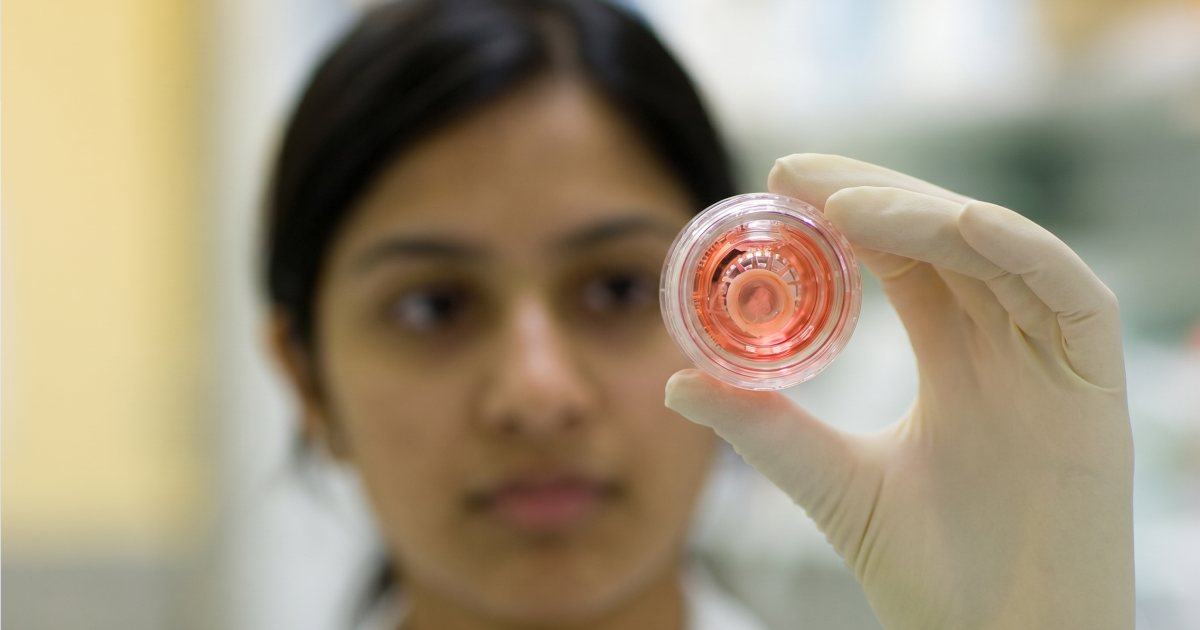
An eye bank is a medical service which does the connection between donation of eyes at the time of death and corneal transplant. When a family donates the eyes of a loved one after he or she has passed away, trained staff collect, preserve, examine and distribute the donated corneal tissue which in turn helps a person with corneal blindness.
For instance if you’re one of the many looking for an eye bank you’ll get that it is more than just a place that stores eyes. The correct eye banking definition includes public awareness, family consent, tissue retrieval, preservation, screening, quality assessment, record keeping and ethical allocation. In short an eye bank takes in the generous act of donation and turns it into safe, usable tissue for sight restoring treatment.
Why Eye Banking Matters
The cornea is the clear front part of the eye. If it does become scarred, infected, injured or cloudy vision may drop off greatly. In some patients corneal transplant will improve vision, but the surgery requires use of donated cornea tissue. This is where the eye bank steps in. .
Government medical bodies report that an eye bank is a recognized institution which collects and doles out human eyes to persons who require corneal transplantation. NOTTO which is a part of the Directorate General of Health Services, Ministry of Health and Family Welfare also does national coordination for organ and tissue transplantation in India.
An eye bank does not take over the role of the eye hospital. Instead it works in with hospitals, trained technicians, counselors and corneal transplant surgeons. The patient is treated at a registered transplant center or eye specialist hospital which is a partner of the bank, while the donated tissue is managed through the bank’s regulated system.
Role of an Eye Bank in Cornea Donation
The first role of an eye bank is awareness. Many who support donation are in the dark about how it takes place, who to contact or what health issues may rule it out. NOTTO’s public FAQ reports that of the various tissues, the cornea is a which can be donated and as for tissues and eyes in general age does not play the issue as a primary factor as it may in some other organs.
After the report of a death, our trained staff approach the family with care. We verify details, get consent from the legal custodian, we identify the donor, review medical history and do the required eye exam. NOTTO’s SOP for cornea retrieval reports that trained medical doctors and eye bank technicians may retrieve eyes or corneas under the conditions we have defined.
One of the primary roles of eye bank teams is to preserve donor dignity and recipient safety. This includes that tissue must be handled with respect, stored properly, tested carefully and made available only when found to be medically appropriate.
Functions of Eye Bank
The functions of eye bank service present a full chain which goes from awareness to transplant coordination. We have in this that they go out for counseling, respond to a donation call, get consent, do tissue retrieval and preservation, do donor screening, lab testing, tissue grading, put it all into documentation, and then forward it to the registered transplant centers.
| Function | What It Means |
| Awareness and counselling | Families are educated about eye donation, consent and the value of donated corneas. |
| Donor coordination | The team responds after death is reported and guides the family through the process. |
| Retrieval and preservation | Trained professionals retrieve the tissue and preserve it using suitable media. |
| Screening and testing | Medical history, eye examination and lab tests help assess tissue safety. |
| Tissue evaluation | The cornea is checked for transplant, therapeutic, research or training use. |
| Allocation and records | Suitable tissue is documented and shared with a registered transplant centre. |
Another important function of eye bank responsibility is reducing avoidable wastage. A PIB release explains that not every collected cornea is suitable for optical transplantation; some tissue may still be useful for therapeutic keratoplasty, research, training or study, depending on medical suitability.
Eye Banking Process: Step by Step
The eye banking definition becomes clearer when we look at the process. At first a family, hospital or coordinator will inform the center upon death. The team then will confirm consent, check donor identity, review the present medical reports and will go to the site with sterile equipment.
After retrieval tissue is put in what is appropriate preservation media and we transport it safely. At the eye bank trained staff examine and grade the cornea. If it is a good fit it is sent to a registered corneal transplant center. NOTTO’s cornea allocation document states that recipient allocation should consider medical urgency, expected benefit, donor-recipient suitability and logistics..
| Step | What Happens |
| Donation call | Family or hospital informs the centre after death. |
| Consent | The legal custodian gives permission for donation. |
| Retrieval | Trained personnel retrieve the eye tissue respectfully. |
| Preservation | Tissue is stored in suitable media and transported safely. |
| Screening | Medical history, examination and tests are reviewed. |
| Grading | The cornea is checked for quality and suitability. |
| Allocation | Suitable tissue is shared with a registered transplant centre. |
| Surgery support | The recipient receives care through a corneal surgeon at an eye hospital. |
Responsibilities of Eye Bankers
Eye bankers have a great many responsibilities which are technical, ethical and emotional in nature. They must respond at a moment’s notice, communicate gently to the grieved families, follow through on consent issues, see to sterile handling of the tissue, properly preserve the tissue and keep accurate records. Also they must clearly report that each donated cornea is evaluated before use.
The eye bank team must be serious in their approach to donation. They have to respect the donor, support the family and see to the best interest of the recipient. If what we have is not suitable for optical transplant we may still put it to use in terms of treatment, training or research. This is to say that the work requires discipline, compassion and strong medical coordination.
Three Tiers of Eye Banking in India
The eye bank, the eye retrieval centre and the corneal transplantation centre. NOTTO’s Form 15 includes registration for these which is in the Transplantation of Human Organs framework. In India the system plays out through what may be thought of as three related levels: the eye bank, the eye retrieval centre and the corneal transplantation centre. NOTTO’s Form 15 includes registration for these which is under the Transplantation of Human Organs framework.
The eye bank which is the main player does the work of storing, evaluating, documenting and distributing corneal tissue. Also which is usual, a retrieval center that supports collection is associated with it. As for the corneal transplantation center that is where the qualified surgeon does the transplant. For patients looking for reliable eye treatment in India, this structure helps maintain safety, traceability and accountability.
Equipment Needed for an Eye Bank
A proper eye bank has trained staff, controlled space, sterile instruments, transport support, preservation material, record keeping, lab access and reliable power backup. In TO’s Form 15 we seem to include Slit lamp biomicroscope, Specular microscope for eye bank use, Class II laminar flow, sterilization facility, refrigerators with temperature monitoring and for HIV, Hepatitis B and Hepatitis C testing.
These issues present that eye banking is a specialized medical function. Tissue quality is a result of safe retrieval, proper preservation, careful screening and accurate evaluation.
Common Myths About Eye Donation
One of the great misconceptions is that which puts forward the idea people wearing glasses cannot donate eyes. In fact in many cases they may still be eligible because glasses do not in and of themselves make the cornea unsuitable. Also it is a fallacy that only young people can donate, age in itself may not exclude corneal donation.
Families also report on issues of appearance post retrieval. We have trained teams that use respectful methods which we see through with dignity. By understanding what is an eye bank you can reduce fear and thus help families to make an informed decision at a difficult time.
Eye Bank and Cornea Care at Vasan Eye Care
At Vasan Eye Care we start with proper diagnosis in cornea care. We do not see that all cases of corneal opacity require a transplant and also not all patients are the same in terms of what treatment they require. A thorough exam helps the doctor determine if medicines, contact lenses, a procedure or corneal transplantation is required.
If a transplant is required, safe donor tissue is key. This is the role of the eye bank in our health care system. As for what is an eye bank, patients should also know that they may require a timely eval at an eye specialist hospital. Cornea specialists will go over the patient’s condition, go into what the treatment options are and what the visual prognosis will be.
Conclusion
The eye banking definition is simple, but what goes into it is very meaningful. We have eye bank which connect a donor’s family with that of a person who has a chance at better vision. They handle consent, retrieval, preservation, testing, tissue evaluation, documentation and allocation.
When people understand what an eye bank is, they understand the value of eye donation more clearly. The functions of eye bank professionals require skill, ethics, speed and compassion. With awareness we see responsible donation and expert cornea care out of which eye banking can play a better role in eye treatment in India and which in turn helps reduce corneal blindness.
Frequently Asked Questions
The Eye Bank’s role is to coordinate eye donation, retrieve the donated corneal tissue, preserve it safely, screen and evaluate it, maintain records and pass on suitable tissue to registered corneal transplant centers. Also we support public awareness and family counseling.
The primary steps are donation call, consent, donor verification, medical history review, tissue retrieval, preservation, transport, testing, grading, allocation and transplant coordination. These steps explain the practical eye banking definition in simple language.
The three tiers which are connected are the eye bank, the eye retrieval center and the corneal transplantation center. The retrieval center supports collection, the eye bank evaluates and distributes tissue, and the transplant center performs surgery.
An eye bank will require sterile retrieval tools, preservation media, special containers, slit lamp biomicroscope, specular microscope, laminar flow Class II, sterilization facility, cold room with temp control, records database, power backup and lab testing access. Also an eye bank will require.
Reference Links
- NOTTO – SOP for Cornea Retrieval
https://notto.mohfw.gov.in/WriteReadData/Final_sop/Eye/Retrieval_Cornea.pdf
- AIIMS Delhi – National Eye Bank
https://aiims.edu/index.php/en/national-eye-bank
- PIB, Government of India – Dispel Myths and False Beliefs on Eye Donation
https://www.pib.gov.in/PressReleasePage.aspx?PRID=1752944