
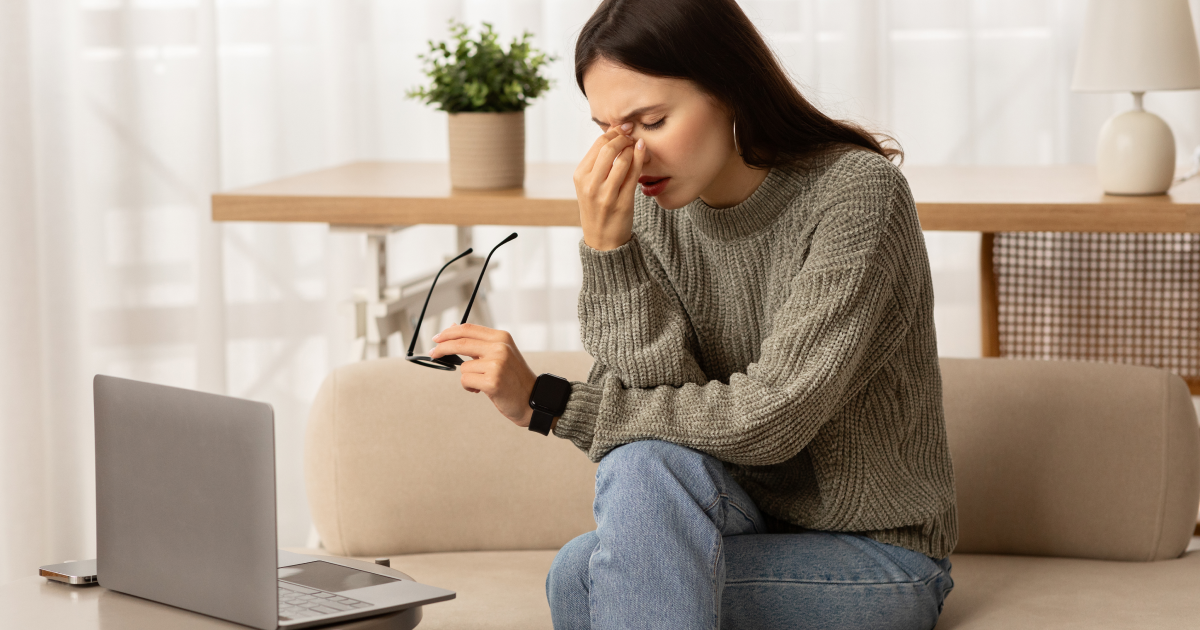
Today we see that children and adults are spending more time indoors than ever before. We study, we work, we entertain ourselves, we game and we socialize via screens. A screen in and of itself does not damage the eye but what we do with it does in a world of little to no break from near work and very little outdoor time we are seeing a lifestyle that makes progressive myopia go more unnoticed and harder to treat. At Vasan Eye Care we see many parents asking us if the increase in the power of their child’s glasses is due to screen use or if their myopia is in fact getting worse. The National Eye Institute reports that near work like that done while using screens, reduced outdoor activity, and genetic heritage all play a role in myopia issues which are of great concern, in particular when myopia presents at a young age.
What is progressive myopia?
Parents usually ask what is progressive myopia when a child’s negative power keeps increasing. Myopia or nearsightedness is when close objects appear clearer than distant ones. When the prescription is still going up over a period of months or years instead of holding steady that is what we see in progressive myopia.
In what is called this condition, the eye grows longer than normal which in turn causes light to focus at a point in front of the retina instead of right on it. That which is far away appears blurry. A child may have trouble seeing the classroom board, TV subtitles, road signs, or off.distant faces. Adults may see an increase in the frequency of their prescription changes, night time driving issues, or blurred vision of signboards after a day which is heavy in screen use.
Understanding what is progressive myopia matters because it is not only about changing glasses. It is about the rate at which the eye’s refractive error is changing and also what measures the patient may need in terms of lifestyle changes, regular check ups, or doctor prescribed myopia control treatments.
Why Indoor Lifestyle Affects Vision
The indoor environment has the tendency to keep the eyes at a close range for large amounts of time. Screens, books, notebooks, and laptops are to blame. Near work is a component of our daily routine, but in that which is very close and without break we see an increase in eye fatigue also report a connection to myopia progression.
Outdoor physical activity is a key factor which we note as natural light is of a greater intensity than that found inside and also that in general we see more of it during outdoor play. Also, it is reported by the U.S. National Library of Medicine that which we put forth is that outdoor exposure does in fact decrease the incidence of myopic parents’ children. Also, that which we see is that school based programs which include more outdoor time have had success in reducing new cases of myopia.
For those which present with progressive myopia the issue is usually the full range of activities they are involved in. A child may be on the computer for online classes, do homework on a tablet, watch videos on his phone, play indoor games, go to bed late and not get much time out. Over time that pattern of activity may cause their vision to change more quickly.
How Screens Can Worsen Myopia Symptoms
Screens do in fact aggravate myopia issues in practice. We see that mobile phones in particular are held very close to the face which in turn puts more demand on the eyes. Also report that long screen sessions reduce blink rate, cause dryness, headaches and eye strain. Also note that screen time replaces outdoor play which is a simple yet very effective protective measure for children’s vision.
In 2025 a systematic review and dose response meta analysis which included 45 studies and 335,524 participants reported that each extra hour of daily digital screen time had a 21% increase in the risk of myopia. We saw that the greatest increase was between one and four hours of screen exposure per day. A separate analysis reported an association between screen time and myopia progression. It is put forward that screens are not the only cause of myopia genetics, extensive near work, little outdoor activity and other environmental factors also play key roles but these results do support the importance of what we do with screens in terms of supporting the eye health of children and adolescents.
| Indoor Habit | How It May Affect the Eyes | Better Daily Practice |
| Holding the phone very close | Increases near focusing demand and strain | Keep the screen at a comfortable distance |
| Long study or gaming sessions | Reduces blinking and visual breaks | Take regular breaks and look far away |
| Mostly indoor routine | Reduces natural daylight exposure | Add safe outdoor time every day |
| Screens before sleep | Increases tired-eye symptoms and affects rest | Keep a screen-free gap before bedtime |
| Delaying eye tests | Misses early power changes | Schedule regular eye checkups |
Also Read: Is Too Much Screen Time Harming Your Eyes?
Common progressive myopia causes
Important progressive myopia causes include genetic history, early onset of the condition, extensive near work, low level of outdoor activity, and poor follow up. If one or both parents are affected by myopia the child is at a greater risk. Also what we do plays a role. Kids which spend great amounts of time on close work and very little time in the great outdoors may see a more rapid change than what is typical.
The modern school environment puts great strain on the eyes. Many kids are into reading, writing, and using screens for a few hours a day. In urban settings play out of doors may drop due to living in apartments, safety issues, academic pressure, and digital games. These combined progressive myopia causes can make myopia appear earlier and worsen faster.
Parents are to look out for subtle signs such as sitting very close to the TV, copying notes from a friend, avoiding outdoor sports, rubbing of the eyes often, or reports of headaches. These signs may be mistaken for carelessness but they may in fact point to changing eye power.
Signs That Myopia May Be Progressing
A child that has progressive myopia may go cross eyed when looking at far away things, get very close to the screen, hold books too near, rub at their eyes, complain of headaches, or have trouble with the classroom board. As for adults we see that they have to change their prescription often, report blurred road signs, eye fatigue after use of the laptop, and discomfort during night time driving.
People who are in a high myopia group should pay attention to sudden flashes, floaters, curtain like shadows, and sudden vision loss which are symptoms that require urgent eye evaluation. The CDC reports that regular eye checks are for children and also stresses the value of eye exams in the early detection of vision problems. Also important is regular testing when progressive myopia is in the family history or when a child’s prescription changes more than once in a year.
How to stop myopia progression with Healthy Screen Habits
Parents often search for how to stop myopia progression but what we should aim for is to slow it down, monitor its progress and to reduce what is within our control which is the avoidable risk factors. The first step is to have a comprehensive eye exam. The doctor will check the present power of the prescription, compare with past ones, look at the health of the eye and determine if lifestyle changes are enough or if medical intervention is required.
Screen breaks are important. The CDC recommends the 20-20-20 rule for screen-related fatigue, which means looking about 20 feet away for 20 seconds every 20 minutes. For children with changing minus power, this habit should be combined with outdoor time, proper lighting, correct screen distance, and regular follow-up.
Another solution, how to stop myopia progression is to reduce unnecessary recreational screen time. Online classes and homework may be out of our control but late night scrolling and long gaming sessions can be put in check. Also get kids off phones in dark rooms and out of their face.
Outdoor Time and Daily Routine
Outdoor time is a simple yet very effective habit for better myopia control. It gets children to look distant, which in turn reduces that which is spent on near work and also we see to it that they get plenty of natural light. Also the CDC reports that we should put forward to parents the idea of less screen time and more frequent breaks for their child’s eye health.
For children that have progressive myopia outdoor activity should be made a daily affair. Walking, cycling, play at the park, time on the terrace, playing in the open these do help when done safely. What families ask is how to stop myopia progression which doesn’t exist. Instead what we see is that it is the consistent routines, timed check ups, and proper medical care that brings about the progress.
Medical Management for Children and Adults
Lifestyle changes are a help but in some cases medical support is required. By age, prescription, rate of change and eye health the ophthalmologist may recommend special spectacle lenses, contact lens options, low dose atropine eye drops, or other myopia control methods. All of which should only be used after professional evaluation.
The National Eye Institute reports that in some cases of myopia we see slowing of the progression in children with multifocal contact lenses. But it is true that proper care, maturity, and follow up is required. This is why treatment for progressive myopia should be personalised rather than copied from another child’s prescription.
For which adult patients have stable power and are of age, we may discuss options like refractive surgery or lasik after we do our eligibility checks. At Vasan Eye Care we report that lasik which is a form of refractive surgery does what it’s named to do; it changes the cornea which in turn causes light to focus better on the retina. Also what we look at for eligibility are factors like age, stable power, and that the cornea and retina are in good health. These procedures do correct vision in the right adults, it must be noted we do not replace the need for childhood myopia control.
| Management Option | Who May Need It | Why It Helps |
| Correct prescription glasses | Children and adults with blurry distance vision | Supports clear vision for study, work, and daily life |
| Lifestyle correction | People with high screen time and low outdoor time | Reduces avoidable visual strain |
| Regular eye exams | Children with changing power or family history | Tracks whether progressive myopia is stable or worsening |
| Myopia-control lenses or drops | Selected children after evaluation | May help slow worsening when needed |
| Surgical vision correction | Eligible adults with stable power | May reduce dependence on glasses after screening |
Why Regular Eye Checkups Matter at Vasan Eye Care
A proper eye exam is more than just for updating glasses. It also is a way to see if power is changing fast in the eye, if the two eyes are developing at the same rate, and if the retina requires monitoring. In kids early diagnosis via an eye exam supports learning, confidence, and daily comfort. In adults we use the info from regular exams to detect refractive errors and other eye conditions which may be developing without any symptoms.
At Vasan Eye Care, patients can consult experienced eye doctors for evaluation and suitable eye treatments based on their condition. As for progressive myopia which is a feature of growth in the power of the eye, we do note that it is very important to have regular follow up because delay may see the power increase beyond what is manageable.
Can Screen-Related Myopia Be Reversed?
Myopia from eye structure growth is a condition which usually does not go back to normal when we stop using screens. We have glasses, contact lenses as well as other solutions which correct vision, also we have doctor guided myopia control methods which may help in slowing down the progress. What we see for lifestyle changes is that they mainly reduce the risk of developing it in the future, they do not reverse the structural change which has already taken place.
This is the early stage at which we must recognize the condition. It is not an issue of screens only and not an issue of glasses only. We must pay attention to regular eye care, health practices, and seek out professional advice.
Conclusion
Progressive myopia is on the rise in our indoor based, screen dominated lifestyle. While screens may not be the only issue we have at hand, large amounts of time spent in close range activities, less time in the sun, poor break routines, and neglecting eye check ups does play a role. We must take a balanced and practical approach. Go out and play more, do the screen breaks, keep the viewing distance great, have proper lighting, and get your eyes checked regularly.
Sure, here is a paraphrase of the provided text: For those that are concerned with increasing eye power do in fact start out with a full eye exam which in turn will give you a better base to work from as opposed to only what you may read online. With time in which we do get proper care, follow healthy practices, and in which we have the right medical input progressive myopia can be very much put in check. If your child’s spectacle power is changing very often or if you’re seeing an increase in screen related eye strain which is also quite common today, we at Vasan Eye Care recommend a in depth evaluation and also we will give you that very personal advice.
Frequently Asked Questions
Looking at screens for long periods of time may cause eye strain and also is a factor in myopia progression which is made worse when screen time replaces that spent in the great outdoors and is very close in nature. Screens are not the only cause of myopia but poor screen habits play a role.
Some reports in the public eye care space that Taylor Swift had myopia and went on to have LASIK, but we shouldn’t treat a celebrity as a case study for medical advice. For lasik to be suitable it depends on age, eye power stability, corneal thickness, retina health, and also that a detailed eye exam is done.
Myopia that results from structural eye growth usually does not go back to normal by stopping screen time. Better screen practices may reduce eye strain and may help to slow future progression, but they do not usually eliminate the need for glasses once myopia has developed.
The 20 by 20 by 20 rule which is what people know the 20 minute rule as means that every 20 minutes you should take a break and look at something 20 feet away for 20 seconds. This breaks up the continuous focus which in turn reduces screen related fatigue. Also people with progressive myopia should include in their routine time spent outdoors and regular eye checkups.
Reference Links
- National Eye Institute — Nearsightedness / Myopia
https://www.nei.nih.gov/eye-health-information/eye-conditions-and-diseases/nearsightedness-myopia - CDC — Preventing Vision Loss / 20-20-20 Rule
https://www.cdc.gov/vision-health/prevention/index.html - NIH / PubMed Central — Screen Time and Myopia in Children
https://pmc.ncbi.nlm.nih.gov/articles/PMC11186094/