
During the course of the COVID-19 pandemic the term black fungus came into wide use especially in India. But from a medical standpoint it is called mucormycosis. It is a rare yet serious fungal infection which is caused by a group of molds we know as mucormycetes. These fungi which are present in the environment including in the soil, decaying vegetation, compost and air. Also for the most part healthy people come into contact with fungal spores which do not make them ill.
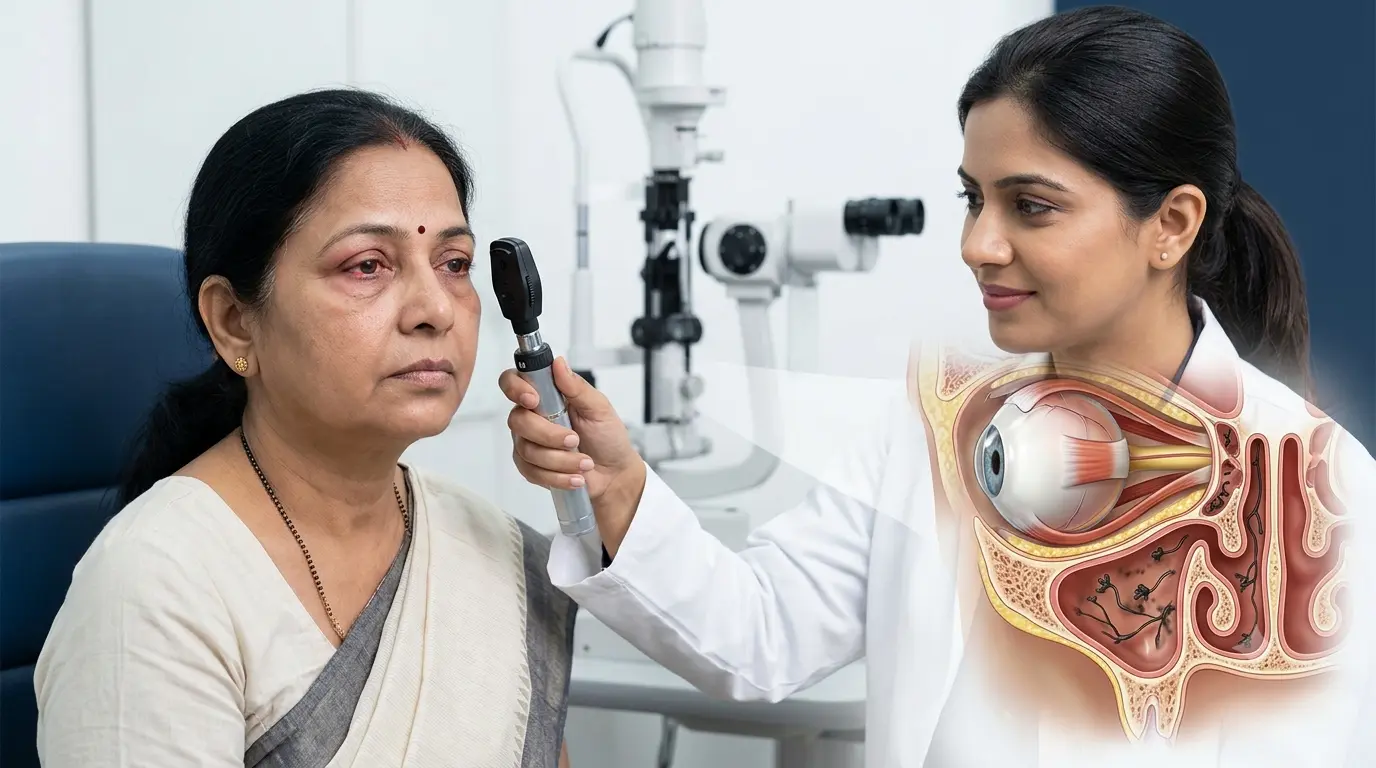
When mucormycosis goes after the nose and sinuses it at times will present in the tissues around the eyes. This version is known as rhino-orbital or rhino orbital cerebral mucormycosis. As the infection may progress fast, recognition of black fungal symptoms around the nose, face and eyes is very important.
Any sudden loss of vision, rapidly increasing eye swelling, severe facial pain or new difficulty moving the eye requires urgent medical attention.
What Is Black Fungus or Mucormycosis?
Mucormycosis black fungus infection is an invasive fungal disease that is caused by moulds in the order Mucorales. The name “black fungus” is a misnomer which may cause confusion as the fungi do not in fact appear black. The term took off because in severe cases the infection does damage to blood vessels which in turn causes tissue death at which point large black or dark areas may appear in affected tissue.
Mucormycosis can affect several areas of the body, including the sinuses and brain, lungs, skin, gastrointestinal system, or multiple organs at once. Regarding eye health, the main concern is an infection that starts in the nasal cavity or sinuses and spreads toward the orbit around the eye.
A simple case of fungal infection and black fungus infection should not be put into the same category. Many fungi infections are in fact local. Invasive mucormycosis is a much more serious issue which requires hospital based evaluation and treatment.
What Are the Main Black Fungal Symptoms?
Symptoms of mucormycosis depend on which part of the body is involved. If the sinuses, face, and eyes are affected, the signs may be more noticeable on one side.
Early black fungal symptoms infection may present as persistent nasal congestion, sinus pain, headache, fever, facial discomfort or one side of the face may present with swelling. Also some patients may report atypical nasal discharge. Dark or black lesions may appear in the nose or on the roof of the mouth as tissue damage progresses.
Eye-related symptoms require particular attention because they may indicate that the infection has moved beyond the sinuses.
Black Fungus Symptoms Affecting the Eyes
Eye damage which may present as swelling of the eyelids, eye pain, redness, blurred or reduced vision, double vision or difficulty in movement of the affected eye. Eyelid may also drop and in more severe cases the eye may appear more protruded.
The CDC reports that rhino-orbito-cerebral mucormycosis is a disease which presents with visual disturbances and which may progress to ptosis, proptosis and loss of normal eye movement. These changes should not be ignored in a person with uncontrolled diabetes, a weak immune system or recent extended corticosteroid use.
| Warning sign | Why it needs attention |
| Sudden blurred or reduced vision | May indicate involvement of tissues supplying or surrounding the eye |
| Rapid eyelid or facial swelling | May suggest progression from the sinuses towards the orbit |
| New double vision | Eye muscles or nerves may be affected |
| Difficulty moving the eye | Can occur with deeper orbital involvement |
| Drooping eyelid | May accompany neurological or orbital involvement |
| Severe one-sided facial or eye pain | Requires urgent assessment when combined with other risk factors |
| Black areas inside the nose or mouth | Can indicate tissue damage and should receive immediate evaluation |
How Does Black Fungus Spread?
People ask how black fungus spread to spread and also how does black fungus spread out. This is so because mucormycosis is reported to be a serious infection.
Mucormycosis does not normally spread from person to person. You don’t usually get it by touch, by sitting close to, or from food which an affected person has handled. The fungi which cause it are present in the environment. Infection may happen when at risk individuals breathe in the fungal spores or less often when the spores get into broken skin.
When the spores are inhaled the infection may present in the nose, sinuses or lungs. In case of rhino-orbital-cerebral disease the infection which has begun in the sinus area extends into the adjacent structures which may include the eye and in severe cases the brain.
Therefore, explaining how black fungus spread requires separating environmental exposure from spread inside an infected person’s body.
Who Is More at Risk of Mucormycosis?
Most people that come into contact with mucormycete spores do not get sick. Risk goes up greatly when the body’s natural defense against fungi is broken down.
People that have uncontrolled diabetes, which includes diabetic ketoacidosis, are at great risk. Also we see that certain cancers, neutropenia, organ or stem cell transplantation, iron overload, severe immune suppression and prolonged corticosteroid therapy are risk factors. Also reported is that Severe COVID-19 is a risk.
The issue of corticosteroids in relation to mucormycosis is of great importance. While steroids are used in many conditions they are a medical necessity, at the same time their improper or long term use may suppress the immune system and also play a role in blood glucose control. Thus patients should use corticosteroids only as per medical advice.
How Is Black Fungus Affecting the Eyes Diagnosed?
Symptoms alone cannot confirm mucormycosis. Several eye and sinus conditions can produce swelling, redness, facial pain or changes in vision.
Doctors present at patient’s symptoms, medical history and risk factors. When they suspect mucormycosis they will take in a look at samples of affected tissue or fluid in the lab. At times a tissue biopsy may be performed. Also we may see imaging studies like CT or MRI to determine if the sinuses, eye area or other areas are involved.
Depending upon the stage of the disease care may include ophthalmologists, ENT specialists, infectious disease doctors, diabetologists, and also other surgical specialists. Research online for black fungus infection images may not present you with a diagnosis or rule it out. What you see in the photos may be of very severe cases which do not reflect what is present in a given patient’s early stages. Diagnosis is achieved via exam and relevant medical tests.
How Is Mucormycosis Treated?
Mucormycosis is a medical emergency which requires prompt treatment. It is not a condition to be treated with home remedies, over-the-counter eye drops or self prescribed antifungal medicines.
Treatment in general includes systemic antifungal medication. CDC reports that which to use are amphotericin B, posaconazole and isavuconazole. What that is given, at what dose, through what route and for how long is determined by the care team. Also run out for several weeks which is dependent on the patient’s health and response.
Surgery may also perform the task of excising affected tissue as well as stopping the infection from getting worse. Also at the same time physicians may have to see to primary health issues like uncontrolled sugar levels or weak immunity. Early detection is key in this which if delayed may cause the infection to affect more critical areas around the eye and brain.
How to Prevent Black Fungus
Patients report to us how to prevent black fungus, in particular if they have diabetes or a weak immune system. We can’t completely avoid mucormycete spores which are present in our environment. Also we do not have a sure fire strategy which will totally black fungus prevention.
People at higher risk should concentrate on factors they can change, especially keeping diabetes well managed. Corticosteroids and other medications that affect the immune system should be used only as directed by a qualified doctor.
High risk groups may also be told to reduce exposure to very dusty settings, construction sites, flood damaged buildings and large amounts of soil or decaying organic material. When exposure is unavoidable, it is recommended that they use respiratory protection and protective clothing. Also proper cleaning of cuts and wounds which have contact with soil or dust is to be done.
Good medical care, proper blood glucose management and at the first sign of something amiss get in to see your health care provider for that issue which may be a symptom of something serious which is what you do with black fungus prevention.
Black Fungus and White Fungus Symptoms: Are They the Same?
The term black fungus white fungus symptoms is a source of confusion. What we see as black fungus is in fact the popular name for mucormycosis, but white fungus does not represent a single defined medical condition. Different fungi may affect the lungs, skin, mouth, blood, or eyes and their symptoms are very diverse. Do not use color based labels for self diagnosis.
When persistent fever, facial swelling, sinus problems, or eye symptoms occur alongside major risk factors for invasive fungal disease, seeking medical assessment matters more than trying to identify the infection based on how it looks.
When Should You See an Eye Doctor Immediately?
Urgent evaluation is required when new ophthalmic symptoms present with at large facial or sinus symptoms which is in a high risk group for mucormycosis. Sudden or progressive vision loss, rapid increase in swelling around one eye, double vision, severe eye or facial pain, difficulty in moving an eye, a new drooping eyelid or black areas appearing in the nose or mouth should be reported as warning signs.
Mucormycosis is a rapidly progressing disease which means that by the time symptoms present it may be too late, thus prompt hospital evaluation is required for any suspect case rather than waiting for the symptoms to cease.
Conclusion
Mucormycosis also known as black fungus is at large rare but very serious. In the eye it is of great concern when it presents with concurrent nasal block, facial swellings, severe sinus pain or other symptoms of mucormycosis.
Understanding of black fungal symptoms is also key for identification of when routine sinus or eye issues may require acute attention. Also at risk are people with uncontrolled diabetes, weak immunity or other known risk factors which should made them very aware of sudden changes in vision, swelling around one eye, double vision or difficulty moving the eye.
Most certainly do not diagnose mucormycosis from black fungus infection images or treat it with home remedies. Timely medical evaluation, proper testing, antifungal medication and in some cases surgery are the best practices for management of this very aggressive infection.
Frequently Asked Questions
- What are the first black fungal symptoms?
Early black fungal symptoms in the body may present as one sided facial pain or swelling, headache, nasal or sinus congestion, fever and atypical nasal discharge. Eye swelling, blurred vision or difficulty in moving the eye is a symptom which may present if the infection spreads to the orbit.
- Can black fungus cause blindness?
Mucormycosis presents to the eye when infection spreads from the sinuses to the structures which surround it. Vision changes are a recognized feature of rhino-orbital-cerebral mucormycosis. Any new or sudden vision changes therefore require urgent specialist assessment.
- How does black fungus spread from one person to another?
It in fact doesn’t. As for how does black fungus spread which is a question many ask, it is key to know that mucormycosis does not present a contagious picture. Infection usually results from exposure to fungal spores in the environment via the air we breathe or through broken skin.
- Can I identify mucormycosis using black fungus infection images?
No. Black fungus infection images don’t diagnose it. In early stages disease may not present as in more advanced infection photos and also other conditions may present with the same signs. A medical exam, imaging and lab or tissue tests may be required.
- How can people with diabetes prevent black fungus?
For people with diabetes, attaining good blood glucose control is a component of black fungus prevention. High risk patients also should follow medical advice which pertains to the use of corticosteroids and immune modifying medicines and to seek prompt care if they have suspicious sinus, facial or eye symptoms.
- Is every fungal infection considered black fungus?
No. A fungal infection and black fungus are different terms. Mucormycosis is an example of an invasive fungal infection caused by mucormycete molds. Also many other fungi cause different diseases and require different approaches to diagnosis and treatment.