
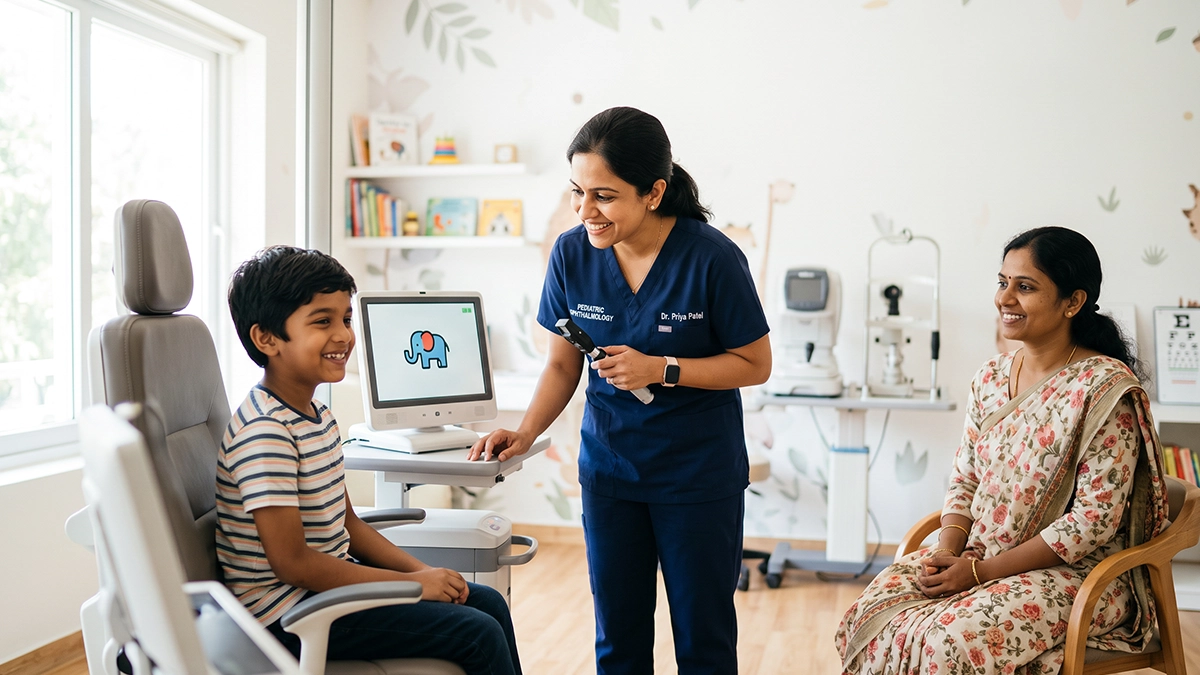
A child eye test is important as they may not be aware that their vision is blurred or that it is different between the eyes. Routine tests which also at the same time identify refractive errors, squint and lazy eye. A pediatric eye exam includes assessment of vision, while children’s vision screening is to identify which kids require in depth evaluation.
Why Regular Eye Checkups Matter
Vision is a growing field. We see that an early child eye test is a tool which the eye doctor uses to see what issues may be present in visual development. The CDC reports that if left untreated some vision problems may play a role in how a child does in school which is why they push for regular eye exams of kids. Children’s vision screening may bring to light issues which may exist, a full pediatric eye exam may then do an in depth investigation.
A routine child eye test does not guarantee future tests. Vision and glasses power may change as they grow. Thus each child eye test should be tailored to age, symptoms, past results and individual risk.
How Often Should a Child Have an Eye Checkup?
No which is the best schedule for all kids.The frequency of a child eye test depends on age. The U.S. Preventive Services Task Force reports that at least once between the ages of three and five we should do vision screens in order to identify amblyopia or its risk factors as also put forth by the CDC. A pediatric eye exam may be sooner with symptoms or at the appearance of risk factors.
| Age | Usual Approach | When Extra Assessment May Be Needed |
| Infancy to 3 years | Routine visual assessment and age-appropriate children’s vision screening | Poor tracking, constant eye turning or abnormal eye appearance |
| 3 to 5 years | At least one formal child eye test or validated screening | Failed screening, squinting, headaches or suspected lazy eye |
| School years | Periodic child eye test based on screening and clinical advice | Board-viewing difficulty, reading problems, eye strain or changing power |
A child eye test should not be delayed because a child has no complaint. Children may adapt to reduced vision.
Vision Screening and a Complete Eye Examination
Children’s vision screening quickly identifies possible visual difficulty. It may take place at school or a routine health visit. A pediatric eye exam provides closer evaluation.
| Check | Main Purpose | Next Step |
| children’s vision screening | Flags children who may be at risk | Arrange a pediatric eye exam if abnormal |
| Comprehensive child eye test | Checks vision, alignment and eye health | Glasses, monitoring or treatment as advised |
If a child does not pass children’s vision screening, parents should arrange a child eye test rather than wait for the next school check.
When Should Parents Arrange an Earlier Test?
Parents may want to have their child eye test checked at an early age if they notice that their child is cross eyed, is covering one eye, reports headaches, or is having trouble with the blackboard in school. Also a pediatric eye exam is a good idea if there is a case of childhood eye disease, squint, or high refractive error in the family.
A child eye test should go in as soon as you see eye turning which is persistent, atypical eye movements or notice any vision changes. For sudden vision loss, severe eye pain, injury, large amount of redness in the eye or a white reflex in the pupil seek immediate medical care. In these cases routine children’s vision screening is not enough.
Child Eye Checkups at Vasan Eye Care
At Vasan Eye Care we tailor the age of the child eye test to your child’s age, symptoms and past health. An eye specialist may determine that routine children’s vision screening is enough for some children or that a full pediatric eye exam is required.
Keeping each child eye test record helps in tracking changes. Also children which wear glasses or have an existing eye condition may require a child eye test more often. Follow up should be based on the advice of the eye specialist doctor
Conclusion
Regular eye care is important for learning and healthy visual development. A child eye test can detect problems early, while children’s vision screening helps identify children who need closer assessment. If symptoms present or screening comes back abnormal, a pediatric eye exam will guide what care is best. Parents may bring their child in for a timely eye test at Vasan Eye Care. A child eye test should be tailored to the individual needs of the child.
Frequently Asked Questions
- How often should children get their eyes tested?
A child eye test should follow what the child’s doctor or eye specialist recommends. Preschool screening is key in the preschool years.
- Is school vision screening enough?
Children’s vision screening is a good tool but in the case of present symptoms, risk factors or an abnormal result a full pediatric eye exam is required.
- At what age should a child have a formal eye check?
Visual assessment is a part of early development. In the preschool years we see the rise in importance of a formal child eye test.
- Does every child need an eye examination every year?
Not necessarily. Whether a child needs an pediatric eye exam every year depends on symptoms, glasses use, earlier findings, and advice from an eye-care professional
References
- U.S. Preventive Services Task Force – Vision in Children Ages 6 Months to 5 Years: Screening
https://www.uspreventiveservicestaskforce.org/uspstf/recommendation/vision-in-children-ages-6-months-to-5-years-screening - U.S. Preventive Services Task Force – Evidence Summary: Vision Screening in Children
https://www.uspreventiveservicestaskforce.org/uspstf/document/evidence-summary/vision-in-children-ages-6-months-to-5-years-screening