
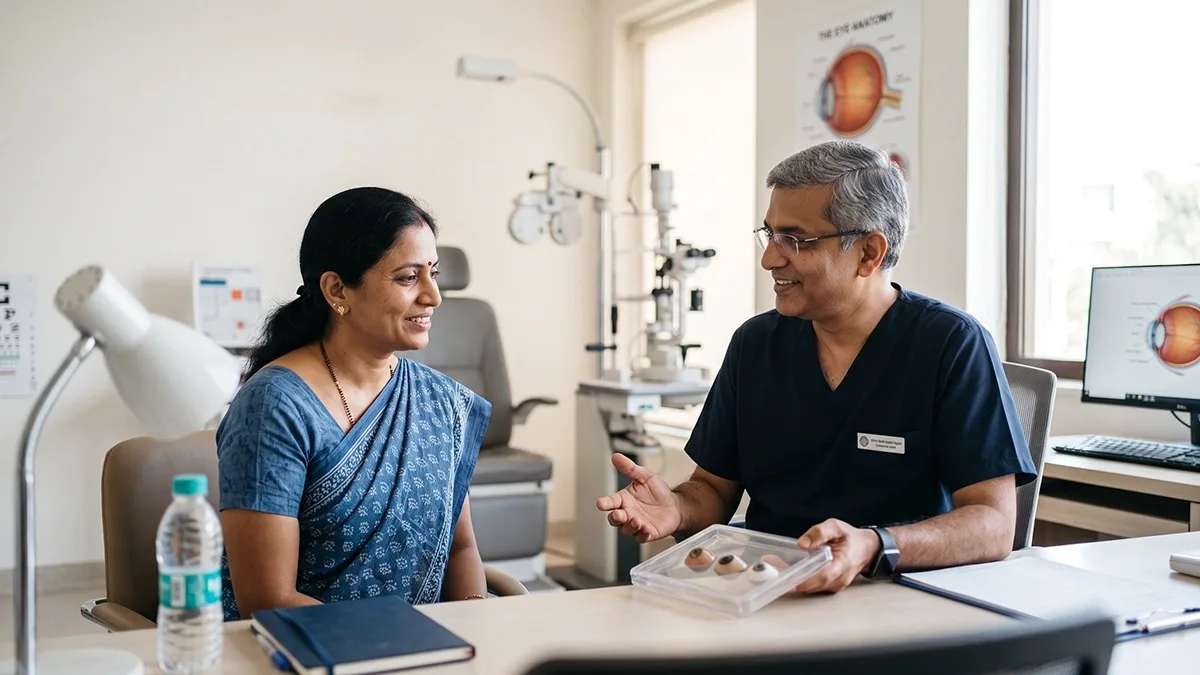
A prosthetic eye is a cosmetic option which is used post loss or very serious injury of an eye. While it won’t repair sight, it is able to improve face symmetry, eyelid support, ease in daily life, and build up self confidence for some. Prosthesis of the artificial eye is fit into a person only after the socket is evaluated and is found to be in health condition to bear this.
Comprehension of how a prosthetic eye meaning works also aids in telling it apart from an implant. The implant is put in during surgery within the socket, while the device goes over the healed tissue and is designed to look like a natural eye.
What Is a Prosthetic Eye?
The ocular prosthesis , also known as an artificial eye, is a removable device for when a person is without an eye or with a non functional one. The Bureau of Indian Standards reports that different ocular prostheses are chosen based on the individual anatomical and functional requirements. For those that are asking what is a prosthetic eye, is, the main thing is that it improves appearance which in turn improves the quality of life for the person.
The device will be used post enucleation or evisceration. In some cases we use a more thin cosmetic shell when only part of the natural eye is present.
Types of Ocular Prosthesis
The main types of ocular prosthesis include stock, custom-made, and scleral shell options.
| Type | Typical Use | Main Benefit |
| Stock artificial eye | Temporary or approximate fitting | Faster availability |
| Custom ocular prosthesis | Individually shaped and painted | Better fit and colour match |
| Cosmetic or scleral shell | Covers a blind or disfigured existing eye | Improves appearance without eye removal |
A tailored eye prosthesis and rehabilitation may include an oculist, ophthalmologist, and plastic surgeon which also may include
Prosthetic Eye Fitting Process
Fitting usually takes place after swelling and inflammation has gone down. At Moorfields Eye Hospital we put in a temporary prosthesis after healing which is followed by a custom made device which is prepared once the socket has stabilized.
For custom fit we have the specialist do a measurement or take an impression of the socket, we have the ocular prosthesis which they craft out, we match the iris color, we check comfort of the prosthesis, how the eyelid closes, it’s position and the prosthetic eye movement.
| Stage | What Happens |
| Socket assessment | Healing, eyelids, and tissue condition are checked |
| Impression and shaping | The device is formed to match the socket |
| Colour matching | Iris and scleral details are customised |
| Final fit | Comfort, stability, and movement are reviewed |
| Follow-up | Fit, deposits, and surface wear are checked |
Can a Prosthetic Eye Move?
Some degree of prosthetic eye movement is present which is a result of movement from the orbital implant and nearby tissues which in turn transfer to the prosthesis. But the device does not move as fully as a natural eye.
If there is rotation, slippage, or discomfort with the prosthetic eye, see an eye specialist which will examine the socket and eyelids.
How to Care for a Prosthetic Eye
Good hygiene is key to keeping the device at its best. We ask that patients follow the care regime which is put forth by their ocularist, wash their hands before they handle the artificial eye, and stay away from abrasive cleaners and harsh chemicals.
Moorfields Eye Hospital says to wash the device in warm running water and mild soap upon removal, also they say to see a health care provider for persistent or atypical discharge. Persistent redness, pain, swelling, bleeding, or atypical discharge should be evaluated at the eye hospital.
Prosthetic Eye Cost in India
The cost of a prosthetic eye varies which in turn does not have a set standard price. What it will be may depend on if the device is stock or custom made, socket complexity, impression work, iris painting, follow up adjustments, polishing, and also if additional oculoplasty is required.
A good estimate is after review which also includes evaluation of fit, adjustment, polishing and also future replacement.
Prosthetic Eye Care at Vasan Eye Care
At Vasan Eye Care we present to patients the option of an ocular prosthesis and related eye treatments when it is clinical appropriate. We focus eye prosthesis and rehabilitation on socket health, a comfortable fit, setting realistic cosmetic expectations, and regular follow up.
A proper fit of prosthetic eye improves appearance and daily confidence, also it is important to practice proper socket care.
Conclusion
A prosthetic eye is a key element in the process of recovery from eye loss. We put that types of ocular prosthesis to choose, maintenance of good hygiene, and follow up care into practice for best results. It is recommended that patients turn to an experienced ophthalmology or oculoplasty team for personal advice on fitting, care, movement, and cost.
Frequently Asked Questions
1. Can a prosthetic eye restore vision?
No. A prosthetic eye improves appearance and socket health but is not a solution for eyesight.
2. How long after eye removal can an artificial eye be fitted?
Timing is based on healing. We may put in a temporary artificial eye first which will be followed by a custom made device once swelling has gone down.
3. Does a prosthetic eye move naturally?
Some prosthetic eye movement is possible but the range is generally less in a natural eye.
4. How often should an ocular prosthesis be replaced?
Replacement is a function of fit, material, wear, and socket changes. We also see that regular review is important in determining when an ocular prosthesis should be replaced.
References
- Bureau of Indian Standards – Study and Comparative Analysis of Functional and Safety Requirements of Ocular Prosthesis