
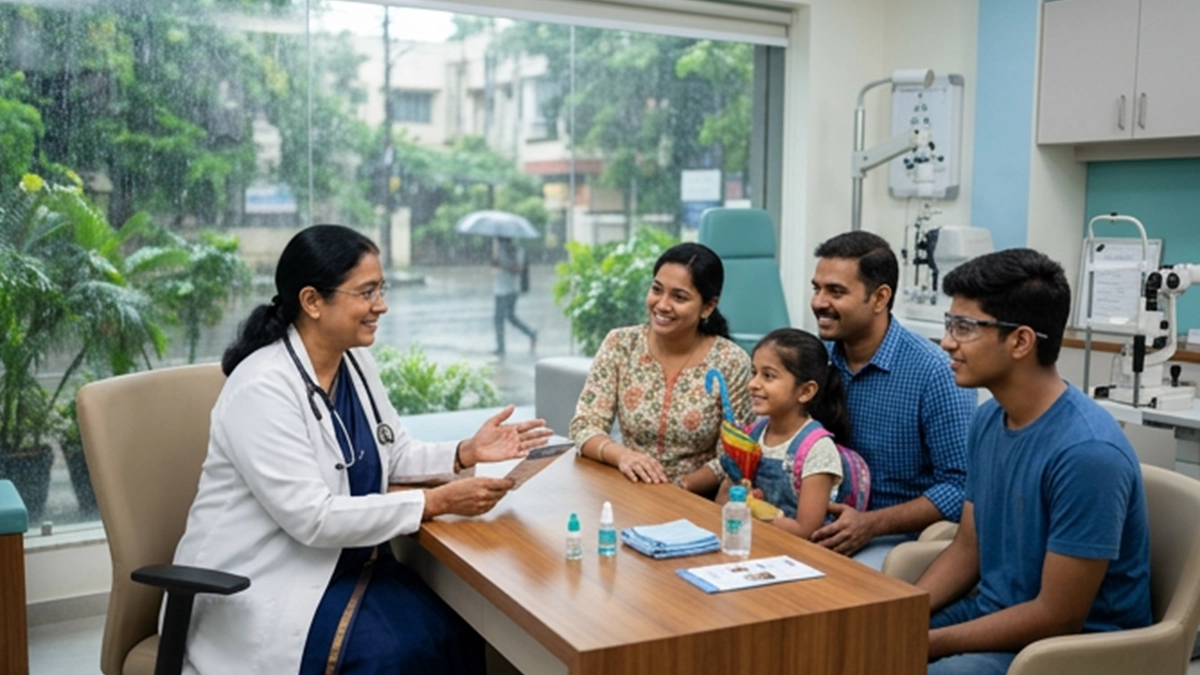
Rain causes cool down of the air but at the same time high humidity, dirty hands and wet environment raises the risk of eye irritation and infection. which see to it that adoption of simple monsoon eye care practices which in large help protect the rainy season eye care. Also these practical tips which can easily be included in our routine bring to notice symptoms which should not be ignored.
Understanding Common Eye Problems During the Monsoon
High humidity and damp weather may bring on an increase of germs and mold. Which puts it that you may catch an infection by touching your eyes with unclean hands, sharing towels or using infected eye make up. As for what to see in the monsoon eye problems are redness, itching, watering and sticky discharge. Also allergic reactions can cause the same symptoms which is why you shouldn’t judge the cause by what they look like.
1. Wash hands before touching your eyes.
Wash your hands with soap and water out after travel, while on public transport, or after you’ve touched shared surfaces. Don’t rub your eyes with that which isn’t clean. This easy monsoon eye care practice is to keep germs out of your eye which is very sensitive. Also good hand hygiene reduces the risk of eye infections during monsoon.
2. Keep Towels and Eye Makeup Personal
Do not use the same towels, handkerchiefs, eye make up items or contact lens accessories. Reusable clothing should be washed frequently and dried completely. If you notice redness or discharge, discontinue use of eye make up until you have received a go ahead from an eye care professional.
In rainy season eye care these are very important measures which this must take as personal items carry germs between people. If you are experiencing an eye infection in rainy season do not share personal belongings and seek medical help when symptoms persist.
3. Avoid Rubbing Itchy or Watery Eyes
Rain, dust, pollen and wet environments cause irritation and allergies. Rubbing out may aggravate inflammation and damage the eye’s surface. A clean, cool compress placed over closed eyelids may provide temporary comfort.
Persistent itchiness, pain, or discharge may be from a variety of causes that include monsoon eye problems that would do well to be checked by a professional. Out of the question are home remedies and application of any foreign substances directly to the eyes. What is recommended is consistent monsoon eye care which includes at the first sign of issue that you seek out professional care rather than to just rub your eyes for temporary relief.
4. Follow Safe Contact Lens Practices
Wash and dry your hands prior to handling contact lenses. Use the supplied lens solution as recommended, don’t use tap water or rainwater, also follow the care instructions provided by your eye care professional. Do not wear your contacts while sleeping unless your optometrist says it is fine.
If you notice redness or pain in your eyes while wearing them remove your lenses and get in to see a professional. Good lens care is the base of a good monsoon eye care plan and also plays a key role in reducing your risk of eye infections during monsoon.
5. Protect Your Eyes Outdoors
Avoid forcing rain water into your eyes in particular by traffic areas or when there is flood. Put on protective glasses if you are in an environment which has dust, splashes or debris. Should water get in to your eyes do not rub them in response; if required rinse with fresh safe water.
If you notice any symptoms after the exposure pay attention to redness which may be increased, discharge, pain or blurred vision. These measures support care during the rainy season eye care and also which help to avoid diseases which are preventable by the eye during outdoor activities.
6. Keep Damp Areas Clean and Dry
Dry out wet towels, pillowcases and clothes fully and if at all possible keep rooms very well ventilated. Get rid of any eye care products which have changed in color, smell or consistency. Those with diabetes or low immunity should pay close attention to persistent eye symptoms and seek medical attention at once.
Unusual swelling, severe pain or changes in vision require immediate care. Don’t wait for the concerning symptoms to go away on their own, may see that some monsoon eye problems do better with early treatment.
7. Avoid Self-Medicating With Eye Drops
Do not refill your prescription for eye drops, whether they be antibiotics, steroids, or combinations of them without a visit with a professional first. Wrong treatment may increase instead of decrease your health issue and also will throw off a correct diagnosis. Eye specialists are able to determine what the problem is if you have an infection, an allergy, an external eye disease, etc.
Online research on black fungal symptoms may bring up issues related to fungal eye infection, which in fact may not be the case. It is of great importance to see a health care professional at the first sign of what may be a fungal eye issue instead of self medicating.
8. Identify Early Warning Signs and Get Help Early.
If your symptoms last or get worse please see an eye care professional. Go to the emergency if you have very painful eyes, light sensitivity, sudden blurred or reduced vision, eye swelling or in case of eye injury.
People with thyroid symptoms eyes, double vision or trouble closing their eyes should see a specialist in this area. Early evaluation will determine the cause and put in place the right treatment. Timely attention is a key element of monsoon eye care which also includes when symptoms play at vision.
Common Monsoon Eye Symptoms and Recommended Actions
| Symptom | Possible explanation | Recommended action |
| Itching and watering | Allergy or irritation | Avoid rubbing and seek advice if symptoms persist |
| Redness with discharge | Possible infection | Avoid sharing personal items and arrange an examination |
| Pain or light sensitivity | A potentially serious eye condition | Seek urgent eye-care advice |
| Blurred or reduced vision | A warning sign that needs assessment | Obtain urgent medical attention |
A Simple Daily Eye-Care Checklist
| Situation | Safer habit |
| After travelling or touching shared surfaces | Wash hands before touching the face |
| When using contact lenses | Follow the prescribed cleaning and wearing routine |
| Towels, pillowcases and eye makeup | Keep personal items separate and clean |
| Redness, pain or vision changes | Avoid self-medication and seek professional advice |
Protecting Eye Health With Vasan Eye Care
Following these easy tips for monsoon eye care may prevent irritation and get people to come in when they notice something is amiss. At Vasan Eye Care do eye exams and also give out info to determine what is causing eye discomfort. Also may have put out info on external eye disease and eye infections which may think will get readers to pay attention to persistent symptoms.
Throughout the rainy season eye care a routine of proper eye care which is combined with seeking professional help as and when required will help in protecting eye health
Conclusion
During monsoon season our easy eye care tips will protect your eyes from irritation and reduce risk of infection. Practice good hygiene, do not share personal items, follow safe contact lens care and do not use eye drops without professional advice. Also if you notice persistent redness, pain, discharge or changes in vision do not delay in seeing a monsoon eye care specialist. At Vasan Eye Care push for regular eye exams and timely treatment which in turn helps you to keep your eyes healthy through the monsoon season.
Frequently Asked Questions
1. Can rainwater cause an eye infection?
Rain water is a source of impurities which is why this does not recommend putting it in the eyes. In the event of irritation or discharge after contact, do what you can to not rub they out, instead see a doctor if the symptoms persist or get worse.
2. Are some eye infections contagious?
Certain types including viral or bacterial conjunctivitis may be passed via hands, towels and shared personal items. This put forward regular hand washing, not sharing of personal belongings and following what the medical professionals advise as measures to reduce the transmission.
3. Should eye drops be used for redness?
Without going into the cause. Redness may be a result of an allergy, an infection or some other condition and also some drops may be harmful when used improperly. See an eye care professional before beginning any medication.
4. When do you present to the emergency room for eye issues?
Go to the emergency with acute pain, light sensitivity, sudden vision changes, great swelling or eye injury. Early assessment may identify a serious issue and reduce your risk of complications.
References Links
1. Centers for Disease Control and Prevention (CDC) — How to Prevent Pink Eye: https://www.cdc.gov/conjunctivitis/prevention/
2. National Eye Institute (NEI) — Causes of Pink Eye: https://www.nei.nih.gov/eye-health-information/eye-conditions-and-diseases/pink-eye/causes-pink-eye