
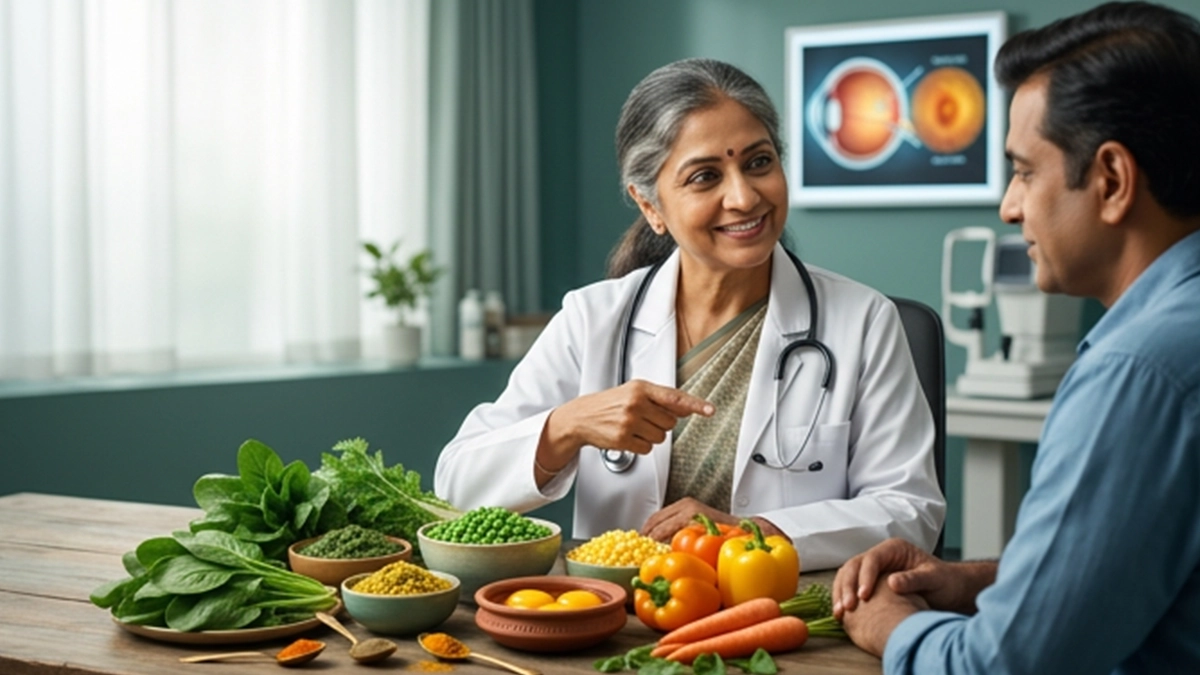
Lutein and zeaxanthin foods are present in dark leafy greens, peas and corn. Which see these carotenoids in the retina and lens which they in turn protect with their anti oxidant action. To include what you know to be good for you is to support an eye healthy diet which is great but no single food is a solution for preventing or curing an eye issue. Nutrition is in addition to regular eye exams which should still be a part of everyone’s health routine.
Why lutein and zeaxanthin matter
Lutein and zeaxanthin which are plant pigments do in fact accumulate in the macula, the center of the retina which is responsible for detail vision. Green leafy vegetables are great sources. Including lutein and zeaxanthin foods in your daily diet can bring in these nutrients into your food, which in turn does not guarantee protection from eye disease or is a replacement for what your eye care professional may recommend.
5 Indian foods to add to your plate
1. Spinach (palak)
Spinach is a great source of lutein and zeaxanthin. Include washed leaves in dal, curry, paratha filling or lightly cooked palak dishes. It is what they may term as an easy way lutein and zeaxanthin foods include these nutrients in familiar meals. Rotate which spinach you use in your Indian foods for eyes instead of relying on one vegetable daily.
2. Amaranth leaves (chaulai)
Amaranth leaves are very common in Indian markets. You can prepare them as a sabzi, add them to dal or cook them with lentils. Wash the leaves well before cooking. Also along with spinach amaranth is a great source of lutein and zeaxanthin foods for including in everyday meals.
3. Fenugreek leaves (methi)
Fresh methi leaves may be added to pla, paratha, dal or mixed vegetable dishes. They have a slight bitter taste which goes well with pulses and whole grains. Use a moderate amount of oil and salt. Methi adds variety to your foods for eye health also it is a great source of fiber and other plant nutrients.
4. Green peas (matar)
Green peas give you carotenoids, fibre and plant based protein. Throw them into pulao, poha, upma or vegetable curry. In the winter months when fresh peas are out of season use frozen. Pairing peas with leafy greens makes it easy to include lutein and zeaxanthin foods in your familiar dishes.
5. (Makai) Corn
Corn is a source of zeaxanthin and may be prepared by boiling, mixed into veggie dishes or in salads. will advise to limit the use of butter, salt and heavy cream. Corn brings variety to a balanced diet and is a great addition to Indian foods for eyes which include a mix of veggies, pulses and whole grains.
Quick guide: food and meal ideas
| Food | Simple Indian serving idea | Practical tip |
| Spinach (palak) | Dal palak or sabzi | Rotate with other leafy greens |
| Amaranth (chaulai) | Chaulai sabzi with roti | Wash leaves well |
| Fenugreek (methi) | Methi dal or thepla | Add when in season |
| Green peas (matar) | Matar pulao or curry | Fresh or frozen both work |
| Corn (makai) | Boiled corn or vegetable salad | Limit added salt and butter |
How to include these nutrients in a balanced diet
Some carotenes do better with a little fat in the diet. Serve up your greens with a bit of oil, nuts or seeds. Include a variety of colorful vegetables, fruits, pulses, whole grains and appropriate protein sources. These for eye health foods for eye health are best in a varied diet, not as a replacement for medical care. Regular choice of lutein and zeaxanthin foods will make for an easier to maintain balanced diet.
These carotenoids play different roles from omega-3 fatty acids which are present in oily fish, walnuts and certain seeds. As for lutein vs omega-3, what you should know is that these nutrients aren’t the same. While fruit may complement veggies, a good tip is best fruits for eye health related issues when you are putting together balanced meals.
Nutrition does not put a dent in all causes of blurred vision. A vitamin B12 deficiency is a player in nerve related issues and should be evaluated by a health care professional when brought to your attention. Also it notes that for cataracts which cause the lens of the eye to cloud up ; there is no food which will reverse that. For persistent blurred vision, distortion, pain or any new symptoms get an eye exam.
A practical guide to daily eye care.
For in terms of Indian foods for eyes on table, variety is the key to not relying on a single ingredient. Rotate what you put out there between spinach, amaranth, methi, peas and corn as they come into season. A varied eye health diet supports overall well being though it does not guarantee to prevent eye disease.
Vasan Eye Care can assess vision concerns and help determine whether further examination or treatment is needed. For complete eye health, also include a balanced eye healthy diet as part of your routine, which is just a piece of the health puzzle. Some foods for eye health do not take the place of a personal assessment when symptoms present. To include a variety of lutein and zeaxanthin foods in your diet each week is an easy way to change up your meals.
Frequently Asked Questions
1.Which Indian food is the best for lutein and zeaxanthin?
Dark leafy greens like spinach and amaranth are great options. Amounts will vary by type of vegetable, how fresh they are and how they are prepared , which is why it is best to include a variety of vegetables in your diet instead of putting all your eggs in one basket.
2. Can these foods improve eyesight?
These nutrients support normal eye health, which see no reversal of refractive errors or treatment of present eye disease. Blurred vision, pain or any change in sight require an eye exam rather than a change in diet.
3. Do lutein and zeaxanthin supplements take the place of food?
No. A diverse diet which includes a variety of nutrients and fiber is recommended. For certain stages of age related macular degeneration some supplement formulations may help but they do not fit all patients and should be discussed with an eye care professional.
4. How often should these foods be eaten?
Include in your weekly meals a variety of vegetables which also change up with what is in season, what fits your budget and what meets your dietary requirements. Also it has been proved that no particular diet prevents eye disease; what they do know is that a balanced diet and a regular eye care routine play key roles.
References
1. National Eye Institute —
https://www.nei.nih.gov/eye-health-information/clinical-trials/age-related-eye-disease-studies-aredsareds2/aredsareds2-frequently-asked-questions
2. Indian study on lutein and zeaxanthin in commonly eaten foods
https://pmc.ncbi.nlm.nih.gov/articles/PMC10981160/