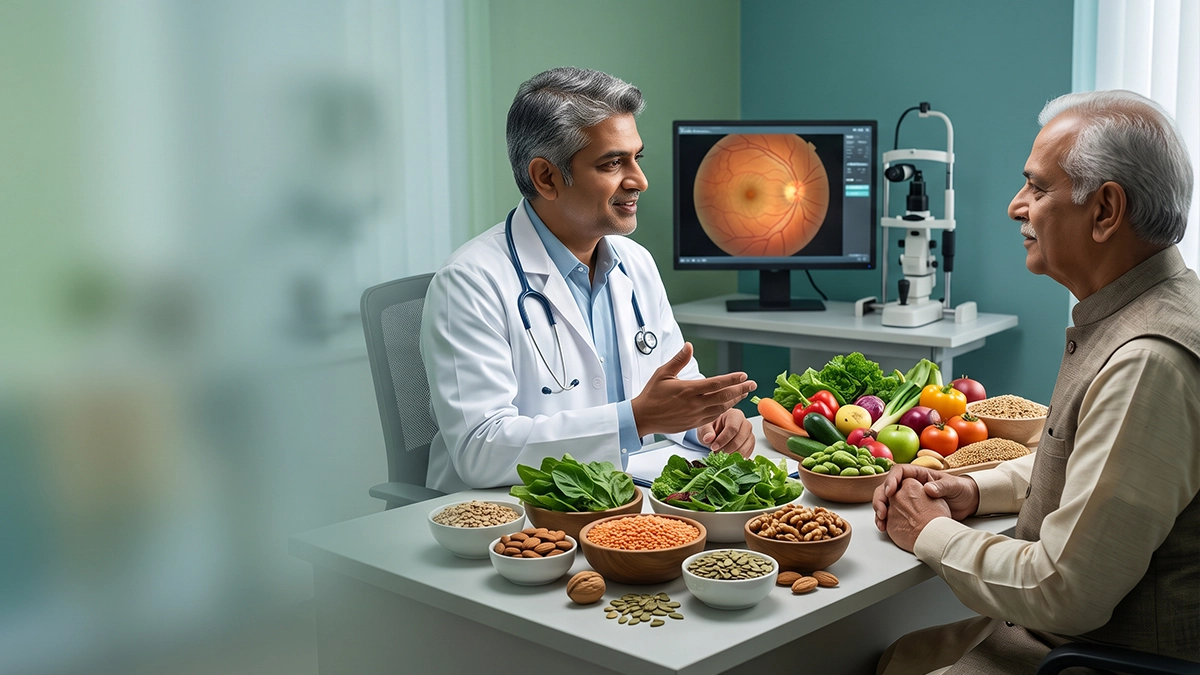
Yes. A healthy diet and eye health go hand in hand as the retina, optic nerve and other eye tissues require nutrients for proper function. A varied diet may support aging eye health and general well being although it is true that some age related eye diseases can not be prevented by what we eat. That said regular eye exams are very important as cataract, glaucoma and age related macular degeneration may still develop despite a healthy diet.
How Are Diet and Eye Health Connected?
Good health of the eyes is supported by good nutrition which is a lifelong issue. Vitamins, minerals, carotenoids, healthy fats and other nutrients for eyesight play a role in retinal function, antioxidant defense and overall tissue health.
A useful diet and eye health is one of variety not of a single “superfood”. Dark green leafy vegetables, colorful fruits and veggies, nuts, seeds, beans, eggs and what are appropriate sources of omega 3 fats may be included in a healthy diet for eyes.
Vasan Eye Care’s guide to best foods for eye health explains how common foods can contribute important vitamins and minerals without relying on one ingredient.
Which Nutrients Matter for Ageing Eyes?
Several nutrients play a role in normal eye health. Vitamin A is for normal vision, also in the retina we find the carotenoids lutein and zeaxanthin. Also vitamins C and E which are antioxidants and zinc which supports many normal cell functions.
The National Eye Institute reports a diet which includes dark leafy greens and fish rich in omega 3 is a component of healthy vision care. These foods are a part of a practical diet and eye health plan instead of a sure fire way to prevent eye disease.
| Nutrient | Common food sources | Role relevant to eye health |
| Vitamin A | Carrots, sweet potato, leafy vegetables, eggs | Supports normal vision and eye-surface health |
| Lutein and zeaxanthin | Spinach, greens, peas, eggs | Concentrated in retinal tissues |
| Vitamin C | Citrus fruit, guava, amla, capsicum | Supports antioxidant defence |
| Vitamin E | Nuts, seeds, vegetable oils | Helps protect cells from oxidative stress |
| Zinc | Pulses, dairy, nuts, seeds | Supports normal retinal and cellular function |
| Omega-3 fats | Fatty fish, walnuts, flaxseed | Support retinal and general cardiovascular health |
Foods containing several of these compounds can also provide natural antioxidants for eye health.
What Does a Healthy Diet for Eyes Look Like?
A healthy diet for eyes doesn’t require out of the ordinary foods or a restrictive diet. What we put on the table every day should include a variety of colored veggies, whole grains, pulses, fruits, nuts and sufficient protein. In many Indian homes spinach, amaranth leaves, carrots, tomatoes, citrus fruits like guava, lentils, chickpeas, eggs and nuts are practical choices. Fish which is a great source of omega 3 fatty acids should be included in the diet by those who eat it.
A well structured diet and eye health routine also put into account nutritional deficiencies. Very low or extended vitamin B12 deficiency in some rare cases may affect the optic nerve. Those on very restrictive diets or which may have deficiencies should discuss appropriate tests with health care professionals.
Can Diet Prevent Age-Related Eye Disease?
Diet can support aging eye health, but it is not a sure fire way to prevent cataract, glaucoma, macular degeneration or diabetic retinopathy. Age, genetics, smoking, diabetes, blood pressure and other factors also play a role in risk.
Understanding common eye problems with age can help older adults recognise when nutrition alone is not enough.
| Eye condition | Role of healthy nutrition | Why eye examinations still matter |
| Age-related macular degeneration | Healthy dietary patterns may support retinal health | Early AMD may cause no symptoms |
| Cataract | Balanced nutrition supports general health | Lens clouding requires clinical assessment |
| Glaucoma | Diet supports cardiovascular health but does not treat glaucoma | Optic nerve damage may develop silently |
| Diabetic retinopathy | Diet can support diabetes management | Retinal changes may occur before vision changes |
The AREDS and AREDS2 trials provide an important distinction. In suitable patients with intermediate AMD, specific AREDS formulations reduced progression to advanced AMD by about 25% over five years. These formulations do not prevent AMD from developing and should not be treated as general-purpose eye vitamins.
Are Eye Supplements Necessary With a Balanced Diet?
Most people do not see that which contains eye nutrients as a cure for better vision. Supplements are different from what we get in food and also may cause side effects at high doses or may react with medications. AREDS2 supplements do have some evidence for certain individuals with AMD. They are not for the general public. An ophthalmologist is the one to determine if a special supplement is right for a particular eye issue.
Therefore, a healthy diet for eyes should be the base, which supplements are to cover what is proven by research instead of replacing a balanced diet.
Supporting Aging Eye Health Beyond Diet
Nutrition is a component of a total preventive health care which also includes in its spectrum physical activity, not smoking, diabetes and blood pressure management, and protection of the eyes from too much ultraviolet exposure which all play a role in aging eye health. The National Eye Institute also reports that healthy diet, exercise and stopping smoking are key vision protection measures.
Changes which include blurred vision, distorted central vision, new flashes, many floaters, eye pain or sudden vision loss require assessment as a matter of course rather than dietary treatment. Sudden vision loss in particular requires prompt medical evaluation.
Regular eye check-up are very important at certain ages and with certain medical conditions which increase risk of eye disease. Also include in your routine age specific eye care tips which can be added to a healthy diet and eye health program.
Eye Care at Vasan Eye Care
Vasan Eye Care provides services for age related vision issues. Based on symptoms and risk factors we may test visual acuity, eye pressure, the lens, retina and optic nerve. At Vasan Eye Care we provide a full eye exam which will in turn help to tell the difference between what is a normal part of aging and what is a condition which requires attention or treatment.
Frequently Asked Questions
1. Can diet improve eyesight after age 50?
A proper diet for daily use supports normal eye function and health in general, but it is not usually to reverse refractive errors or permanent retinal and optic nerve damage. Maintaining adequate nutrients for eyesight can form one part of healthy aging.
2. Which foods are best for aging eye health?
Leafy greens, colorful fruits and veggies, nuts, seeds, beans, eggs and what is known to be good sources of omega-3 fatty acids support aging eye health. Variety in food choice is what really counts instead of putting all your eggs in one basket.
3. Are carrots enough for a healthy diet for eyes?
No. Carrots provide beta carotene which the body puts into vitamin A, but for best eye health a wide range of nutrients from veggies, fruit, proteins, healthy fats and other foods is required.
4. Can supplements replace a balanced diet and eye health routine?
No. Supplements are not a substitute for a balanced diet and eye health routine. Certain formulations like AREDS2 may benefit some individuals with specific stages of AMD, but an ophthalmologist should determine that.
References
- National Eye Institute — Keep Your Eyes Healthy
https://www.nei.nih.gov/eye-health-information/healthy-vision/how-eyes-work/keep-your-eyes-healthy? - National Eye Institute — AREDS/AREDS2 Clinical Trials
https://www.nei.nih.gov/eye-health-information/clinical-trials/age-related-eye-disease-studies-aredsareds2/about-areds-and-areds2?