
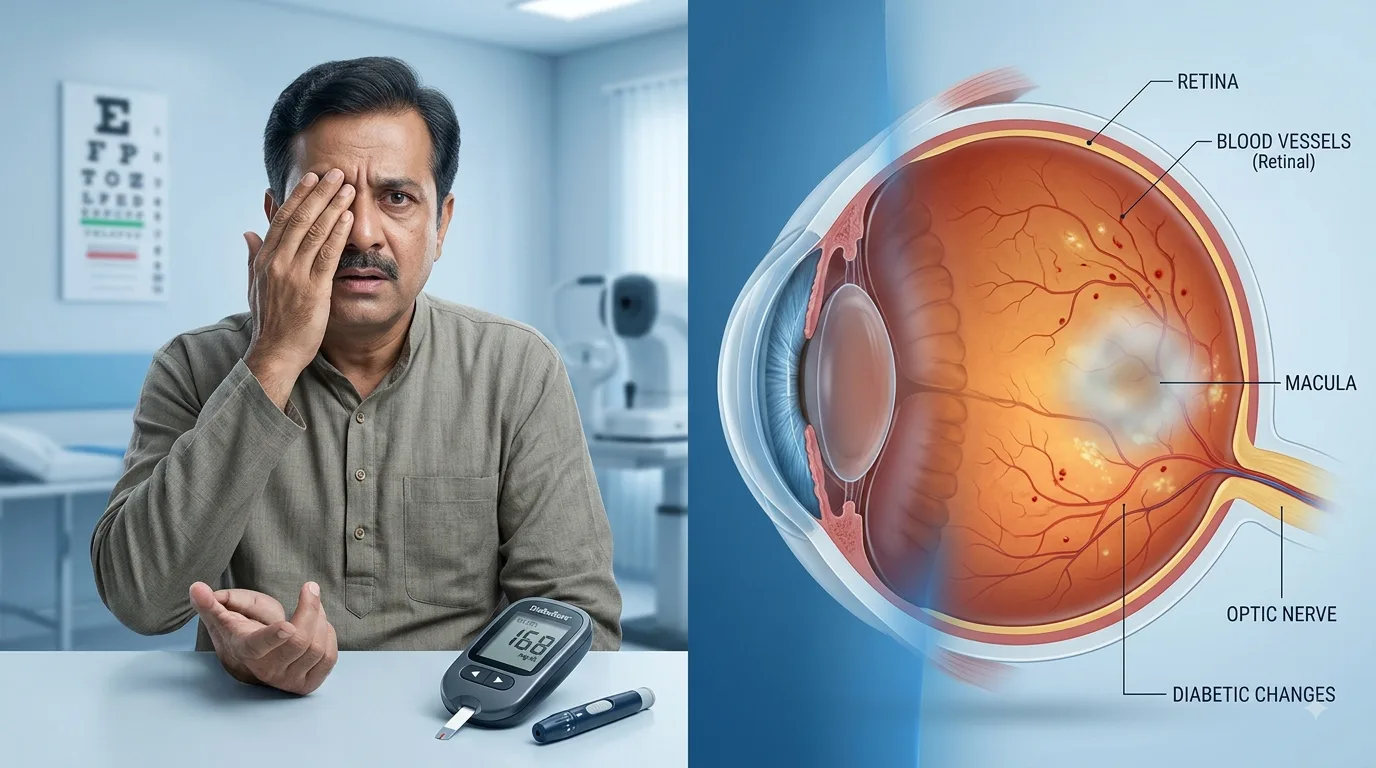
Diabetes doesn’t just affect blood sugar levels. Over a period of time it may cause the delicate blood vessels which supply the retina (a layer or the back of the eye) to become damaged. That in turn can cause diabetic eye disease such as diabetic retinopathy and diabetic macular edema. In severe cases vision will greatly deteriorate some cases also which in some instances appears very quickly.
Sudden loss of vision is not to be taken as a routine matter in diabetics. It may be a sign of internal eye bleed, retinal detachment, a retinal blood vessel issue or any other serious ocular condition. At the first report of dark, cloudy, distorted or partial loss of vision seek out medical attention from an eye doctor or emergency ophthalmic service.
How Can Diabetes Affect Your Eyes?
Persistently high blood sugar may cause injury to small blood vessels all over the body which includes the retina. When retinal blood vessels are damaged which may lead to leakage of fluid or blood. Also in more advanced disease new fragile blood vessels may grow. This is a large element of what occurs in diabetic eye disease.
The Indian Council of Medical Research reports that in many cases of diabetic retinopathy patients may not present with any symptoms even though retinal changes are present. Also they have put forth that at the time of diagnosis of diabetes retinal screening should be done and also that follow up screening to assess the severity of retinopathy should be conducted.
Diabetes is also associated with a higher risk of other eye problems, including cataracts and glaucoma. Therefore, changes in sight should be evaluated rather than automatically attributed to blood sugar fluctuations.
Can Diabetes Really Cause Sudden Vision Loss?
Yes. Diabetic related vision loss at times may present suddenly, also when retinopathy has advanced. A cause is via a vitreous hemorrhage. What happens is that abnormal fragile blood vessels from late retinopathy bleed into the clear gel within the eye. As it may range in degree, a person may report the sudden onset of many floaters, fuzzy vision, black spots, or a large-scale loss of sight.
Another issue that presents is tractional retinal detachment. In advanced diabetic retinopathy scar tissue may form and pull the retina out of its proper place. Retinal detachment may threaten sight and requires urgent assessment. In some people with diabetes a sudden change in sight may not be due to retinopathy. Other retinal or neurological conditions may produce similar symptoms which is why evaluation by an eye specialist is important.
| Vision change | Why medical assessment matters |
| Sudden appearance of many floaters | May occur with bleeding or changes involving the retina |
| Dark shadow or curtain over vision | Can be associated with retinal detachment |
| Sudden severe blurring | Requires evaluation to determine the underlying cause |
| Central distortion or reduced detail | May indicate involvement of the macula |
| Sudden loss of part or all of vision | Needs urgent medical assessment |
What Are the Diabetic Retinopathy Symptoms?
Early in the course of diabetic retinopathy there may be no apparent symptoms which is why it is so important to have a routine retinal exam as part of the care plan for diabetes. As the condition progresses, diabetic retinopathy symptoms include blurred vision, floating spots or dark shapes, difficulty with fine detail, fluctuating vision, and areas of reduced vision. In advanced stages of the disease severe diabetic vision loss can occur. The National Eye Institute reports that in later stages of diabetic retinopathy patients may experience blurry vision, floaters and in serious cases blindness.
Importantly, the absence of diabetic retinopathy symptoms does not mean that the retina is healthy. Changes may already be developing before a person notices difficulty seeing.
Who Is More at Risk of Diabetic Eye Problems?
In all forms of diabetes we see development of diabetic eye disease. Risk goes up with the length of time one has had diabetes and also is related to how well blood glucose and blood pressure are controlled. Also during pregnancy risk of retinopathy may increase in people with diabetes which is why it is important for that to be taken into account and for appropriate medical and ophthalmic follow up.
Regular check ups with your health care team and an eye doctor can play a role in catching changes before they progress into serious diabetic vision loss.
How Is Diabetic Eye Disease Diagnosed?
Through a comprehensive dilated retinal exam which is performed by an ophthalmologist that is when they will look at the retina for signs of abnormal blood vessels, bleeding, swelling, scar tissue and other related changes which point to diabetic eye disease.
Depending on what the examination shows, additional tests may be recommended.
| Examination or test | What it helps assess |
| Dilated retinal examination | Blood vessels, retina, macula and optic nerve |
| Retinal photography | Documents retinal changes for comparison over time |
| Optical coherence tomography (OCT) | Detects and measures swelling or structural changes in the retina |
| Fluorescein angiography | Helps evaluate retinal blood flow and leakage when clinically indicated |
| Ocular ultrasound | May help assess the retina when bleeding prevents a clear internal view |
ICMR has included retinal examination in the list of basic diagnostic procedures and reports that for certain cases OCT, fluorescein angiography and other imaging will be used.
How Is Diabetic Vision Loss Treated?
Treatment is based on the type and extent of retinal damage. Not all people with diabetic eye disease will require the same intervention.
Anti- in which case VEGF treatments may be prescribed for diabetic macular edema or proliferative diabetic retinopathy. Laser used to treat certain retinal changes, and in some cases vitrectomy may be performed when we see large scale vitreous bleeding, retinal traction or other advanced complications are present.
These eye treatments are for management of the base retinal issue and to also put a stop to any more damage. As to how much vision improves that is a result of what caused the retinal change, the degree of its severity and the time which has passed each person’s results may not be the same after an exam.
Can Diabetic Vision Loss Be Prevented?
Not all complications are preventable, but good diabetes management and regular retinal exams play a role in reducing what is preventable. It is important to keep blood glucose and blood pressure at the levels which your care provider says is target for you in which you also protect your whole health as well as your eye health.
Do not wait for diabetic retinopathy symptoms before arranging an eye exam. Proactive eye care is very important as retinopathy may progress without you noticing. If we find early changes in the retina we may adjust the rate of your follow up according to your individual case.
When Should You Seek Urgent Eye Care?
Immediate assessment is required if you notice a sudden drop in vision, a dark curtain or shadow, many new floaters, unexpected flashes of light, or parts of your visual field going dark. These are also signs of conditions which may benefit from early treatment. If you have diabetes do not wait for your next routine appointment when you see these symptoms. Contact an eye specialist or visit an appropriate Eye hospital for prompt evaluation.
Conclusion
Diabetes can affect vision silently for years, and diabetic eye disease may not produce warning signs during its early stages. By the time complications set in, diabetic vision loss may be very serious and in some cases is known to appear suddenly.
Routine retinal check ups, proper management of diabetes and prompt treatment are the keys to early identification of issues which before may have become more difficult to handle. If you notice sudden changes in vision or are worried about your retinal health, see a professional ophthalmologist at Vasan Eye Care or go to a trusted eye hospital for personalized care.
Frequently Asked Questions
Yes, in some cases severe complications of diabetic eye disease may present with acute or very quick to progress vision loss. Vitreous hemorrhage and retinal detachment are examples. Also sudden blindness which is a symptom of other issues also has many causes and should be referred immediately to an eye specialist rather than self treated.
In the early stages of diabetic retinopathy there are usually no visible symptoms. As diabetic retinopathy symptoms may present as blurred vision, spots or strings that float in the field of vision, that the vision plays out differently from day to day or that large sections of the visual field are missing. It is thus very important to have regular dilated retina exams which will catch the disease before symptoms present.
Not always. The outlook for diabetic vision loss depends on its cause, how severe it is and how fast appropriate treatment is started. Some conditions do respond to treatment, while in advanced retinal damage there may be permanent visual impairment. An ophthalmologist can give more in depth assessment
While good diabetes care may put a break on the progress of the disease, established diabetic eye disease may still require ophthalmic monitoring or treatment. Blood sugar levels should be managed as per the plan given by your physician which may not change just because of an eye symptom.
The which schedule is put in place depends on diabetes type, retinal findings, pregnancy status and also other individual factors. In India it is recommended that retinal screening be done at the time of diabetes diagnosis and then again based on retinal results. Your eye doctor can recommend the appropriate follow-up interval for you.
References
- Indian Council of Medical Research – Diabetic Retinopathy Standard Treatment Workflow
https://www.icmr.gov.in/icmrobject/uploads/STWs/1726569102_diabetic_retinopathy.pdf - National Programme for Control of Blindness and Visual Impairment, Ministry of Health & Family Welfare, Government of India
https://npcbvi.mohfw.gov.in/ - AIIMS – Eye Health Education Unit
https://aiims.edu/index.php/en/dept-of-community-ophthalmology/eye-health-education-unit - National Eye Institute, U.S. National Institutes of Health – Diabetic Retinopathy
https://www.nei.nih.gov/eye-health-information/eye-conditions-and-diseases/diabetic-retinopathy - National Institute of Diabetes and Digestive and Kidney Diseases – Diabetic Eye Disease
https://www.niddk.nih.gov/health-information/diabetes/overview/preventing-problems/diabetic-eye-disease