
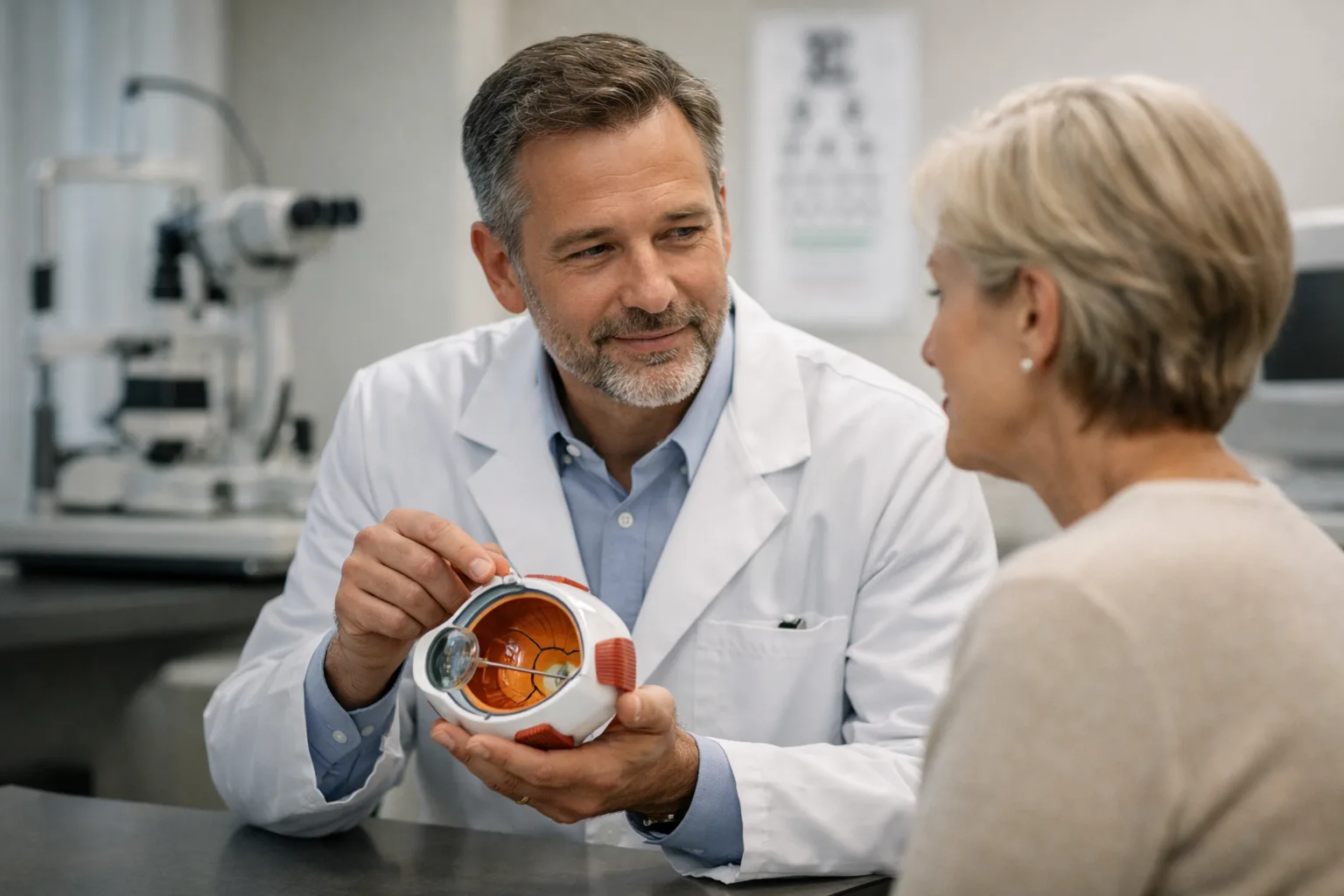
Glaucoma is often managed for years before surgery even enters the conversation. Most patients come in already using drops, adjusting routines, and trying to keep eye pressure under control.
And then surgery becomes the next step.
So what actually happens after that? How long does recovery take, and what should you realistically expect in the weeks that follow?
What is Glaucoma and Why Surgery Becomes Necessary?
Before getting into recovery, it helps to understand what glaucoma is in practical terms.
Glaucoma refers to a group of conditions where increased intraocular pressure damages the optic nerve. This first affects peripheral vision, and if not treated, it will also affect central vision.
But not all cases need surgery.
Doctors usually start with glaucoma medications, which are eye drops that lower the pressure inside the eye. You could also try laser treatments. When these steps don’t work and the damage keeps getting worse, surgery is usually the next step.
Because once nerve damage occurs, it cannot be reversed.
Glaucoma Surgery Recovery: What Happens in the First Few Weeks
The phrase glaucoma surgery recovery can sound straightforward, but healing tends to vary from person to person.
In the first few days, mild irritation, redness, and blurred vision are common. Patients are usually prescribed antibiotic and steroid eye drops to reduce inflammation and prevent infection.
But vision does not clear overnight.
Most people notice gradual improvement over 2-4 weeks. Activities like reading or using a phone may feel slightly uncomfortable at first, especially with long screen hours under harsh indoor lighting.
And yes, follow-ups are frequent in this phase.
Understanding Glaucoma Symptoms During Recovery
Recovery doesn’t mean symptoms disappear immediately.
Some symptoms of glaucoma, like light sensitivity or mild visual blur, may last for a short time after surgery. This doesn’t always mean there’s a problem; it could just mean that the eye is healing.
But some signs need to be looked at:
- Vision loss that happens suddenly
- Extreme pain in the eyes
- Redness or discharge that doesn’t go away
- Seeing rings around lights
So when should you see a doctor? If something feels a lot worse instead of slowly getting better.
Types of Glaucoma Surgeries and Their Recovery Patterns
Not all surgeries are the same, and recovery depends on the procedure performed.
Trabeculectomy
This is one of the most common procedures. It creates a new drainage pathway for fluid inside the eye.
Recovery tends to take a few weeks, with close monitoring to maintain the correct pressure.
Glaucoma Drainage Devices
Tiny tubes are implanted to help fluid drain.
Because these are implants, healing may take slightly longer, and pressure adjustments are monitored over time.
Minimally Invasive Glaucoma Surgery (MIGS)
These are newer procedures with smaller incisions.
And recovery is usually quicker, often within a couple of weeks.
But they may not be suitable for advanced cases.
Also Read: Common Questions about Glaucoma Surgery
Glaucoma Causes and Their Impact on Healing
Recovery doesn’t exist in isolation. The underlying glaucoma causes often influence how the eye heals.
For instance, patients with long-standing high pressure or advanced optic nerve damage may not notice dramatic visual improvement after surgery. The goal here is often to prevent further loss rather than restore vision.
And systemic conditions matter too.
Diabetes, for example, can slow healing. So can age and overall eye health.
Most people walk into a clinic only when vision starts interfering with daily tasks – reading messages, driving through traffic at night, or managing long hours on screens. By then, the disease may already be advanced.
Life After Surgery: Adjustments and Expectations
Healing is only one part of the process.
After glaucoma surgery, patients often need to continue some form of glaucoma medications, though sometimes at reduced levels. Regular eye pressure checks remain part of routine care.
Because glaucoma doesn’t go away.
A common question patients ask is: Will I be able to go back to normal life quickly?
In most cases, yes – but with some caution.
Avoiding heavy lifting, protecting the eye from dust (especially during daily commutes), and limiting strain for a few weeks helps recovery stay on track.
Long-Term Outlook Across Different Types of Glaucoma
There are several types of glaucoma, including open-angle, angle-closure, and secondary glaucoma. Each behaves differently.
And so does recovery.
Open-angle glaucoma, which progresses slowly, often responds well to surgery aimed at lowering pressure. Angle-closure glaucoma may require more urgent intervention, and recovery can be slightly more complex.
But across all types, the aim remains similar-control pressure and prevent further optic nerve damage.
Not necessarily restore lost vision.
Also Read: Laser Treatment for Glaucoma: What to Expect – SLT, LPI & More
Accessing Follow-Up Care Matters
Follow-up care plays a vital role in ensuring a smooth and successful recovery after Glaucoma Treatment. Vasan Eye Care provides ongoing glaucoma management and post-surgical monitoring across multiple centres, making it easier for patients to access regular pressure checks and long-term eye care close to home.
Because surgery is only one step in long-term glaucoma care.
Final Thoughts on Glaucoma Surgery Recovery
Most of the time, the recovery from glaucoma surgery is slow and closely watched. It may take some time for your vision to get better, and the main goal is to keep your eye pressure under control instead of fixing the damage that has already been done.
And that distinction matters.
Understanding this helps set realistic expectations after treatment.
Frequently Asked Questions (FAQs)
1. How long does glaucoma surgery recovery take?
Most patients recover within 2-4 weeks, though full stabilisation may take longer depending on the procedure.
2. Will vision improve after glaucoma surgery?
Surgery mainly prevents further damage. Vision improvement varies and is often limited if nerve damage is advanced.
3. Do I still need glaucoma medications after surgery?
In many cases, yes. But the number or dosage of medications may reduce after successful treatment.
Find Glaucoma Treatment in Your City: Glaucoma Treatment in Bangalore | Glaucoma Treatment in Chennai | Glaucoma Treatment in Hyderabad