
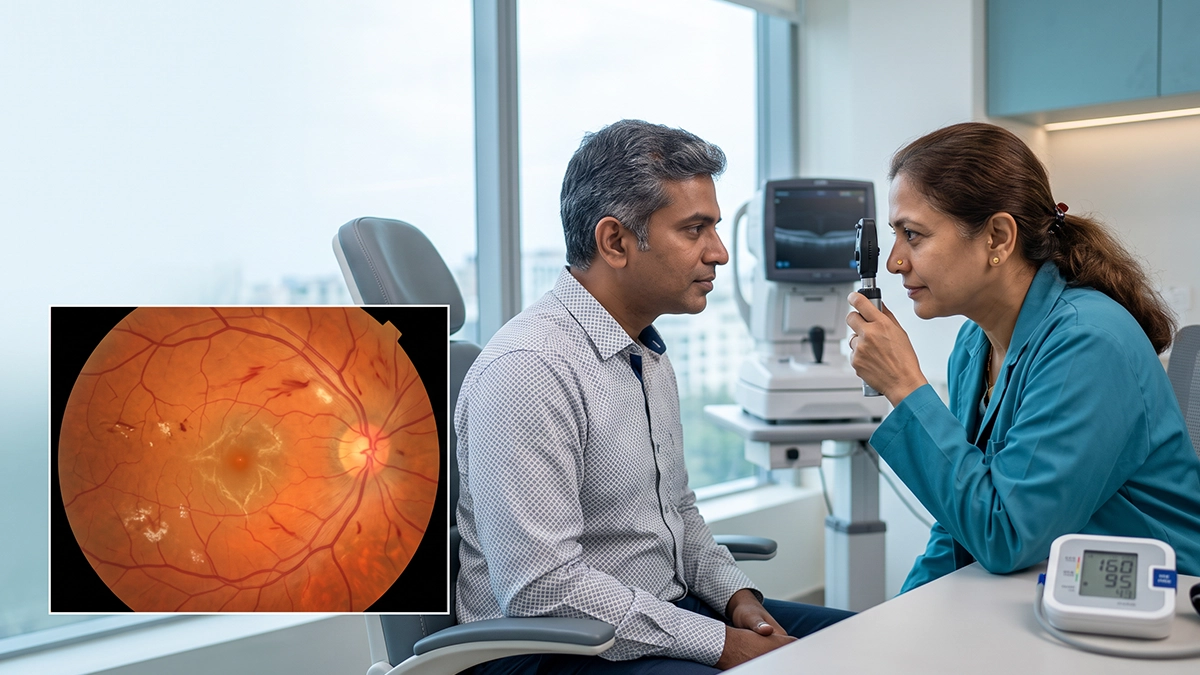
High blood pressure can damage the tiny blood vessels which feed the retina. This is referred to as hypertensive retinopathy. In Hypertensive retinopathy grading is used by eye specialists to report the extent of the changes present and to determine how closely the eyes and overall health should be monitored. As retinal blood vessels can be seen directly hypertensive retinopathy grading may signal signs of more widespread vascular damage.
What Is Hypertensive Retinopathy?
Hypertensive retinopathy is what results from either constant or sudden rise in blood pressure which in turn affects retinal circulation. At first we see narrowed arterioles. Later vessel walls may become thick which in turn compresses nearby veins. In advanced disease we see hemorrhages, cotton wool spots, hard exudates and also optic disc swelling.
The hypertensive retinopathy stages do differ between classification systems, thus hypertensive retinopathy grading should be used along with blood pressure history and general health. Also see MedlinePlus info on high blood pressure and eye disease MedlinePlus: High Blood Pressure and Eye disease note that many present with no symptoms until the disease has progressed.
Hypertensive Retinopathy Grading: Grades 1 to 4
A traditional system of hypertensive retinopathy grading which goes from mild arterial narrowing to severe retinal and optic-nerve involvement.
| Grade | Typical Retinal Findings | What It Suggests |
| Grade 1 | Mild generalized arteriolar narrowing | Early vascular change |
| Grade 2 | More narrowing and AV crossing changes | Chronic vessel-wall changes |
| Grade 3 | Haemorrhages, cotton-wool spots or exudates | Significant retinal injury |
| Grade 4 | Grade 3 changes plus optic-disc swelling | Severe disease needing urgent assessment |
Hypertensive Retinopathy reports on similar issues which is the reason for the use of hypertensive retinopathy grading to determine the severity. Severe cases also may indicate that other organs affected by high blood pressure should be assessed.
Signs Doctors Look For
Common hypertensive retinopathy signs include narrow arterioles, AV nicking, retinal hemorrhage, cotton wool spots and hard exudates. In the salus sign in hypertensive retinopathy a vein is deflected at an arteriovenous crossing. Silver wiring in hypertensive retinopathy is a term used for a thickened arteriole which has become pale or silvery. These present also to hypertensive retinopathy grading.
Symptoms and Eye Tests
Early in the course of the disease there may be no hypertensive retinopathy symptoms; we see that issues like blurred or dim vision, double vision, headache, or sudden visual loss may present. With very high blood pressure which presents suddenly, visual symptoms will require immediate medical care.
Diagnosis usually includes a dilated fundus exam and may also involve fundus photography or OCT. At Vasan Eye Care we do tests for retinal bleeding, swelling and vascular changes. Vasan Eye Care retina test also Hypertensive retinopathy grading which is from the exam results.
Hypertensive Retinopathy vs Diabetic Retinopathy
Hypertensive retinopathy vs diabetic retinopathy can be a point of confusion while both do cause retinal bleeding and leakage. With hypertension we typically see arteriolar narrowing, AV nicking and vessel wall changes, out in diabetes we see microaneurysms, diabetic macular edema and other tell tale retinal changes.
| Feature | Hypertensive Retinopathy | Diabetic Retinopathy |
| Main systemic factor | High blood pressure | Diabetes |
| Typical vascular clue | AV nicking and narrowed arterioles | Microaneurysms and capillary leakage |
| Main management focus | Blood-pressure control | Glucose, blood-pressure and retinal management |
Because the diseases differ, hypertensive retinopathy grading is not interchangeable with diabetic-retinopathy staging.
Treatment and Follow-Up
The base of hypertensive retinopathy treatment is in controlled blood pressure which is under medical supervision, also we use hypertensive retinopathy grading to determine the extent of eye damage. In mild cases we may see just close monitoring once the system is brought into check. For moderate to severe issues we will require a team approach between the ophthalmologist and physician.
Associated retina treatment may require additional retinal treatment. Vasan Eye Care Retina Treatment At Vasan Eye Care, clinicians can document the hypertensive retinopathy grading during a retinal assessment and compare it at follow-up.hypertensive retinopathy grading helps show how blood-pressure-related vascular changes are affecting the eye.
ICD-10 and Medical Documentation
People who are looking for information on hypertensive retinopathy icd 10 should know that coding is based on which coding system is used, the clinical setting and laterality. In ICD-10-CM hypertensive retinopathy includes H35.031 for right eye, H35.032 for left eye, H35.033 for bilateral disease and H35.039 for an unspecified eye.Hypertensive retinopathy grading is a description of clinical severity which in turn codes the condition for medical classification and documentation.
Why Early Detection Matters
Because people may not notice the onset of htn retinopathy with hypertension it is to that which they should adhere to medical advice for eye exams. Retinal Hypertensive retinopathy grading may show vascular changes before we see large scale visual symptoms. For that, hypertensive retinopathy grading should be done in conjunction with assessment of blood pressure. Regular blood pressure care and retinal follow up will help to reduce the risk of further damage.
Frequently Asked Questions
1. What is hypertensive retinopathy grading?
Hypertensive retinopathy grading is a scale which grades retinal changes caused by high blood pressure which range from mild vascular changes to severe retinal and optic-nerve involvement.
2. Can hypertensive retinopathy improve?
Some retinal changes will improve once blood pressure is well controlled but it is the chronic vessel wall changes which tend to persist.
3. Is Grade 4 hypertensive retinopathy serious?
Yes. Grade 4 presents with optic-disc swelling which in turn requires acute medical attention.
4. Is a hypertensive retinopathy PPT enough for diagnosis?
No. A hypertensive retinopathy ppt may help to clarify the condition, that said diagnosis is based on a thorough eye exam.
5. How often should the retina be checked?
The interval for treatment response varies according to blood pressure control, symptoms and hypertensive retinopathy grading involvement which is determined by your ophthalmologist.