
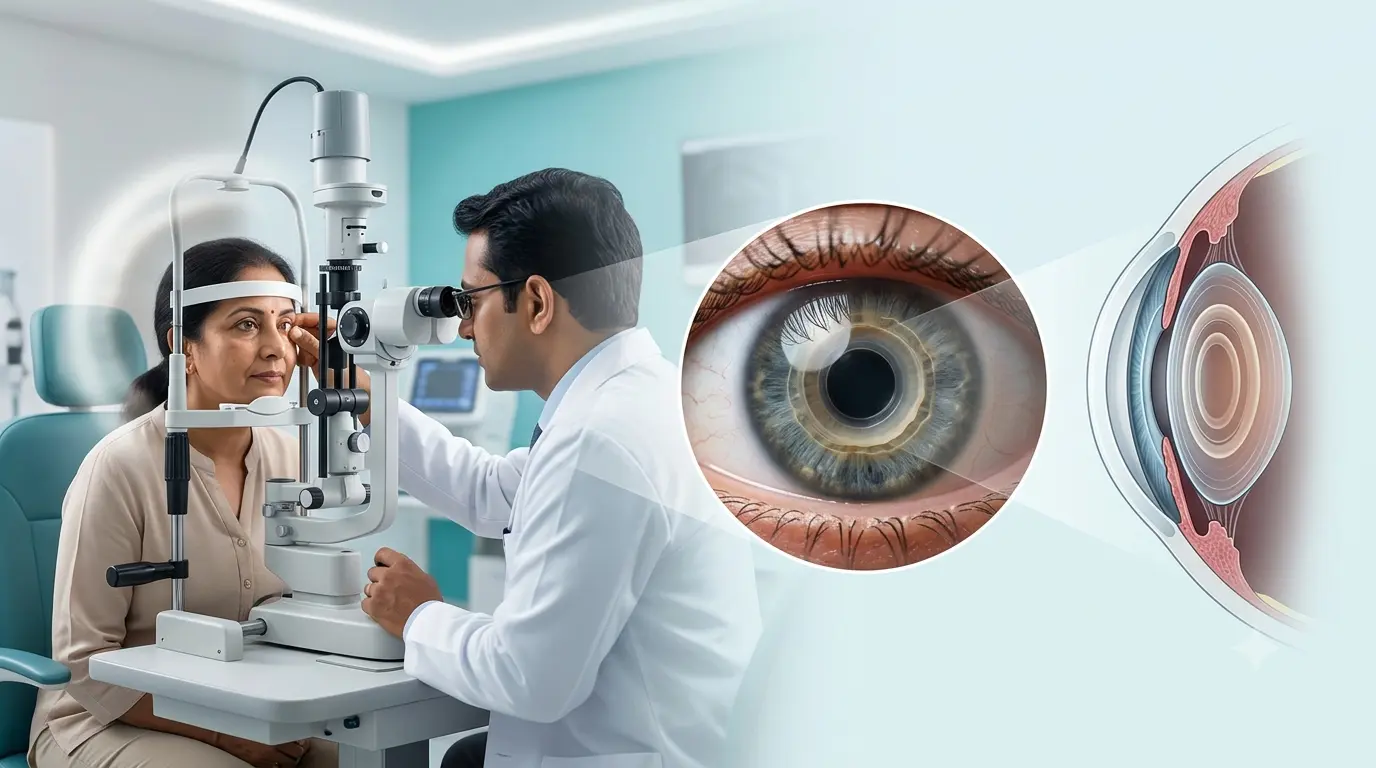
A cataract is a common feature of aging but in babies and children the eye’s natural lens may also cloud. Of that which is a result of age there is a type which is a zonular cataract also known as a lamellar cataract. Unlike age related which may slowly affect large sections of the lens this developmental cataract tends to affect a specific layer or zone.
A lamellar cataract may also present itself in early childhood. In some cases only slight visual changes are seen, in other more dense cataracts which do to affect a child’s development of vision. Also of great import is that in the case of childhood cataracts which go untreated they may cause amblyopia which is also known as lazy eye.
What Is a Zonular Cataract?
A zonular cataract which is a type of developmental cataract in which cloudiness appears in a specific layer of the crystalline lens. The rest of the lens may still be relatively clear. This condition is referred to as “zonular” which we use because the issue is in a zone of the lens “lamellar” refers to its layered look.
Therefore, zonular cataract and lamellar cataract are used to describe the same type of lens opacity. What is important to note is that the term “zonular” in this case refers to the affected lens zone. Also do not confuse disorders which affect the zonules and the fibres which support the lens within the eye.
Lamellar and zonular cataracts are types of congenital and developmental cataract which do present in both eyes though the degree of severity may not be the same in each.
What Happens to the Lens in Lamellar Cataract?
In the natural lens which is clear it focuses in comings light at the retina. Through childhood the growth of new lens fibers which surround former layers is a continuous process.
In some cases of lamellar cataract a layer which develops at a certain time becomes cloudy with the inner and outer parts of the affected area may still be clear. Upon examination by an ophthalmologist you may note a tell tale ring or shell like area of opacity.
Some in which lamellar cataracts present what are essentially small opacities which extend into the adjacent lens cortex. These are at times referred to as “riders” and may aid in the ophthalmologist’s determination of the cataract’s morphology during a slit lamp exam. What impact vision has is more so a result of the size, density and position of the opacity which in turn determines the type of cataract.
What Causes Zonular Cataract?
There isn’t a single cause for all cases of zonular cataract. In terms of developmental cataracts we see they may result from genetic factors, disturbances which affect lens development or in some children we see they present with no identifiable cause.
Genetic and Hereditary Factors
Genetic factors play a large role in many congenital cataracts. We have identified several genes which when faulty cause the structural and transparent issues in the lens that lead to inherited cataracts.
Research reports that certain mutations in HSF4 play a role in lamellar cataracts which may be present at birth or which develop in early childhood. Also reported are both dominant and recessive inheritance patterns. It is thus useful for families to report any history of childhood cataract to their ophthalmologist.
Metabolic and Developmental Factors
Some pediatric cataracts present in association with metabolic diseases or other issues that play a role in proper lens growth. Also congenital cataracts may report certain prenatal issues which include specific infections or exposures during pregnancy.
However also we do not see in every case of lamellar cataract that there is a systemic disease present. That will be determined by the ophthalmologist which may include doing some extra medical, metabolic or genetic tests based on the child’s history and what is seen at the eye exam.
Cases Without a Clear Cause
At times we see development of zonular cataract in the absence of known family history or associated health issues. These are to be put in the category of sporadic or idiopathic after proper evaluation.
What Are the Symptoms of Lamellar Cataract?
Symptoms present in a variable degree. A small and rather clear lamellar cataract may cause little in the way of issues. A dense central opacification has a greater tendency to affect vision.
Children can have blurry or reduced vision, have trouble with small or far away objects, sensitivity to bright light which may cause glare and they may have issues with contrast. Also report of a lot of squinting from the child, an eye that turns in or out, or having difficulty in doing tasks which require fine visual motor skills.
More in young patients the presentation of childhood cataracts may be via leukocoria which is a white appearance to the pupil as opposed to the normal red or dark reflex. Also in these kids we see strabismus and nystagmus which is an involuntary movement of the eyes in children with what we term as visually significant cataracts.
Children do not at times express that they see blur, especially if the issue is a congenital one. This is which is why routine pediatric eye checkups and evaluation of abnormal visual behavior are key.
Can Zonular Cataract Cause Lazy Eye?
Yes. A large zonular cataract may impede clear vision at the time the brain and eyes are in the process of learning to team up.
If a single eye is providing a poor quality image the brain may start to use the better eye more which in turn may lead to amblyopia. Also with bilateral cataracts if both eyes are not receiving enough visual info that has an impact on visual development. That is why we should not just monitor childhood cataracts they should be professionally assessed. The urgency of the treatment will depend on the degree of visual impairment.
How Is Lamellar Cataract Diagnosed?
Diagnosis starts with a full ophthalmic exam. In babies we use the red reflex test to identify which may require more in depth investigation.
An ophthalmologist does a dilated eye exam and slit lamp assessment which in turn looks at the site, size and pattern of the lamellar cataract. When we are able to we do age appropriate visual acuity testing which is its own measure of how the cataract is affecting sight.
The during the exam we may also do a refraction which we do to see if glasses will help vision. Retina and optic nerve if at all possible will be evaluated. If the cataract is very dense and we can’t see into the back of the eye we may have to use imaging like ultrasound. Also a medical or genetic evaluation may be done when the history or exam points to a larger health issue.
How Is Zonular Cataract Treated?
Treatment for a zonular cataract is based on its effect on vision rather than simply its appearance.
Observation and Vision Correction
A mild lamellar cataract which does not report large issues with visual development may not need to have immediate surgery. The ophthalmologist may put on glasses when refractive errors like short sightedness, long sightedness or astigmatism present and also will do regular follow up which is very important as the child’s visual needs change as they grow.
Amblyopia Treatment
When there is a difference in vision between eyes, treatment for amblyopia may be required. In each case we may put in appropriate glasses and do careful supervised patching or other amblyopia therapies. It is also very much that we manage amblyopia as well as treat the cataract which is present. For example, removing an opacification does not in itself restore normal visual development.
Cataract Surgery
Surgery may be recommended when a zonular cataract is dense enough to obstruct vision or place the child at significant risk of amblyopia.
During pediatric cataract surgery the cloudy lens is removed. At what age the child may benefit from restoring focus and which method of doing that will work best is determined by the ophthalmologist. This may include the use of an intraocular lens, contact lenses, glasses or a mix of these.
There is not a set age for surgery which applies to all children. What we see is that timing of the procedure varies based on issues like the degree of cataract present, if it is in one or both eyes, visual behavior, risk of amblyopia and the health of the eye as a whole. We do see that early intervention is very important in cases where the cataract is large and is greatly blocking the visual axis.
Vision Care After Lamellar Cataract Surgery
Successful treatment is not a one time fix at the point of surgery. As they grow, so do their eyes which means that children will have to have their eyes checked out on an on going basis. Also there may be a need for changes in spectacle or contact lens prescription. In some cases amblyopia therapy may also be required to be continuous and we watch out for changes in eye pressure, visual development and other post operative issues. What is clear is that the more consistent the follow up care the better the visual outcome for the child.
When Should Parents Consult an Eye Doctor?
Parents should take their child for an eye exam if they notice white or abnormal pupil reflexes, eyes turning in or out, persistent atypical eye movements, frequent squinting, difficulty in recognizing objects, poor visual attention or issues brought up during a pediatric screening exam.
A known genetic history of congenital cataract is a reason to have early eye screening with a qualified ophthalmologist.
At Vasan Eye Care we have ophthalmologists that can evaluate for childhood cataracts and determine which of the options of watchful waiting, vision correction, amblyopia treatment or surgery is appropriate.
Conclusion
A zonular cataract, or lamellar cataract, is a developmental issue of the lens in the eye which affects certain layers of the natural lens. It may present as a minor issue best managed by close monitoring or as a more serious childhood cataract which may interfere with the proper visual development.
Because little to no attention may be paid by a baby or young child to issues like blurry vision, parents need to take note of atypical appearance of the pupils, cross eyed condition or other abnormal visual behaviors. Early diagnosis at this point is key for the ophthalmologist to determine if that child will require glasses, amblyopia treatment, close monitoring or cataract surgery.
If you notice signs of a cataract, or different types of unusual vision problems in your child, book a complete eye exam at Vasan Eye Care to get proper assessment, personalized advice.
Frequently Asked Questions About Zonular Cataract
1. Are zonular cataract and lamellar cataract the same?
Yes. Zonular cataract and lamellar cataract present for the similar development of these cataracts. The opacity which is seen is of a zone or layer of the natural lens’ structure and not the total lens.
2. Is lamellar cataract present from birth?
A lamellar cataract is present at birth in some cases of which are congenital, in others they develop in infancy or early childhood as the lens grows. The onset may depend on the base genetic or developmental issue.
3. Does every zonular cataract require surgery?
No. A mild zonular cataract which does not affect vision greatly may be watched. Surgery is usually recommended when the cataract interferes with vision a great deal or when it is at risk of affecting normal visual development. An ophthalmologist should make that decision after an evaluation of the child.
4. Can glasses cure lamellar cataract?
Glasses do not correct the cloudy lens layer. But they may help vision if refractive error is a factor in blurriness. Also, children with a lamellar cataract may require wear of spectacles even when we don’t go ahead with immediate cataract surgery.
5. Can lamellar cataract affect both eyes?
Yes. Lamellar cataract is a common issue which presents in both eyes. We see that the disease may not affect each eye equally, thus in some cases vision may be worse in one eye or we may see a greater risk of amblyopia.
6. Can vision improve after zonular cataract treatment?
Many children see great visual improvement when we identify and manage a visually significant zonular cataract. As for the outcome that varies with cataract severity, age at which treatment is sought, amblyopia and associated eye conditions. Also important is ongoing visual rehabilitation and follow up.