
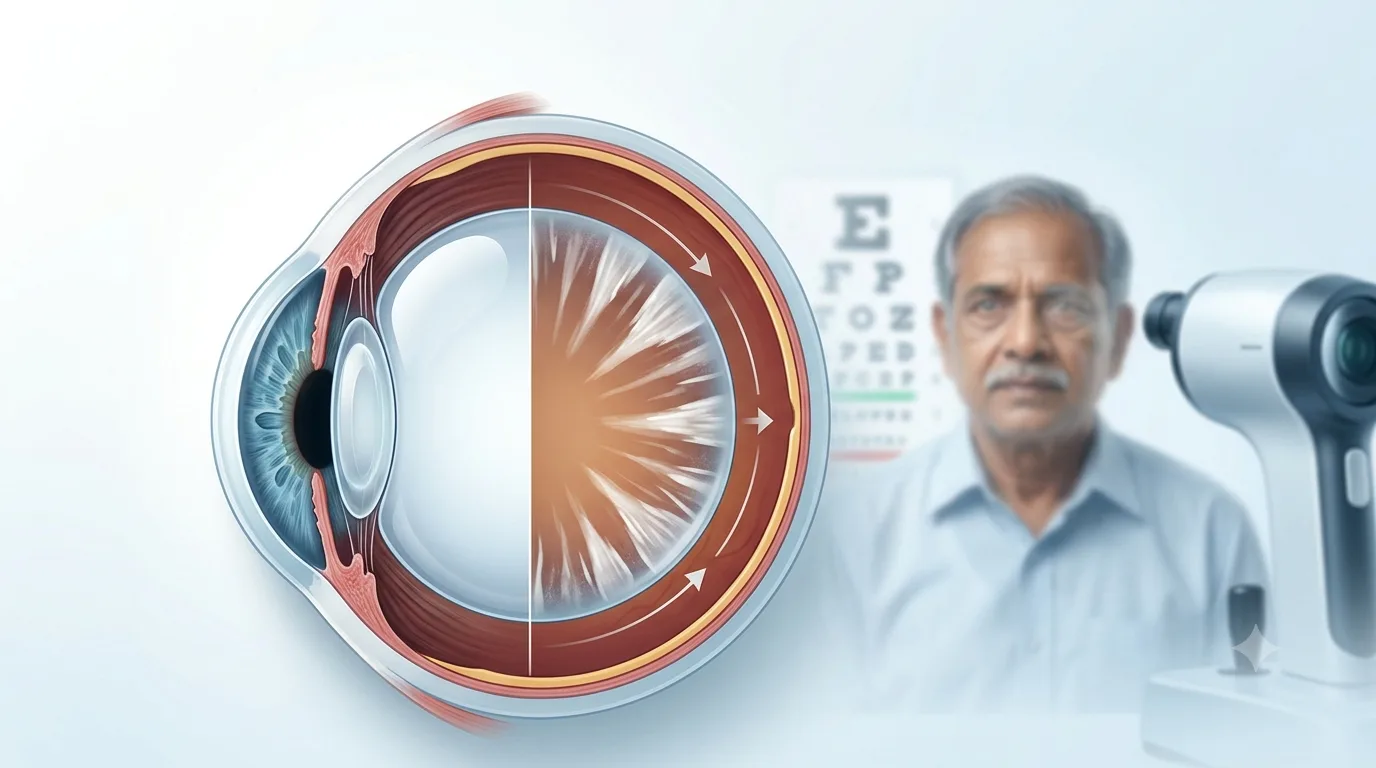
A cortical cataract which is very typical of all cataracts affects the cortex, the outer layer of the eye’s natural lens. It may present as white, wedge shaped or spoke-like areas which develop at the edge of the lens and tend to progressive growth towards the center. Also because of these cloudy areas which interfere with the incoming light this condition may cause especially at night time while driving headlight glare.
Cataracts usually develop slowly and painlessly. In the early stages a person may not notice any change at all. As the clouding progress vision may become blurred, colors may appear more dull, and bright lights may bother.
Understanding the cortical cataract meaning,what symptoms to look out for and what its progress looks like will enable people to know when an eye test is needed and at what stage cataract surgery may be considered.
What Is a Cortical Cataract?
To understand the cortical cataract meaning, it is helpful to know the basic lens structure. The natural lens contains a central nucleus which is surrounded by an outer layer which we call the cortex. In a cortical cataract lens fibers in this outer portion lose their normal clear state and become cloudy.
These types of opacities present with a distinct spoke-like appearance. At first they may be located at the periphery of the lens and cause little issue. As the cloudy areas within the lens shift toward the visual axis they start to play a greater role in how much light is able to enter the eye. Thus the role in the change of vision which cataracts play not only depends on the degree of cloudiness that is present, but also the location of the opacities.
A cortical senile cataract is what we today term an age related cortical cataract. The term “senile” which was used in the past is no longer common in present day medical practice which has taken to using the term age related cataract. Age related cataracts are the most common type of cataract.
What Does a Cortical Cataract Look Like?
During an exam of the eyes an ophthalmologist may note white or gray spoke like opacities which extend through the lens cortex. We see these changes with the use of a slit lamp microscope in a full scale eye exam. Also at the same time cortical changes may occur with nuclear or posterior subcapsular cataracts which means a patient does not always have only one type of cataract.
Some past reports in ophthalmology used the term cupuliform senile cortical cataract. “Cupuliform” which is a term for a disc like or saucer shaped opacity at the back of the lens cortex. Also this type of opacity may position closely to the visual axis which results in early visual impairment. Today’s ophthalmologists mostly report on the anatomic location and clinical appearance of the cataract instead of using these older terms.
The term corticated comes up in searches at times, but it is not a standard diagnostic term for this condition. Patients that look up info on a “corticated cataract” are usually better off asking an ophthalmologist if their diagnosis is a cortical, nuclear, posterior subcapsular or mixed cataract.
Common Cortical Cataract Symptoms
A cortical cataract may present little in terms of symptoms until the opacity stays to the periphery of the lens. As the cloudy areas start to grow and affect the passage of light, symptoms become more noticeable.
| Symptom | What You May Notice |
| Glare | Headlights or bright lamps become uncomfortable |
| Blurred vision | Objects may appear hazy or less defined |
| Reduced contrast | It becomes harder to distinguish objects from similar backgrounds |
| Night-vision difficulty | Driving after dark may become more challenging |
| Changes in near or distance vision | Reading or seeing distant objects becomes less clear |
| Halos around lights | Rings or streaks may appear around bright lights |
Glare is a very prominent feature of cortical cataracts. The American Academy of Ophthalmology’s EyeWiki reports that during night time while driving under the head lights glare is a very common issue. As for cataracts in general with cataracts they also cause blurred vision, faded colors, halos, poor night vision and frequent changes in spectacle prescription.
These symptoms do not only apply to cataracts. Glare, blurred vision and sudden changes in eyesight may also present with other eye issues which is why it is best to have symptoms checked by a professional rather than diagnose yourself.
Stages of Cortical Cataract
The course of a cortical cataract may also vary greatly. Some cataracts develop slowly over a period of several years, while others progress much quicker. As it stands, age related cataracts are described by how extensive the lens opacity is in each case. The exact course and appearance of the cataract may differ between patients.
| Stage | Typical Change |
| Early or incipient | Small peripheral cortical opacities develop, sometimes with minimal symptoms |
| Immature | Opacities increase but clear areas of the lens remain |
| Mature | Lens clouding becomes extensive and vision is significantly affected |
| Hypermature | The cataract is very advanced and the lens undergoes further degenerative changes |
An early cortical senile cataract does not at all time call for right away surgery. To determine if surgery should be done is a different issue which includes how the cataract is affecting use of vision and daily activities out which stage the patient is in.
What Causes Cortical Cataracts?
Aging is a primary cause for the development of cataracts. As we age structures within the lens which include proteins change thus reducing its transparency. Also there are a number of factors which play a role in the overall risk of cataract development. These include diabetes, smoking, excessive ultraviolet exposure, prior eye injury or eye surgery, family history, radiation exposure and certain steroid medicines.
Having some of these risk factors does not mean that a person will develop a cortical cataract for sure. Also it is the case that cataracts may appear in people who do not have what we would consider an apparent risk factor because the aging process itself brings about natural changes in the lens.
How Is a Cortical Cataract Diagnosed?
Ophthalmologists can diagnose cataracts at the time of a thorough eye exam. Also according to the National Eye Institute a dilated eye exam is when the doctor looks at the lens as well as other internal eye structures.
The evaluation may include vision testing and slit-lamp assessment which in turn will identify the site and degree of the cataract. Also in cases which present with more visual loss than what is reported by the cataract alone we look at the retina, the optic nerve and other eye elements in detail. To determine if the patient has a cortical cataract, nuclear cataract, posterior subcapsular cataract or a combination we do which in turn helps to identify symptoms and guide in the plan of treatment.
Cortical Cataract Treatment
At present there is no one which has been proven to remove a set in cataract. In the early stages we may find that a new glasses prescription, better lighting, magnification or anti-glare measures will help some people to function better.
When signs of a cortical cataract appear in the form of trouble with reading, driving, or doing work which was once routine it may be time to look into cataract surgery. Surgery is the only treatment which removes cataracts.
In the course of cataract surgery the cloudy natural lens is removed and in most cases is put in a clear artificial intraocular lens which also is known as an IOL. Also we use in modern cataract surgery techniques like phacoemulsification which break up the cloudy lens into small pieces before its removal.
The appropriate time for surgery is variable for each person. While cataract surgery is not a requirement upon diagnosis of cataract we may still see it recommended. An ophthalmologist will look at the patient’s symptoms, visual needs, the health of the eye and the overall health before putting forth a treatment recommendation.
Can Cortical Cataracts Be Prevented?
No plan out there can promise you will never develop an age related cataract. But that which may support overall eye health and in turn may reduce the chances of certain cataract risks is to protect the eyes from ultraviolet rays, to not smoke, to protect the eyes from injury, to eat a balanced diet and to manage conditions like diabetes. Also as we age it is very important to have regular eye exams which may find cataracts before they begin to affect your vision.
When Should You Visit an Eye Doctor?
Book in for an eye exam if you notice a gradual presentation of blurred vision, headlight glare, issues with night time driving, changed color perception, or that your glasses prescription is changing often. Cataract symptoms present with other eye conditions which is why an exam is needed to determine the cause.
Sudden vision loss, severe eye pain, flashes of light or a large increase in floaters does not necessarily point to a cortical cataract and requires prompt medical evaluation.
Conclusion
A cortical cataract which affects the periphery of the natural lens and also produces spoke like opacities that may gradually shift towards the visual axis. Glare, blurred vision, reduced color contrast and difficulty with night time driving are common issues which may present but are also based on the cataract’s position and extent.
Early changes can often be monitored, but once cataract-related vision problems begin affecting everyday life, surgery can remove the cloudy lens and replace it with an artificial intraocular lens. If you are noticing progressive visual changes, a comprehensive examination at Vasan Eye Care can help determine whether a cortical cataract or another eye condition is responsible.
Frequently Asked Questions
1. Is cortical cataract serious?
A cortical cataract will greatly impact vision when opacities grow into the lens center. In early stages they may cause little trouble, in advanced stages it may interfere with reading, driving and other activities. An ophthalmic exam is used to grade the severity.
2. What is the main symptom of cortical cataract?
Glare is a very prominent symptom which in particular presents itself as headlight glare during night time driving. Also patients may report blurred vision, reduced color contrast and trouble seeing at night as the lens opacity increases.
3. Can cortical cataract be cured without surgery?
No medication or eye drop has put forth a cure for cataract. In early disease glasses, better lighting and anti glare measures may improve vision temporarily which is a fact, but surgery is the only sure way to remove the cloudy lens.
4. What is a cupuliform senile cortical cataract?
A term that was used in the past for a cupuliform senile cortical cataract which is a description of a saucer or disc shaped opacity which affects the posterior cortex of the lens. As this type is located more centrally it may impair vision before peripheral cortical opacities.
5. How quickly does cortical cataract progress?
There is not a set timeline. A cortical cataract may progress over the space of a few years in one individual at a different rate in another. Location, extent of the opacity, age, eye health and other medical issues can play a role in how fast symptoms present.
6. When is surgery needed for cortical senile cataract?
Surgery is a treatment option which we turn to when a cortical senile cataract is the cause of vision issues that in turn interfere with what a person does every day like reading, driving or watching TV. That decision is made after a discussion between you and your ophthalmologist on what the benefits are and also what the risks may be.