The development of laser vision correction has changed how doctors treat refractive vision problems. People who have extreme myopia or severe astigmatism need to determine their eligibility for the treatment. The safety and effectiveness of LASIK make it a popular procedure but its success rate with high prescriptions depends on several clinical factors. Decision making requires a comprehensive understanding of these particular elements.
The success of lasik for high myopia depends on accurate assessments and advanced technological solutions and doctors who possess exceptional expertise. Modern refractive surgery practices which have operated for several decades now deliver better safety measures and more accurate results and improved patient outcomes than they did in previous times.
Understanding High Myopia and Astigmatism
The term high myopia describes a condition of extreme nearsightedness which results in vision impairment that exceeds-6.00 diopters. The condition causes distant objects to appear blurry because of either excessive eyeball elongation or irregular corneal curvature. Astigmatism creates a visual impairment because the cornea develops an irregular shape which produces distorted vision that affects all viewing distances.
The people who have these medical conditions depend on glasses and contact lenses for their vision needs. The rising demand for lasik surgery for high myopia shows that people prefer a treatment which delivers permanent outcomes and simplified operation.
Also Read: LASIK vs Glasses & Contacts: Pros, Cons, and What to Expect
How LASIK Works for Higher Prescriptions
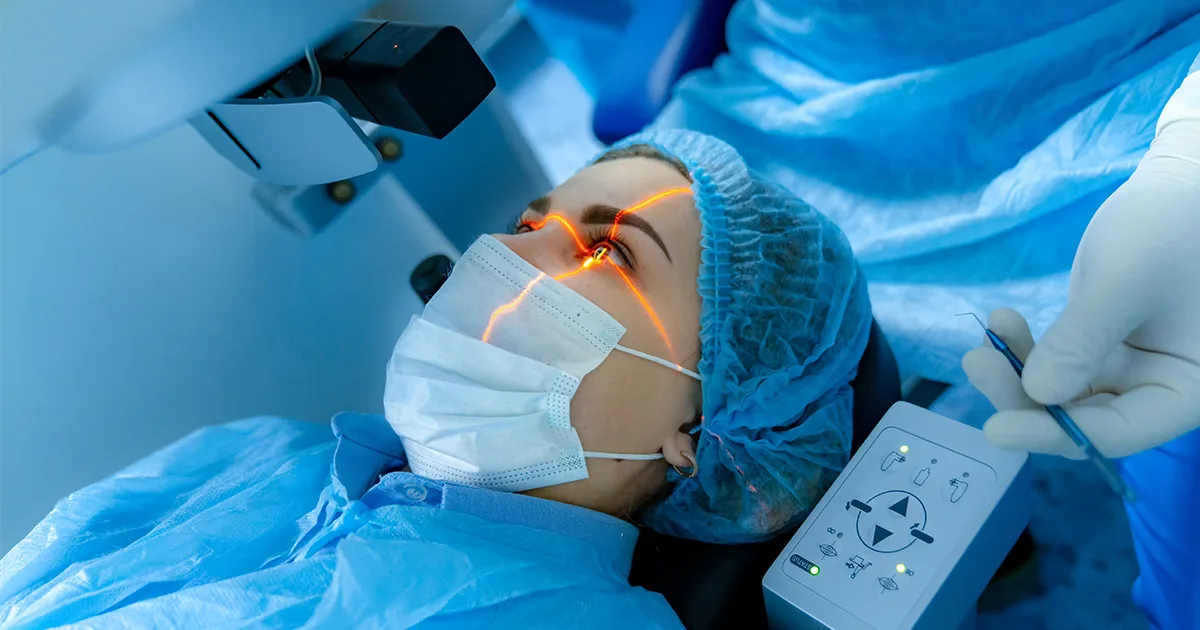
LASIK uses a precise laser to reshape the cornea which corrects all types of refractive errors. The procedure requires surgeons to remove additional corneal material when treating patients who have high myopia or astigmatism compared to patients who have lower prescription needs. This is where careful screening becomes critical.
Advanced diagnostic tools assess corneal thickness, curvature, and overall eye health. Only when sufficient corneal thickness is present can lasik for high myopia be performed safely.
Modern laser systems are designed to handle complex corrections with high accuracy. The surgical results improve significantly when highly experienced expert doctors perform the procedures because they can treat patients with high refractive errors better than other doctors.
Also Read: What Is Refractive Surgery? An Overview of LASIK, PRK, SMILE & ICL
Is LASIK Good for High Myopia?
A common question remains: is lasik good for high myopia? The answer requires assessment of each person’s suitability because the procedure does not work for all patients. LASIK can be highly effective for high myopia when:
- Corneal thickness is adequate
- Eye power remains unchanged
- The patient has no undetected eye conditions
- The medical team performs complete pre-surgery evaluations
For eligible candidates, lasik eye surgery for high myopia can reduce dependence on glasses and provide clear vision. However patients with extremely high cases should receive recommendations for alternative procedures which include implantable lenses.
Role of Epi-LASIK in High Myopia
The procedure EPI-LASIK Surgery for severe myopia serves as an alternative for patients who cannot undergo traditional LASIK because their corneas lack sufficient thickness. The surface-based procedure establishes a safer method which eliminates the need for constructing a deep corneal flap because it does not require such a procedure.
Epi-LASIK provides the following benefits –
- The procedure decreases thin corneas actual risk of complications
- The procedure enables actual control over how much tissue they take from the patient
- The procedure enables patients to achieve similar visual results which they would obtain through standard methods
The procedure epi laser keratomileusis for severe myopia enables medical professionals to treat patients who traditional methods consider unfit despite needing an extended recovery period.
Safety Considerations in High Myopia and Astigmatism
Any refractive procedure must prioritize safety as its main requirement. The development of better technologies together with improved surgical methods has made lasik for high myopia safer than its previous state. The system contains certain limits that need to be examined.
The main elements that ensure safety protection include:
Corneal Thickness
The cornea becomes weaker when excessive tissue gets removed from it. The screening process establishes proper management of structural integrity through its assessment methods.
Risk of Regression
Higher prescriptions show a small increase in risk because myopia regression can occur after some time.
Dry Eyes
Patients who undergo high correction procedures will face temporary dry eye symptoms that develop after their surgery.
Visual Quality
Modern lasers have reduced night vision disturbances which include halos and glare but they still create some visible effects.
The center which has maintained its reputation for excellence over multiple decades together with its highly skilled medical specialists will help to decrease these various risks.
Also Read: 9 Crucial Things You Must Know Before LASIK Eye Surgery
Technological Advancements Improving Outcomes
Current LASIK technologies have improved safety and surgical precision for patients who have severe myopia. The system provides these functions to its users –
- Wavefront-guided treatments for customized correction
- Femtosecond lasers for precise flap creation
- Eye-tracking systems for real-time accuracy
The new technology allows doctors to treat patients with extreme myopia and astigmatism with better treatment results.
Who Should Avoid LASIK?
Your assessment of candidate suitability for LASIK surgery must include all patients with severe myopia. LASIK surgery remains prohibited for patients with these conditions:
- Extremely thin corneas
- Progressive myopia
- Severe dry eye conditions
- Corneal disorders like keratoconus
The use of alternative vision correction methods becomes necessary because they provide safer outcomes in these specific circumstances.
The complete consultation process determines whether lasik for high myopia operates as the best treatment or if another method should be chosen.
Benefits of LASIK for High Myopia and Astigmatism
For eligible candidates, LASIK offers several advantages which include:
- Users experience decreased need for contact lenses and glasses
- The process requires minimal time to complete and patients need only short recovery time
- The procedure provides patients with visual results that will remain unchanged throughout their lifetime
- Patients experience better life satisfaction after their treatment
The combination of budget-friendly high-quality services and available discount packages has resulted in more people choosing lasik surgery for high myopia as their actual solution.
Importance of Choosing the Right Eye Care Provider
The surgical team’s skills and the technological equipment used in the procedure determine the success of lasik for high myopia. The selection of a highly successful Eye Hospitals ensures that all procedures which range from diagnosis to post-operative care will be conducted with precise execution.
The team of highly experienced expert Eye Doctors conducts individual evaluations for each medical case to achieve the best patient results while decreasing potential dangers. Patients are advised to not compromise on quality when considering vision correction procedures.
Things you Must Know Before Making Any Decision
Before choosing lasik surgery for high myopia medical professionals need to understand three essential points:
- LASIK treatment does not apply to every high myopia patient.
- The evaluation process before surgery needs to be done with complete accuracy.
- The surgical outcomes depend on the unique characteristics of each patient’s eyes.
- In certain cases alternative treatment options present lower risk than standard procedures.
The medical team must inform all patients about these vital aspects before they move forward with their treatment process.
Conclusion
The most effective treatment path can be established through prompt medical assessments conducted by seasoned specialized doctors. The assessment process needs to start before the first procedure which includes traditional LASIK and epi lasik for high myopia and other treatment options because it helps deliver more secure and effective outcomes. People should take immediate action to learn about their eligibility and begin their journey toward vision improvement.
Frequently Asked Questions (FAQs)
Is it Safe to Get LASIK for High Myopia?
When measured according to the guidelines below, it is determined that LASIK can safely treat someone with high myopia.
Are All Patients with High Myopia Eligible to Have LASIK?
There are circumstances where LASIK would not be appropriate for patients with high myopia. Patients with very high prescriptions or patients that have a corneal thickness of less than 300 microns would be considered unfit candidates for laser vision correction and would require a different type of procedure.
What can I expect from EPI-LASIK as a treatment option if I have high myopia?
EPI-LASIK uses a surface laser technique, which allows the doctor to perform laser vision correction without cutting a large flap in your cornea. This eliminates the additional risks associated with cutting a flap.
If I’m a high myopia patient, will I also be able to have my astigmatism treated with EPI-LASIK?
Astigmatism can be treated using the EPI-LASIK technique when the thickness of your cornea is within acceptable limits and the amount of astigmatism you have meets the appropriate criteria for the treatment.
Permanent Outcome of LASIK Surgery for Patients with High Myopia?
The majority of patients undergoing LASIK to treat high levels of myopia will experience stable vision for at least 5 years following the procedure. However, a small percentage will experience some degree of regression and thus lose some vision.
What is the procedure to determine whether I am a candidate for LASIK Surgery to treat my high Myopia?
The only way to know if you would qualify for LASIK as a treatment option for high myopia is through a comprehensive examination by an ophthalmologist who utilizes diagnostic technology.
Treatments Near you: LASIK Eye Surgery in Hyderabad | LASIK Eye Surgery in Bangalore | LASIK Eye Surgery in Chennai