
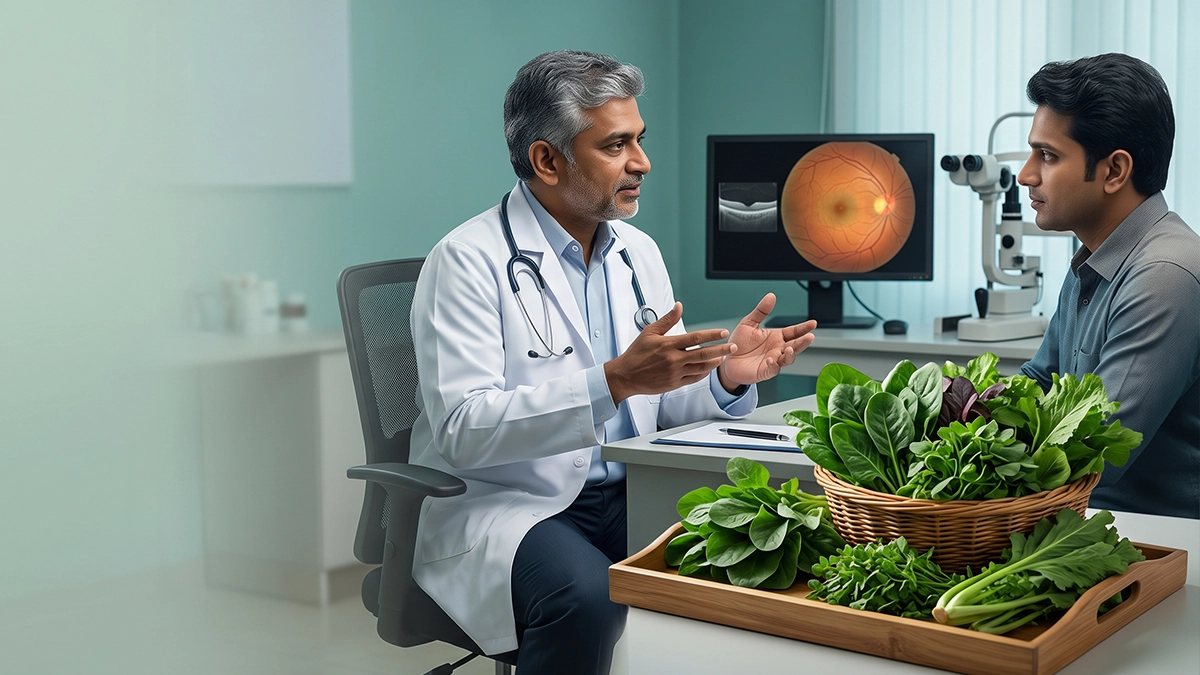
Leafy greens for eye health play a great role as they include spinach, amaranth, methi and the like which present lutein, zeaxanthin, beta-carotene, vitamin C and other plant nutrients. These compounds in turn support the retina and macula and also play a role in antioxidant protection. A healthy diet for eyes does support long term visual health although it is to be noted that food cannot do away with the need for glasses, reverse cataracts or take the place of disease treatment.
Why Are Leafy Greens Beneficial for Eye Health?
Leafy greens are the focus for eye health because of their carotenoid content. Lutein and zeaxanthin are pigments from plants which get from green veggies. In the eye these carotenoids go to the macula, the central retinal area that is responsible for detail in what you see.
A study was done on 33 varieties of fruits and vegetables which reported that often see high levels of lutein and zeaxanthin in dark green leaves like spinach. Also the research reports that dark green leafy vegetables are a great source for dietary lutein intake. This may help to note why these greens are at the top in terms of lutein foods.
Leafy greens also provide beta carotene, folate, vitamin C and other antioxidants. These do not cure eye disease. Instead they are a part of a balanced healthy diet for eyes which in turn supports normal function of tissue.
Which Leafy Greens Can Be Added to an Indian Diet?
Common vegetables for eyesight do not need to be imported or expensive. Palak, amaranth leaves, methi and drumstick leaves can add carotenoids and micronutrients to everyday meals.
| Leafy Green | Important Nutrients | Practical Use |
| Spinach or palak | Lutein, beta-carotene, folate | Dal, sabzi, soup |
| Amaranth leaves | Carotenoids, vitamin C, folate | Stir-fry, dal |
| Methi leaves | Carotenoids, micronutrients | Sabzi, paratha |
| Drumstick leaves | Carotenoids, vitamins | Dal, poriyal, soups |
Rotating between different green vegetables is a better option than a diet which includes only a few types of vegetables. For those that are looking to get more veggies into their diet for better eyesight, also pair your greens with carrots, pumpkin, peas and broccoli. Vasan Eye Care’s guide to lutein and zeaxanthin foods reports how you can include familiar Indian dishes which are a good source of carotenoids. Lutein and zeaxanthin foods
How Do Lutein and Zeaxanthin Support the Retina?
Lutein and zeaxanthin which make up the macular pigment also have antioxidant action. This is a reason that research is done on lutein in terms of age related macular degeneration (AMD). The National Eye Institute’s AREDS2 study enrolled 4,203 adults aged 50-85 that had intermediate AMD or were at high risk for it. Vasan eye care looked at a specific supplement which included lutein and zeaxanthin. Also this does not mean that leafy green vegetables for eye health do in fact treat AMD and that AREDS2 supplements are for all.
| Food or Nutrient | Main Eye-Health Role | Important Limitation |
| Leafy greens | Dietary lutein, zeaxanthin and antioxidants | Do not treat existing eye disease |
| Carrots and pumpkin | Provitamin A carotenoids | Do not correct refractive error |
| Citrus and guava | Vitamin C and antioxidants | Work best within a varied diet |
| AREDS2 supplements | Used for selected people with AMD | Require professional advice |
A varied plate is more useful than focusing on one “superfood”. Vasan Eye Care provides further guidance on best foods for eye health. Best foods for eye health Readers can also explore fruits good for eye sight Fruits good for eye sight and antioxidants for eye health. Antioxidants for eye health
How Often Should Leafy Greens Be Eaten?
There is no one ophthalmology guideline that says which amount of leafy greens to have for eye health daily. Vasan eye care aims for a wide variety in a balanced diet. Greens go well with protein, whole grains, other veggies and healthy fats. Also to include in a healthy diet for eyes is care for diabetes, kidney disease, allergies and other health issues. What often put in our body may thus require individualized attention, especially when it is affected by another health issue.
Vasan Eye Care’s guide to essential vitamins for healthy eyes provides additional information about vitamin A, C, E and other nutrients. Essential vitamins for healthy eyes
Can Leafy Greens Improve Eyesight?
Leafy greens for eye health are a great source of nutrition; they do not usually cause a change in prescription for glasses or reverse vision loss from retinal disease, glaucoma or cataract. Reports that veggies can “cure weak eyesight” should therefore be taken with a grain of salt.
People going for veggies to improve eyesight should see nutrition as a piece of the prevention puzzle. Also get into the habit of regular eye check-up which is key as some eye diseases may progress without you noticing.
Healthy choices which go beyond diet are important. Vasan Eye Care presents a guide to daily habits for eye health and put forth practical lifestyle tips which pair with a healthy diet. Daily habits for eye health.
Eye Care at Vasan Eye Care
Nutrition is a support for eye health, but persistent blurred vision, new floaters, flashes, eye pain or acute changes in vision need professional assessment. Vasan Eye Care does eye and vision evaluation and will give advice which may be routine monitoring, an eye exam or more in depth testing. Sudden loss of vision, a shadow that descends like a curtain, severe eye pain or your vision is rapidly getting worse require prompt ophthalmic assessment instead of dietary home treatment.
Frequently Asked Questions
1. Are spinach and palak good for the eyes?
Yes. Spinach and palak are good sources of lutein which also provides zeaxanthin, beta carotene, folate and other nutrients. They do great in the leafy green category for eye health and a balanced diet, but do not supplant what is put forth for the treatment of diagnosed eye disease.
2. Which vegetables are best for eyesight?
Useful for eyes are spinach, amaranth, methi, carrots, pumpkin, broccoli and peas. Diversity in what you eat is key which is to say different vegetables supply different carotenoids, vitamins and antioxidants. No single vegetable is going to prevent all eye issues.
3. Can leafy greens prevent macular degeneration?
A diet that includes lots of leafy vegetables may support retinal health, but no food is a sure thing for preventing AMD. AREDS2 reports on a certain supplement which is put to use for some people with AMD, not on the use of leafy greens as a preventive eye health measure.
4. Do leafy greens replace eye supplements?
Not at all. For most people a balanced healthy diet is what often is seen for eye health and also certain supplements which may have specific medical applications. If you have AMD, a nutritional deficiency or any other health issue that may play a role in your eyes’ health you should see a professional, an ophthalmologist or a qualified health practitioner.
References
- National Eye Institute — AREDS/AREDS2 Clinical Trials
https://www.nei.nih.gov/eye-health-information/clinical-trials/age-related-eye-disease-studies-aredsareds2/about-areds-and-areds2? - British Journal of Ophthalmology / PubMed
https://pubmed.ncbi.nlm.nih.gov/9828775/?