
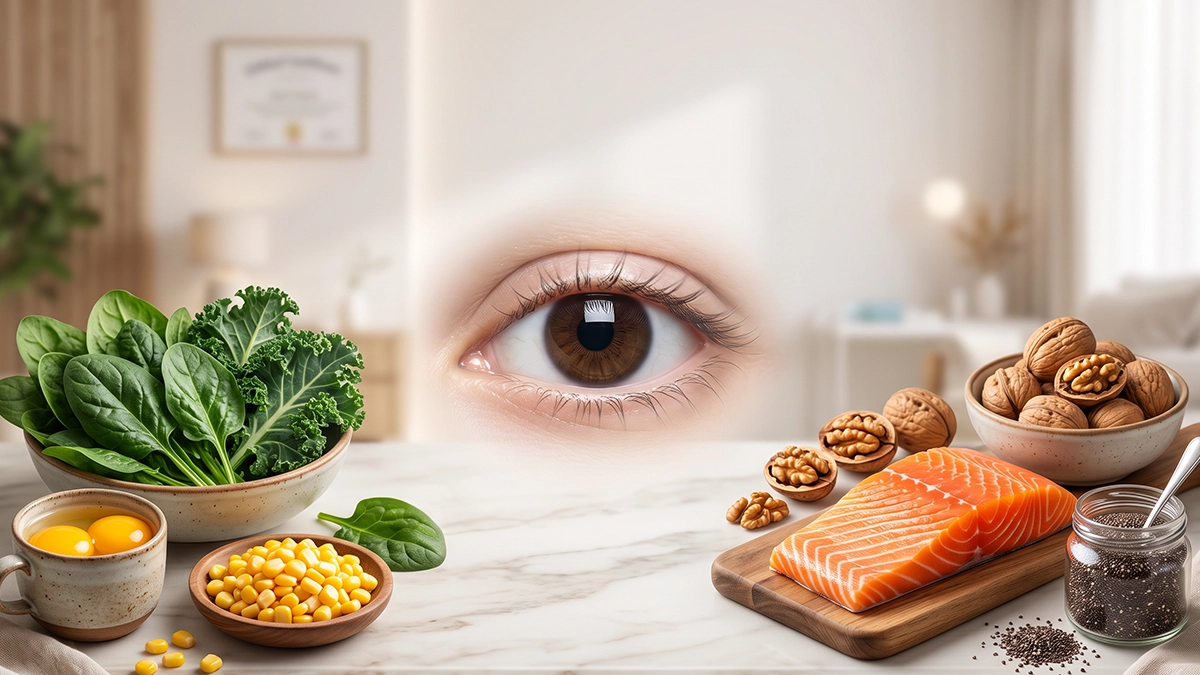
Good health of your eyes is a result of more than just regular eye exams. What you put in your body also plays a role as the retina, lens and other eye structures require certain nutrients to function well. As for which nutrients are related to vision, lutein and omega-3 fatty acids are the ones that get the most attention
This naturally raises a question: which one is better for your eyes?
The issue is not black and white in terms of which supplement is better. What we see is that the lutein benefits for the retina are different from what we get out of omega 3 for eye health. Lutein is a carotenoid which we mainly find in the macula, at the same time DHA which is a type of omega 3 fatty acid makes up a large part of retinal cell membranes.
Both play a role in balanced eye nutrition, it is true they function in different ways. Out of that which may come healthier food choices for you and also which supplements you may not need
What Is Lutein and Why Is It Important for the Eyes?
Lutein is a carotenoid which is present in nature and is mostly found in green leafy vegetables and some colorful fruits and vegetables. Also with another carotenoid that is zeaxanthin lutein deposits in the macula which is the center of the retina and is responsible for detail in central vision.
One of the key lutein benefits is that it is a component of the macular pigment. We see that lutein and zeaxanthin are able to absorb specific high energy light waves, also they have antioxidant actions. That which is presented by these elements may contribute to protection of retinal tissues from oxidative stress over time. It is also known that lutein and zeaxanthin are present in the retina and lens. Also out of the AREDS2 study research we saw into the role of these elements in the issue of age related macular degeneration.
However also does not include that all should be on lutein supplements. For most people a diet that includes vegetables, fruits and other whole foods is the best place to start.
What Are the Main Lutein Benefits for Eye Health?
The most reported lutein benefit is for the macula. In which lutein deposits in this part of the retina it has been studied by researchers whether its intake is enough for healthy aging of the eye. Also lutein works in combination with zeaxanthin instead of alone. These pigments play a role in the eye’s natural antioxidant defense and also filter out certain high energy light waves from reaching the delicate retinal cells.
Evidence is an issue for people with intermediate AMD. In the AREDS2 study beta carotene was replaced with lutein and zeaxanthin which in turn produced a better and safer version of the supplement. Also it was found that beta carotene has a relation with an increased risk of lung cancer in current and past smokers. The AREDS2 formula includes 10 mg of lutein and 2 mg of zeaxanthin in addition to other nutrients. Also it is important to note that AREDS2 supplements are not for everyone who wants “better eyesight”. They were tested for specific stages of AMD. An ophthalmologist should determine the appropriateness of such a supplement.
What Is Omega-3 and How Does It Support the Eyes?
Omega-3 fatty acids are a group of essential dietary fats. We see mainly three of them: alpha-linolenic acid which is ALA, eicosapentaenoic acid which is EPA, and docosahexaenoic acid which is DHA. In the issue of omega 3 for eyes DHA is very relevant. DHA is present in high levels in retinal tissue and makes up the structure of retinal cell membranes. Also the body does transform some plant based ALA into EPA and DHA but to a small degree. From food sources like fish, seafood and some algae based products we get more direct supplies of EPA and DHA
This biological role which in turn causes the assumption that taking fish oil capsules will definitely prevent eye disease. We do not have proof of that which is so wide a claim. While omega 3 is an important component of a healthy eye nutrition, supplements should not be put forth as a cure for all eye conditions.
Lutein vs Omega-3: What Is the Difference?
Lutein and omega-3 play out in separate biological processes. That is why it is a mistake to compare which is “stronger”.
| Factor | Lutein | Omega-3 |
| Main eye-related role | Forms part of macular pigment and provides antioxidant support | DHA is an important structural component of retinal cell membranes |
| Major forms | Lutein, often discussed with zeaxanthin | ALA, EPA and DHA |
| Common food sources | Spinach, kale, broccoli, peas, corn and egg yolk | Fatty fish, seafood, flaxseed, chia seeds, walnuts and algae |
| Evidence in AREDS2 | Lutein and zeaxanthin became part of the AREDS2 formula | Adding omega-3 did not provide additional benefit for AMD progression |
| Best approach | Prioritise lutein-rich foods; supplements only when appropriate | Include omega-3-rich foods as part of a balanced diet |
The comparison shows why the lutein benefits cannot simply be replaced by omega 3 for eyes, or vice versa. They are different nutrients with different functions.
Which Is Better for Age-Related Macular Degeneration?
When it comes to questions related to AMD, lutein has what we may term greater targeted clinical evidence as part of the AREDS2 nutritional formulation. The National Eye Institute reports that AREDS and AREDS2 supplements do in fact reduce by approximately 25% the risk of progression from intermediate to advanced AMD in the right patients. Also in AREDS2 it was determined that omega-3 fatty acid supplementation does not add to the benefits of the formula.
This issue is of import. It does not mean that omega-3 is at all harmful or out of place in our diet. What it does mean is that we do not see the same specific benefit from omega-3 in terms of slowing AMD progress in that which we have studied. Also for people without AMD or at early stages of the disease it is up for them to know that AREDS2 supplements do not in fact put a stop to the development of AMD. You should see your eye doctor for a retina check up and for them to give you a recommendation on whether an AREDS2 formulation is right for you.
Can You Take Lutein and Omega-3 Together?
For most healthy adults we get most of our eye nutrition from food. A meal of fish and greens for example will give you lutein and omega-3 fatty acids. When it comes to supplements that is a different story. What we put in that category of which supplements are right for you is based on your age, diet, eye health issues, medications and over all health
Higher dosages of supplements are not always better. Some health supplements may interact with your medication or may not be right for people with certain health conditions. It is recommended that anyone that has a eye disease speak to an ophthalmologist or another health care provider before taking a supplement which may include advice from the internet.
Best Food Sources of Lutein and Omega-3
A food-first approach provides these nutrients alongside vitamins, minerals, fibre and other compounds that support general health.
| Nutrient | Useful Food Sources | Easy Ways to Include Them |
| Lutein | Spinach, kale, peas, broccoli, corn and egg yolk | Add leafy vegetables to dal, sabzi, salads, soups or omelettes |
| Zeaxanthin | Corn, egg yolk, orange peppers and some green vegetables | Combine colourful vegetables across meals |
| EPA and DHA | Sardines, salmon, mackerel and other fatty fish | Include suitable fish regularly as part of a balanced diet |
| ALA omega-3 | Flaxseed, chia seeds and walnuts | Add ground seeds or nuts to breakfast or snacks |
For most people, eye nutrition is not secured by finding one “superfood.” A varied diet—with plenty of vegetables and fruit, along with nuts, seeds, whole grains, and appropriate protein sources—matters much more. That is the standard we should all try to meet
Lutein or Omega-3: Which Should You Choose?
If you are a healthy person looking to care for your eyes, you do not usually see a reason to pick out one nutrient over the other. What you put in your diet which contains them all is what you should be putting in. If you have intermediate AMD that supports the lutein benefits what we see more of. Lutein and zeaxanthin make up the AREDS2 formula which has been studied clinically, also in the AREDS2 trial it was found that omega 3 supplements did not in fact add to protection against AMD progression.
If you don’t include much fish or other omega 3 in your diet which is a great source of them, improving what you put in your body is still a good idea for health in general. But at the same time, taking omega 3 for eyes health shouldn’t be looked at instead of getting a medical assessment or treatment.
The right choice therefore depends on why you are considering the nutrient in the first place.
Why Diet Alone Cannot Replace an Eye Examination
Nutrition supports eye health, we must note that it does not diagnose or treat issues like glaucoma, cataract, diabetic retinopathy or macular degeneration. Also some retinal diseases may present no symptoms in their early stages. Routine in depth eye exams are the only way to identify what supplements may not bring to light.
If your vision becomes distorted or suddenly blurry, or you notice flashes, a sudden increase in floaters, loss of sight in part of your visual field, or a sudden reduction in vision, seek professional eye care immediately instead of trying nutritional supplements first.
Conclusion
The issue between lutein and omega-3 is that which is the best is not determined as they play different roles. In terms of lutein benefits the macula, antioxidant protection and its role with zeaxanthin in the AREDS2 formulation for patients with AMD are main. As for omega-3 fatty acids in particular DHA which are a part of retinal tissue and thus are valuable in a balanced eye nutrition. Also it was found in AREDS2 that omega-3 supplementation does not show the same benefit in slowing AMD progress
For daily eye health, focus on a diverse diet which includes leafy greens, colorful fruits and veggies, nuts, seeds and foods high in omega-3. If you have AMD, a retinal issue or issues with your vision, come to Vasan Eye Care and see an ophthalmologist before you choose an eye health supplement. A personal eye exam will determine what is right for you instead of solely using supplements
Frequently Asked Questions
1. Is lutein better than omega-3 for eyesight?
Neither nutrient is a one size fits all solution. Lutein benefits are very much for macular pigment and we see that in the AREDS2 research which reports on certain groups of AMD patients. Omega 3, in particular DHA, is a key structural element of the retina. Your requirements depend on your diet and eye health
2. Does lutein improve vision?
Lutein supports the tissue which is responsible for central vision, we must note that it does not immediately improve eyesight or do away with the need for glasses. It has the most research support when used alongside zeaxanthin and other nutrients in the AREDS2 formulation which in turn is for certain people with intermediate or late AMD.
3. Is omega 3 good for eyes?
Yes, omega 3 fatty acids are included in healthy eye nutrition and DHA is very present in high levels in the retina. But to those who may think that taking in omega 3 for eyes health means they also put in a protection or cure for eye disease from fish oil supplements, think again. AREDS2 study reported no extra AMD benefits from use of omega 3 supplements.
4. Can I get enough lutein naturally?
Many people get lutein from foods like spinach, kale, broccoli, peas, corn and egg yolks. As for whether you need more of a supplement than out. That which relates to your diet and health is personal. As for AREDS2 or other high dose eye supplements which you may be thinking of using, it is best first to speak with an ophthalmologist.
5. Can lutein and omega-3 prevent macular degeneration?
No supplement can do for the prevention of AMD. Also reports from the National Eye Institute indicate that AREDS2 supplements do not prevent AMD from occurring. They may in fact reduce progression in some people which already have intermediate or late AMD. Still it is very much recommended that regular eye exams be a part of health care.
6. Should I take an eye-health supplement every day?
Not all people require eye supplements. They are most useful when there is a proven nutritional or health based reason for their use. Before you start on long term supplementation which includes AREDS2 products check with an eye specialist if it is right for you age, eye condition and overall health.